

Posts

The Hidden Side of Life: Trials We All Face

I have come to the conclusion that everyone, no matter how blessed, faces trials.

Some are ordinary: how to pay a bill, find a job, or cope with everyday stress. Others are far heavier. I remember a week a few years back when I was praying for friends and loved ones dealing with heart bypass surgery, Parkinson’s disease, accident recovery, cancer, and stroke. Any of these can feel insurmountable, especially when a doctor uses the word “terminal.”

Thirty-nine years ago I sat with my dad after he received a terminal diagnosis. He chose a treatment that might give him five more years if it worked. Even while facing his own death, his thoughts centered on making sure his family knew how he felt and that they would be all right without him. I never fully accepted how immediate his condition was, and I missed chances to share my feelings with him. Maybe it was the awkwardness of youth or simply not knowing how to say what I felt.

His sudden death left me more open with others for a time, unwilling to leave things unsaid. Over the years, though, I’ve drifted back into the habit of keeping those thoughts inside.
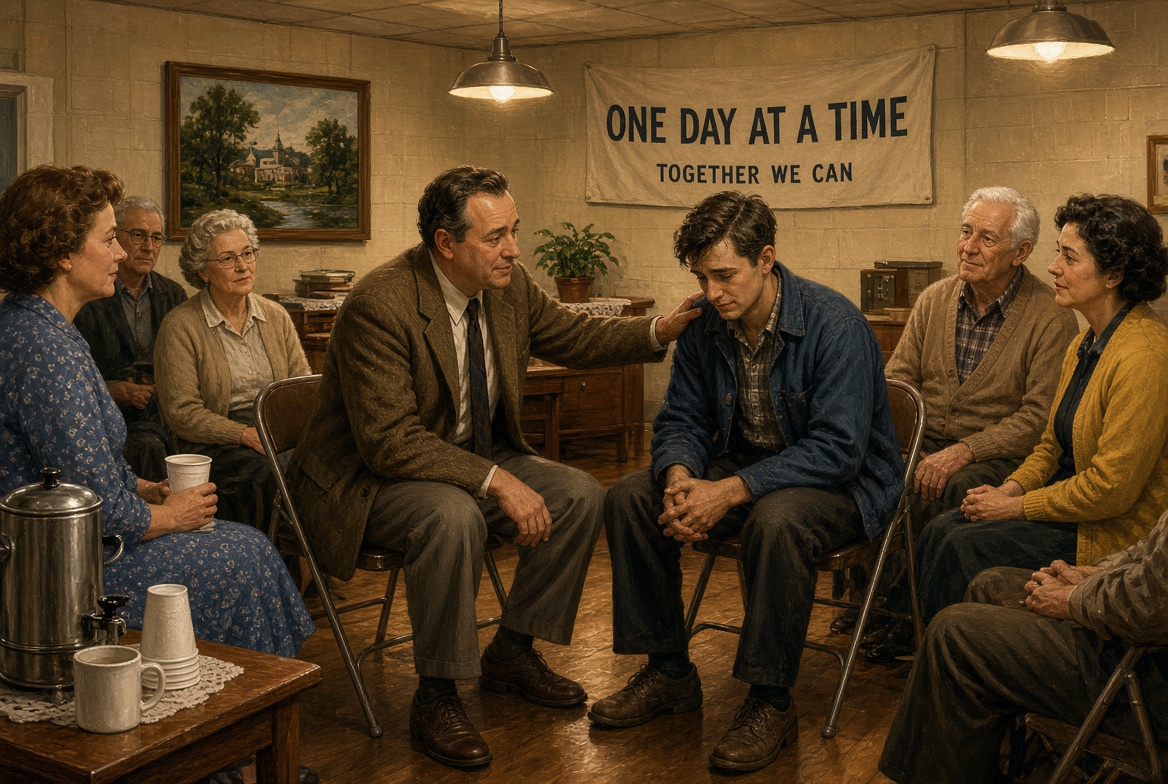
Our home church began a ministry several years ago for people caught in addiction. Has there ever been something you wanted so badly that your body ached and your mind could focus on nothing else?

When most people hear “addiction,” they think of alcohol or drugs. The list is much longer, and the damage is often the same—to the person struggling and to everyone around them. I have yet to meet anyone who cannot be pulled into some activity or fascination that consumes time, money, and energy, sometimes at real cost to themselves or those closest to them.

You may think, “How can I be addicted? I’m a good person,” or “I’m a Christian.” Consider a few less obvious possibilities: exercise, computer use, food, gambling, sex, or limerence (an obsessive romantic attachment). Any of these can become addictive.

Addiction usually involves impaired control, preoccupation with a substance or behavior, continued use despite consequences, and denial. The drive for immediate relief often overrides concern for long-term effects. Stopping suddenly can bring anxiety, irritability, cravings, nausea, and other withdrawal symptoms.

In truth, most of us have addictive tendencies. Unchecked, those tendencies can become addictions. Is there something you feel you have to watch or attend, even when it crowds out other priorities? (I’ve wondered more than once whether following every football or baseball game counts.)

I have spent much of my life encouraging young people to stay away from drugs and alcohol, and I have lost friends and family to both. I chose not to use them myself, yet I know the potential exists in me, just as it does in other members of my extended family. One step in the wrong direction can open a door. I am also a creature of habit. At times I have wrestled with behaviors that felt close to obsessive-compulsive patterns. Having worked through those, I now try to stay alert so I don’t slip into unhealthy routines.

If your church or a local nonprofit offers a recovery program, support it with whatever gifts you have. If a friend needs someone to go with them to a meeting, don’t stay home out of fear that people will assume you have a problem. Just be there.

Addiction is potentially within each of us. Some forms are simply less visible or less stigmatized, but they still affect our lives and the people we love.

Read more of Randall’s writing through his books available in our Store.

Have you got something stuck in your craw?

You’ve probably heard the expression “They have something stuck in their craw.” It’s one of those old sayings that essentially means someone is mad or upset about something.

There’s not a day that goes by when such an occurrence can’t seep into your being and take over your thinking. It might be a passing statement uttered by a relative or friend, an encounter with a perfect stranger that catches you the wrong way, or even your closest people—wife, husband, mom, dad, children—simply getting on your nerves. These little irritations can accumulate in your craw like crumbs over time until eventually you just have to get them out.

What is a craw, anyway? It’s the pouch in a bird where food is stored before reaching the stomach. How this comparison became part of the human lexicon, I’m not sure, but the phrase has been with us since the days of King Henry VIII.

Life, with its many trials and daily experiences, can be either a path of pleasantness or miles of misery—or, of course, a mix of both. As the old Scottish folk song goes, “You take the high road and I’ll take the low road, and I’ll be in Scotland afore ye…”

With the exception of unforeseen circumstances such as accidents, illness, and unexpected losses, we largely sit in the driver’s seat. We turn the wheel, press the gas, hit the brake, and decide what gear we’re traveling in. Even when something intervenes, we still have a chance to choose how we will react to it.

I learned long ago that fretting over encounters with people who aren’t a regular part of your life is truly a waste of energy and time. Letting those moments stick in your craw is fruitless—like a barren tree. It’s the moments among our closest loved ones that most often plague the mind and keep the wheels spinning.

Recently one of those hit me and kept my thoughts turning for hours whenever my mind wasn’t occupied with other tasks. Sometimes, no matter how much something sticks with you, you simply have to find a way to let it go. I’ll be the first to admit that is one of the hardest things to do—our loved ones know exactly how to push our buttons.

Life is hard enough without letting flippant utterances steal our time, energy, and focus from what can fill our lives with joy, happiness, and hope.

Learn to let go, take the high road, and find the path to pleasantness.

Read more Randall Franks writings in his books found in the Store.

Beneath Leaves: Finding Renewal When Worry Piles High

There are seasons in life when worries, sorrows, fears, and quiet depressions gather like autumn leaves drifting from the branches. One by one they fall— a health scare, a strained relationship, financial strain, the ache of loneliness, or simply the relentless news of the world—until they form a thick, damp blanket over the ground. The roots that once fed our soul, drawing nourishment from faith, friendship, purpose, and simple joys, lie hidden beneath. In that shadowed place, it becomes hard to see daylight, harder still to believe spring will ever return.

Even the markers of renewal can feel distant or mocking. Easter arrives with its promise of resurrection and families gathering around tables laden with ham, dyed eggs, and laughter. Spring unfurls tender green shoots and birdsong. For many, these are moments of uplift. Yet for others, they add another layer to the pile: the contrast between outward celebration and inward heaviness only presses the leaves down more tightly. The beauty meant to heal can sometimes underscore how far we feel from blooming ourselves.

I wish the remedy were as straightforward as stepping into sunshine and saying, “It’s a beautiful day—grab a rake, clear the debris, and let the flowers push through.” In truth, I’ve tried that approach more times than I can count. A brisk walk, a forced smile, a playlist of upbeat songs—sometimes they shift the mood for an hour or two. But when the weight has settled long enough, the potential beneath begins to wither. The soul’s tender shoots, starved of light and air, curl inward. What was once vibrant growth risks becoming brittle and dry.

In my own lowest seasons, I’ve learned there is no quick sweep of the rake that suffices. Instead, the way forward is to reach deeper—down through the layers, straight to the roots themselves.

For me, those roots are twofold. First, the living Word of God, which has been the steady food of my spirit since I first opened a Bible as a youth. When sadness clouds everything, I don’t always feel like reading, but I do it anyway—sometimes just a single Psalm, or a few verses from Isaiah promising that God gives strength to the weary. I read slowly, letting the words sink in like rain after drought. “Come to me, all who labor and are heavy laden, and I will give you rest” (Matthew 11:28). Those aren’t abstract platitudes when you’re buried; they become oxygen.

The second root is people—the ones who care about me, and the ones who need care. Isolation feeds the pile; connection scatters it.

I remember one November a few years back when grief over a family loss had me retreating inward for weeks. The leaves felt suffocating. One Saturday, almost on autopilot, I answered a call from a friend who was in the hospital. I thought he might need someone to talk with so I went, to listen and pass the time. We talked for hours—mostly him talking, me listening.

Driving home that night, something shifted. My own sorrow hadn’t vanished, but it occupied less space. In the mirror of his pain, mine looked smaller—not diminished in importance, but placed in perspective. Helping him didn’t erase my burden; it redistributed the weight. I breathed more easily, as though a few leaves had been lifted away.

That pattern has repeated itself since. When worry permeates every moment, threatening to steal my breath, I step toward someone else’s need. A phone call to check on an elderly friend. Volunteering at the food pantry. Listening to an acquaintance who’s struggling. Each small act of reaching out reminds me I’m not alone in the hole—and sometimes, in joining others to dig, I find my own hands pulling me upward.

It’s counter intuitive: when you feel most trapped, the path to freedom often lies in helping set someone else free. The effort required to encourage, to serve, to show up replaces suffocating rumination with purposeful motion. Problems that loomed gigantic shrink when held next to another’s hardship. Kindness becomes the wind that scatters leaves.

Of course, this isn’t a cure-all. Some burdens require professional help—and seeking it is itself an act of courage and connection. Nor does reaching out magically dissolve every worry. But it does lighten the load enough to glimpse daylight again.

So if the pile feels heavy this season, don’t wait for the wind to do the work. Head to the shed—or the hardware store—and pick up that rake. Better yet, grab a shovel too. Start clearing space around you: a conversation, a kind deed, a verse that speaks directly to your heart. Root yourself deeper in God’s promises and in the lives of those around you.

In time, you may notice the first green shoots breaking through. Hope, fragile at first, begins to rise. Kindness takes root. Enthusiasm stirs. The very act of tending others’ gardens revives your own.

Spring always comes. Sometimes we just need to rake away what’s covering it—and in helping others uncover their light, we rediscover ours.

Read more of Randall’s work in Seeing Faith : A Devotional.
