Posts

Edward Uptegrove: A Virginia Patriot Story

Among the earliest German settlers in Pennsylvania were a Mennonite group known as the “Original 13” families. This included three brothers—Derick (Dirk), Herman, and Abraham Op den Graeff—who arrived aboard the ship Concord on October 6, 1683. They helped found Germantown (now part of Philadelphia) and, in 1688, signed the Germantown Quaker Petition Against Slavery—the first organized religious protest against slavery in the colonies.

It was Isaac Vanbibber Op Den Graeff’s son, Edward Uptegrove (also spelled Updegrove or similar), who was born around 1739 in Pennsylvania. He married Sarah Lewis, and together they had at least six to eleven children, including Isaac Uptegrove (1761–1817); Susanna/Susannah Uptegrove (1760–1840), who married Benjamin Melton in Albemarle County in 1787; Hannah Uptegrove (1770–1854), who married Elisha Collins in Albemarle in 1794; Solomon Updegrove; and others who later simplified the surname to “Groves” after moving to North Carolina.

In the mid-to-late 1760s, the young family migrated to Albemarle County, Virginia—a rapidly developing Piedmont frontier region of rolling hills and fertile river valleys. Still largely rural and agricultural, the county was transitioning from wilderness clearings to established plantations and small settlements, with Charlottesville emerging as its new courthouse village.
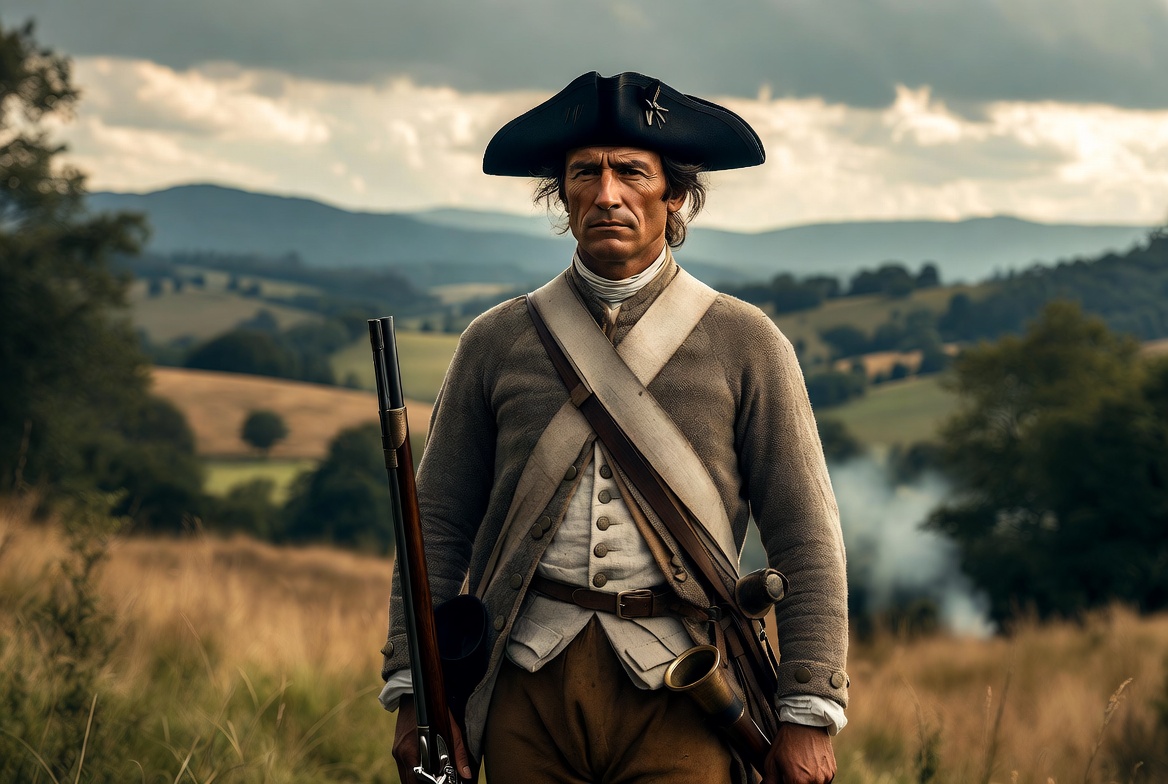
As murmurings of revolution grew, local leaders—including a young Thomas Jefferson—organized resistance. In 1774, Albemarle County held meetings opposing British policies. In spring 1775, following the Gunpowder Incident (when Virginia’s royal governor Lord Dunmore seized colonial gunpowder in Williamsburg), the county formed an Independent Company of militia. Roughly 155 volunteers (later growing to nearly 300) marched toward Williamsburg to demand the powder’s return or compensation, though they turned back before any major confrontation.

Local men also enlisted in Virginia Continental regiments, such as the 14th Virginia, which fought in major northern campaigns like Brandywine and Germantown. The county supplied recruits, provisions, and militia musters. Edward likely first felt the Revolution through committee activities and musters in the mid-1770s, with demands increasing by the late 1770s.The war arrived physically in 1778–1779 with the transfer of thousands of British and German (Hessian) prisoners captured at Saratoga. Starting in early 1779, the Albemarle Barracks (near Charlottesville along what is now Barracks Road) housed up to about 4,000 prisoners. This placed a tremendous logistical burden on the rural county, bringing economic activity, security concerns, escapes, and constant interactions with the community as locals supplied food and guards.

Benedict Arnold’s British invasion of Virginia in late 1780 prompted the Virginia legislature to relocate temporarily to Charlottesville for safety. The county remained relatively quiet on the battlefield until June 1781, when Banastre Tarleton’s raiders struck Charlottesville itself, aiming to capture the legislature and Governor Jefferson. The raid brought direct combat, property damage, and chaos—partially thwarted by Jack Jouett’s famous nighttime ride.

At the height of Virginia’s crisis, Edward stepped away from raising his young family to answer the call. As a private in the Albemarle County militia in 1781, he joined thousands of everyday Virginians who shouldered muskets to defend their homes. That pivotal year, traitor Benedict Arnold’s forces torched Richmond, while “Bloody Ban” Tarleton’s cavalry threatened the heart of Albemarle. Local militia scrambled to protect families, supplies, and the prisoner barracks while supporting the broader campaign that funneled British troops toward Yorktown.

Though no single battle bears Uptegrove’s name, his service embodied the quiet resolve of local defenders whose vigilance helped secure victory at Yorktown in October 1781. He returned to civilian life but died by 1785, leaving a patriot legacy recognized by the Daughters of the American Revolution (Ancestor #A117995).Uptegrove’s story reminds us that the Revolution was won not only on famous battlefields but also in county militias across the land. His descendants spread across the frontier, carrying pride in Edward’s service and instilling that commitment to country in generations to come.

Edward Uptegrove is Randall’s maternal 6th Great Grandfather.

Read more of Randall’s writing in his books from his Store.
Ordinary Heroes: The Remarkable Founders of America

There are many ways to celebrate the founding of our country. Two hundred and fifty years ago, 56 men gathered to debate how the 13 colonies would move forward as a new nation. These delegates came from every colony, representing a remarkable cross-section of American life. Some were wealthy and well-established in their professions, while others were ordinary tradesmen and farmers. That, in many ways, was what America’s early years were all about. It wasn’t about nobility or inherited privilege—it was about ordinary people having a voice in shaping their future whether they were in that room or serving near their home.

One such man was frontier farmer Thomas Arnett Sr. (1740–1808) of Augusta County, Virginia. Soon after the battles of Lexington and Concord, he volunteered as a private in Captain Pryor’s Militia Company. In addition to his military service, he contributed 300 pounds of flour from his modest farm to support the Continental Army. From 1775 until the war’s end, Arnett found multiple ways to have his say in the struggle for independence.

The spirit of resistance first took root in Boston, where tradesmen and ordinary citizens publicly objected to the Crown’s oppressive taxes, beginning with the Stamp Act. The Sons of Liberty emerged from that early resistance, spreading the cause of liberty across the colonies from the shadow of Boston’s Liberty Tree. Declaration signer Samuel Adams was a founding member of the group. Though he struggled financially as a businessman—he even lost the family brewery—his passion for creating a free nation proved far more valuable. Through his tireless efforts, Adams helped lay the groundwork for generations to come.

Another signer, George Walton of Georgia, rose from humble beginnings. Orphaned young and raised by an uncle, he was apprenticed to a carpenter. Largely self-educated, he became a lawyer and eventually served as governor of Georgia.

Signer Abraham Clark of New Jersey showed little interest in personal wealth. As an attorney, he devoted much of his practice to helping ordinary people who could not afford legal representation. Contemporaries described him as “limited in his circumstances, moderate in his desires, and unambitious of wealth.”

It was John Adams of Massachusetts who famously observed that about one-third of the population supported the Revolution, one-third remained Loyalist, and one-third stayed neutral. Among the founders who shaped the nation’s spirit, Adams stands out as one of the most influential. He was often unpopular among his fellow delegates, largely because of his relentless push for independence. It was Adams who helped steer the young Thomas Jefferson of Virginia into the role of primary author on the committee tasked with drafting the colonies’ grievances against King George III.

That committee included Adams, Jefferson, Benjamin Franklin of Pennsylvania, Roger Sherman of Connecticut, and Robert R. Livingston of New York. It was Virginia’s Richard Henry Lee who first advanced the cause with his resolution declaring the colonies “free and independent states” in June 1776. The committee was formed in response, and by July they had prepared a draft for debate.

In his original draft, Jefferson included a powerful condemnation of the slave trade and slavery itself. Unfortunately, that passage was struck out after objections from delegates in both the northern and southern colonies. While the focus remained on achieving independence, the ideal of freedom for all had been planted—though it would take nearly another century and the lives of hundreds of thousands of soldiers before that ideal began to be realized.

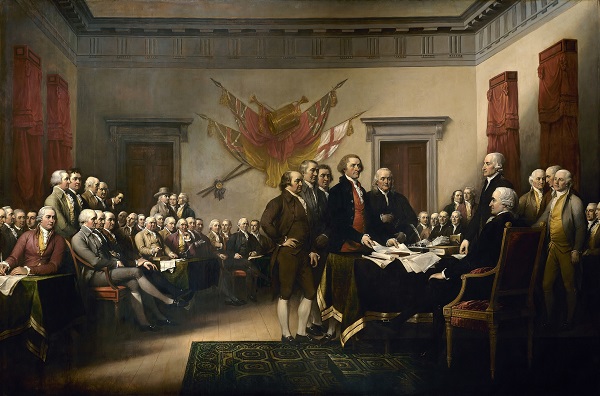
The Congress approved the final text on July 4, 1776—the date we celebrate as our nation’s founding. The actual signing of the engrossed document took place primarily on August 2, 1776, a moment famously reflected in John Trumbull’s iconic 1818–1819 painting of the June 28th presentation by the committee.

Among the signers, Roger Sherman of Connecticut stands in a class by himself. A self-made man who began his working life as a cobbler, Sherman is the only delegate to sign all four of the nation’s foundational documents: the Continental Association; the Declaration of Independence, the Articles of Confederation, the U.S. Constitution, and he also served on the committee that helped draft the Bill of Rights. A version of the Bill of Rights in his handwriting still exists today.

These men—and the countless ordinary citizens who supported them—created something unprecedented in world history. In an age dominated by monarchies, they offered the radical idea that ordinary people could govern themselves. They gave the world a new hope for freedom and self-determination. Two hundred and fifty years later, that experiment continues. Whether by attending a Revolutionary War reenactment, participating in a grave marking ceremony for one of these patriots, joining a local Independence Day celebration, or watching a parade, there are many meaningful ways to honor their extraordinary legacy this year. If that isn’t worth celebrating, I don’t know what is.

The columnist is related to Thomas Arnett Sr., paternal 6th Great Grandfather; and he is related to 48 signers of the Declaration including most of those mentioned above.

Read other writings from Randall Franks in his books: Store

Adam Sherrill’s Ride: From King’s Mountain to Boyd’s Creek

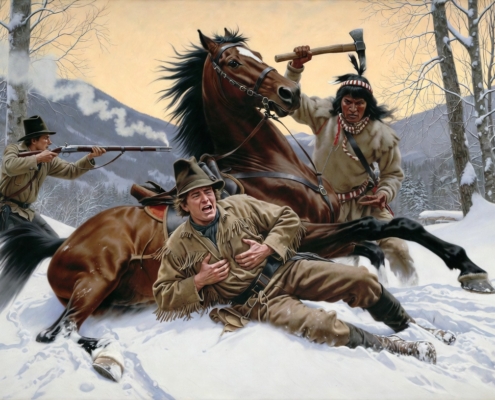
In the chill December of 1780, in the midst of a three-pronged attack against the British-aligned Cherokees, Adam Sherrill’s horse suddenly stumbled on the frozen ground near Boyd’s Creek. The rider was thrown hard amid a sharp engagement with a Cherokee war party. Pain exploded through his chest as several ribs snapped. Before he could rise, a Cherokee warrior sprang upon him, tomahawk raised for the kill. In that frozen instant, a ball from a comrade’s rifle found its mark. The attacker fell. Adam, gasping, was pulled to safety by his fellow Overmountain Men. The wound would heal, but the memory of that narrow escape—and the hard service that preceded it—would stay with him for the rest of his long life.
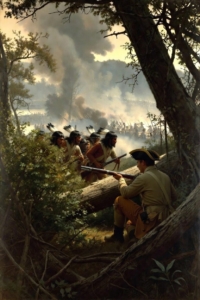
Lying on the rough pallet as his ribs knit together in the weeks that followed, Adam Sherrill had time to think. Time to let his mind travel back across the mountains to the journey that had brought him and his family to this hard-won victory—and forward with worry about what lay ahead for those still in the field.

The pain in his side was sharp, yet it paled beside the fire of remembrance and the ache of concern. For Adam had marched not alone, but shoulder to shoulder with his brothers George and Samuel Jr., alongside their father Samuel Wilson Sherrill Sr., and with his brother-in-law Colonel John Sevier in one of the most remarkable campaigns of the Revolutionary War.

The Journey to King’s Mountain


By 1780, Adam Sherrill, born in 1758 on the Yadkin River country of North Carolina, had already put down roots in the Watauga settlements of what would become Washington County, Tennessee. Like his brother George, he had signed the Watauga Petition in 1776, declaring the mountain people’s desire for order and protection. His brother Samuel Jr. stood with them as well. In late September of that fateful year, the brothers—Adam, George, and Samuel Jr.—along with their father, rendezvoused with Colonel John Sevier’s regiment (their brother-in-law through sister Catherine “Bonny Kate” Sherrill) at Sycamore Shoals in Carter County. There, amid the crisp autumn air and the gathering of rugged frontier riflemen, the Overmountain Men prepared to cross the Blue Ridge. The family marched as a unit of resolve. The march itself was legendary: steep mountain trails, cold rains, dwindling rations, and the knowledge that they had left their own families exposed to Indian raids. Yet they pressed on, linking with other North Carolina militia before descending on King’s Mountain on October 7. There, on that rocky knob in South Carolina, the Overmountain Men unleashed a fierce, close-quarters battle. Adam, George, Samuel Jr., and their father fought in the thick of it under Sevier as Ferguson’s command disintegrated. When the smoke cleared, Ferguson lay dead, more than 700 of his men were captured or killed, and the tide of the Southern Campaign had turned. The victory at King’s Mountain would later be called the “turning point” that led to Yorktown. For the Sherrill brothers and their father, it was simply the day they stood with kin and neighbors to help save the frontier. After the battle, they marched the prisoners up to near Gilbert’s Town in North Carolina, then on to Morganton in Burke County, before returning home. These were just a couple of the many hard engagements fought to carve out the frontier they would call home.

Return to Boyd’s Creek, Recovery, and Concern


As Adam’s ribs slowly mended after Boyd’s Creek, he could take satisfaction in the broader campaign that secured the western settlements. Yet a fresh worry gnawed at him. Still sidelined by his injuries, he could not join the continued march south with George, his brother-in-law John Sevier, and the other friends and family who pressed onward. Reinforced by Virginia troops under Colonel Arthur Campbell, they crossed the Tennessee River toward Hiwassee, destroying Cherokee towns in a punishing expedition that lasted into the new year. Adam’s concern for their safety weighed heavily during his recovery—another chapter in the family’s shared sacrifice on the volatile frontier.

Closing Reflection


Adam Sherrill would go on to marry his second wife Rebecca Kilgore in Washington County in 1789 (daughter of one of the five Kilgores of Kings Mountain), raise a family, and eventually settle at the Head of Sequatchie (Gravelly Spur area) in what became Cumberland County, Tennessee. His brother George would later recount their shared service in a pension application, preserving the memory of the Carter County rendezvous, the march to King’s Mountain, and the hard fighting that followed. Their father Samuel’s quiet participation and Samuel Jr.’s steadfast presence added further layers of family resolve. Adam died in 1827.

He left no pension application of his own, yet his service—marked by the triumph at King’s Mountain, the near-fatal moment at Boyd’s Creek, and the anxious wait while loved ones marched to Hiwassee—lives on in the stories passed down through his descendants.

In the quiet moments of recovery on that winter pallet, Adam understood what many patriots felt: the Revolution was not won in grand declarations alone, but in broken ribs, long mountain marches, rifle shots that saved a brother’s life, and the quiet worry of those left behind.

Adam Sherrill is the maternal fourth great grandfather of the author. You can learn more about his descendants in the books of Randall Franks in our store, such as A Mountain Pearl.

A Narrow Escape from the Battle of Wyoming

Retreating on foot through the smoke and chaos, young Sergeant Giles Parman pulled his musket close and slipped into an overgrown thicket, using a fallen oak log as cover. Three Iroquois warriors passed within yards of him, their war cries echoing as they hunted stragglers. That desperate moment of survival would haunt him for the rest of his life.

One of the greatest motivating forces in wartime is the stories of fellow countrymen who suffer at the hands of the enemy. My 6th great-grandparents, Giles and Elizabeth Parman, lived such a story—one deeply interwoven with one of the Revolutionary War’s most devastating frontier defeats.

The Battle of Wyoming, also known as the Wyoming Massacre, occurred on July 3, 1778. What began as a military engagement soon became a sensationalized horror that spread across the colonies, fueling outrage and patriotic resolve.

Giles Franklin Parman Sr. (SAR Patriot # P-265930), born in 1758 in the Wyoming Valley, and his wife Elizabeth Penn were raising two young children on their roughly 100-acre homestead in the Plymouth District. At the time, this area was part of Northampton County, Pennsylvania (later Luzerne County). The Wyoming Valley itself formed a fertile, canoe-shaped corridor stretching 20 to 25 miles along the North Branch of the Susquehanna River and measuring about 3 to 6 miles wide between the flanking Appalachian mountain ridges.

Word of the invading force spread rapidly through the valley’s tight-knit farming communities. A mixed army of British-allied Loyalist Rangers—about 110 men under Major John Butler—and roughly 460–600 Iroquois warriors, primarily Seneca led by chiefs Sayenqueraghta (Old Smoke) and Cornplanter, had entered the northern valley around June 30–July 1. They quickly overran smaller outposts, destroying farms, running off livestock, and killing or capturing some residents in the prelude to the main assault.

At about age 19–20, Giles was already serving in the Pennsylvania militia, which required all able-bodied men aged 18–53 to answer the call. As a sergeant in the Northampton County Militia, he likely led a small squad of 10–20 local farmers. With his own homestead threatened and his young family at risk, he probably loaded Elizabeth and the children into a wagon and hurried them to the safety of Forty Fort (near modern Kingston/Wilkes-Barre), the main Patriot stronghold, before mustering with his men.

Inside Forty Fort, a heated debate raged among the roughly 375 Patriot defenders (five companies of militia plus a small Continental detachment). Lieutenant Colonel Zebulon Butler, a Continental officer home on furlough, and Colonel Nathan Denison urged caution, advising the men to remain behind the stockade and await reinforcements. Hot-headed subordinates, including Captain Lazarus Stewart, demanded an immediate offensive to protect homes and families. The majority voted to march out.

On the hot afternoon of July 3, the Patriot force—accompanied by fife and drum playing “St. Patrick’s Day in the Morning”—advanced northward from Forty Fort to open ground near Kingston. Giles and his men joined the formation as the Patriots established a battle line and initially pushed back the Loyalist Rangers with disciplined volleys. The crack of musket fire filled the air, but the line’s terrifying collapse soon became apparent amid smoke and screams as the right flank gave way under the hidden assault by Iroquois warriors.

Giles and his squad were suddenly inundated by war cries and a galling fire that shattered the Patriot line. The battle turned into a chaotic rout within 30–45 minutes. Panic spread as men fled toward the river, woods, or forts. Historical estimates place Patriot deaths at 160–300 or more in the fighting and immediate pursuit, with many scalped or killed while trying to escape. Loyalist and Iroquois losses remained light.

Giles survived the battle and made a desperate way back toward his family, with pursuers close behind. The scene around him was one of horror—neighbors cut down, the valley’s defenders broken in what colonists quickly called a “massacre.”

The exact path Giles and his young family took in the immediate aftermath has been lost to time. Did they remain sheltered in Forty Fort? Or did they risk returning briefly to their Plymouth District homestead to salvage what they could?

On July 4, Colonel Denison surrendered the fort under terms negotiated with Major Butler: the defenders would not take up arms again, and private property would ostensibly be respected. Family accounts and lore suggest Giles continued fighting for a total of about seven years in militia service (a figure repeated alongside his friend Michael Girdner), so he may not have been present for the formal surrender—allowing him to keep defending the region without strictly honoring the agreement.

Despite the capitulation, discipline among some Iroquois warriors broke. In the hours and days that followed, scattered killings, plundering, and burnings occurred across the valley. Homes and farms were looted and torched; livestock was driven off. While Major Butler largely restrained his white troops and claimed no non-combatants were harmed, the frontier reality included real brutality and revenge—motivated in part by earlier Patriot raids on Iroquois villages. Exaggerated tales of atrocities (including stories of the debated “Bloody Rock”) spread rapidly through colonial newspapers, inflaming public fury and helping inspire the 1779 Sullivan Expedition against the Iroquois.

Giles and Elizabeth helped bury and mourn neighbors and friends. They endured the “Great Runaway”—the desperate flight of hundreds of women, children, and elderly into the mountains and swamps, where many perished from exposure. Giles continued militia duties protecting the frontier through much of the remaining war, a common pattern for Northampton County men focused on local defense rather than distant Continental campaigns.

After the war, the family remained in Pennsylvania for a time. Giles sold and migrated westward around 1792–1793 to Greene County, Tennessee, settling along the Nolichucky River. There he served as a justice of the peace, road overseer, election inspector, and helped found the Flat Branch/New Providence Baptist Church in 1803. Elizabeth died before January 10, 1799. Giles then remarried Phoebe (Gilbert) Woolsey. Across both marriages, he raised roughly 11–12 children. Later, the family moved to Knox County, Kentucky (near modern Corbin), where Giles received a land grant, built a plantation on the Cumberland River, and raised horses. He died there in 1832.

Giles represents the archetypal Revolutionary frontier Patriot: an ordinary young farmer and family man thrust into extraordinary circumstances. Unlike officers or Continental soldiers in major eastern battles, he and thousands like him in the Pennsylvania and New York back country fought a grinding, personal war of home defense against raids that blurred the lines between military action and civilian terror. His survival at Wyoming, continued service, and subsequent life as a community leader and westward migrant embody the Revolutionary promise—defending liberty on the edge of settlement, then helping build new communities in Tennessee and Kentucky as the nation expanded. Giles’s life mirrors the resilience of countless unsung Patriots who paid the price for the freedoms that followed.

Read more of Randall’s writings in his others books found at Randall Franks Store .

Brothers Divided: A Frontier Family’s Revolution Sacrifice

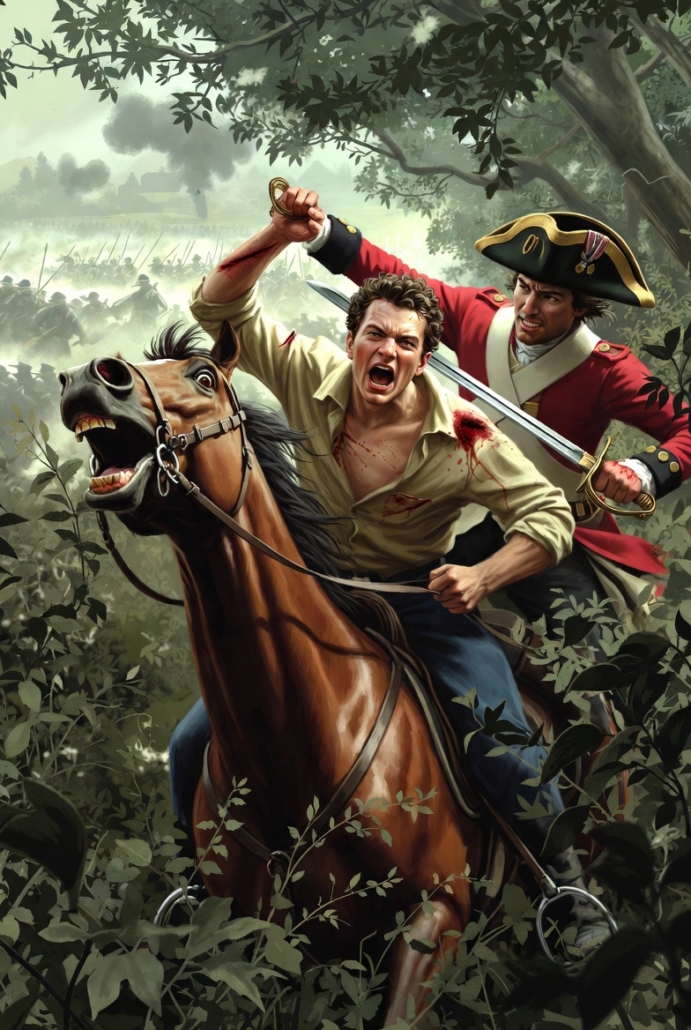
A Depiction of Joshua Moses engagement at capture.

Imagine fleeing on horseback through the thick South Carolina underbrush, only to feel the sting of a British dragoon’s sword slashing your arm as you deflect a blow meant for your head. This was the harrowing fate of Joshua Moses in 1781, a North Carolina militiaman captured while visiting kin near the Wateree River. Wounded four times—a deep head cut, an arm laceration, a shoulder pierce, and a minor gash—he was bound and marched toward the chaos of battle. But Joshua’s story, like his family’s, reflects the deeper tensions of a war that pitted neighbor against neighbor and brother against the call to arms.

Life on the colonial frontier demanded every hand to tend farms and protect families. When whispers of rebellion against England rippled through the land in the 1770s, they ignited fierce divisions. In Anson County, North Carolina—home to the Moses clan—Loyalists (Tories) were a formidable force. Continental General Nathanael Greene estimated in 1781 that up to half of North Carolinians were Tories, dominating about half the state’s counties, including backcountry areas like Anson. Petitions from the era show roughly 227 Anson residents pledging loyalty to the Crown, compared to about 355 who had earlier protested colonial grievances as Regulators—a movement that often fed into Patriot support. This near-even split made open rebellion risky; many families chose neutrality to survive raids and reprisals.

John Moses Sr. and his wife, Jane, had settled in Anson County by the 1760s, raising likely four sons—John Jr., Joshua, Samuel, and Robert—and two daughters to adulthood before the war escalated. John Sr. likely died sometime after 1763, leaving Jane a widow in a turbulent time. As conflict engulfed the South, the pull to fight tugged at the brothers’ hearts, but someone had to keep the home fires burning amid Loyalist threats. Samuel stayed behind, farming and safeguarding the family stead, while Robert also remained neutral, later settling near the Wateree. Joshua and John Jr., however, answered the call.

John Jr., the eldest, had migrated south to South Carolina by the early 1780s, near the Wateree River. This was the heart of the brutal Southern Campaign, where British forces occupied much of the state, and local militias waged guerrilla warfare alongside Continentals under Greene. As a private in the South Carolina militia, John served 110 days in 1781 and 1782—short bursts of duty that might have included sieges like Ninety-Six or Augusta, or clashes with Loyalist partisans. His service, documented in state audited accounts, earned him a modest indent for pay, though no federal pension followed.

Meanwhile, back in Anson, Joshua (1748–1836) volunteered under Captain Williams in Colonel Thomas Wade’s regiment (DAR Ancestor #A082368). His unit patrolled Drowning Creek near the NC-SC border, scouting for Loyalists. In one skirmish on Brown’s Creek, they routed a Tory band without fatalities—a gritty echo of the Carolinas’ internal strife. After seven months, Joshua’s company received parole, sending him home on call.

Fate wasn’t done with him. Venturing to the Wateree—likely to check on John Jr. and Robert—Joshua was ambushed alone by dragoons. Captured and wounded, he was hauled toward Eutaw Springs (September 8, 1781), guarded amid the battle’s roar before transfer to Charleston’s crowded provost prison and then James Island. Nine months of harsh captivity followed. In a daring escape, Joshua and comrades paddled an old pirogue for three starving days, reaching Greene’s forces on the Ashley River. Greene granted rations and leave, with the war winding down after Yorktown’s surrender in October 1781. Credited with 16 months total (including imprisonment), Joshua later drew a $53.33 annual pension from 1831. Post-war, the brothers scattered into the wilderness they helped secure: Joshua to Whitley County, Kentucky, around 1813; Samuel to Monroe County, Tennessee; John Jr. and Robert to Jasper County, Georgia. Separated by miles, they carried shared memories of a divided era, passing tales of sacrifice down generations.

Let us never forget that farmers and frontiersmen bled to forge this nation. Patriots Joshua and John Moses Jr. are the uncles of this columnist, who descends from their brother Samuel of Monroe County, Tennessee who helped keep the home fires burning amidst the Loyalist threats.

The descendants of Samuel are included in Randall’s book A Mountain Pearl : Appalachian Reminscing and Recipes

Echoes of Valor: Frederick Emert’s Revolutionary Odyssey

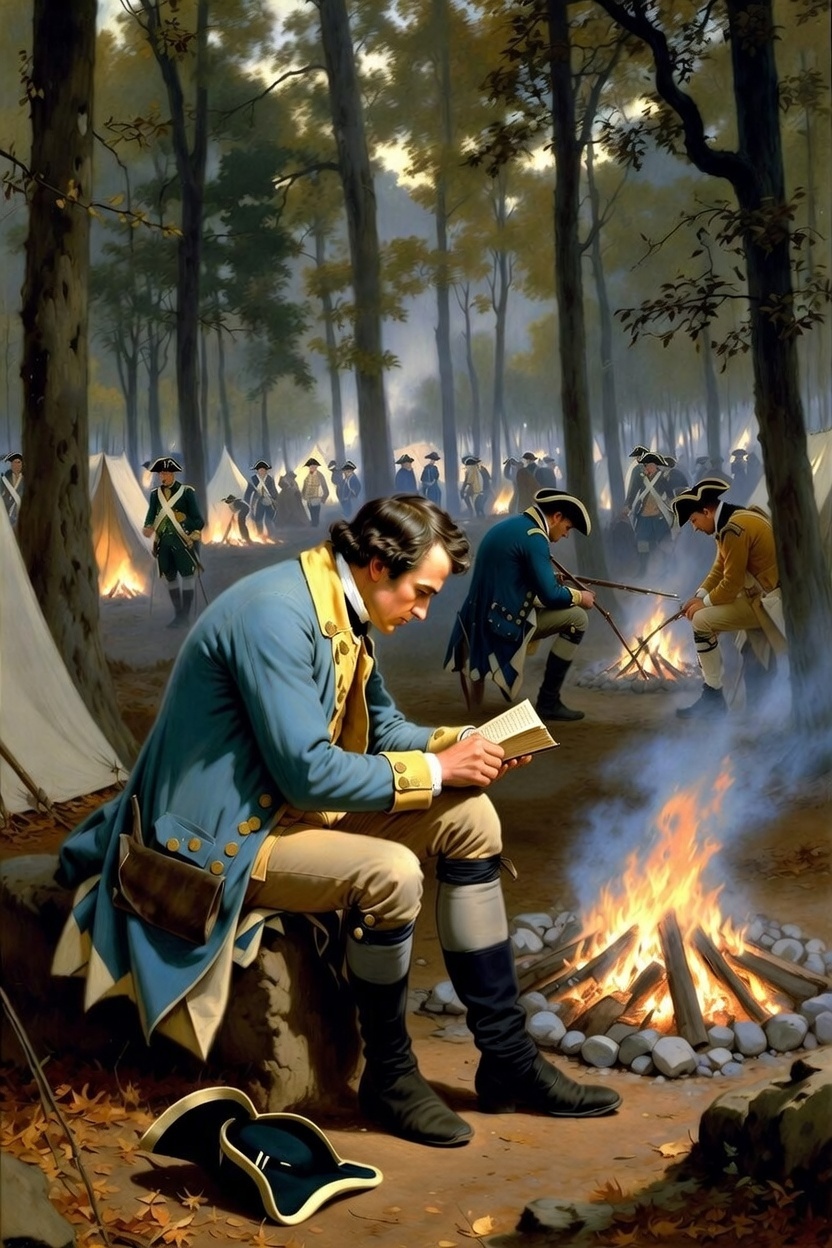
Amid the crisp autumn air of September 1777, Private Johan Frederick Emert huddled near a flickering campfire along the banks of Brandywine Creek in Pennsylvania, his woolen coat—part of the standard Continental Army uniform, dyed a faded blue and frayed from months of marching—draped over his shoulders against the evening chill cleaning his musket.

Around him, the dense woods rustled with the movements of fellow soldiers from his Pennsylvania regiment, their tricorn hats tilted low as they cleaned muskets or shared meager rations of hardtack and salted pork. The distant rumble of artillery echoed from British lines, a grim reminder of the day’s fierce engagement where Emert and his comrades had charged through smoke-filled fields, dodging grapeshot and bayonets in a desperate stand against General Howe’s advancing forces. 

Born on October 11, 1754, in Berks County, Pennsylvania, to German immigrant parents, Emert enlisted as a private in the Continental Army around the war’s early days, likely in 1776, joining the 3rd Pennsylvania Regiment under Captain John Huling and Colonels Arthur St. Clair and Joseph Wood, part of the Pennsylvania Line under Brigadier General Anthony Wayne.
This unit was dispatched in May 1776 to bolster Colonel Benedict Arnold’s retreating forces in the northern theater. Emert’s movements indicate he would have been stationed at Fort Ticonderoga, where soldiers endured harsh conditions—fortifying defenses, drilling daily, and guarding against British incursions amid the rugged wilderness of upstate New York.

Compatriots’ recollections, passed down through family oral histories, paint a picture of Emert’s likely participation in the naval clash at Lake Champlain in October 1776, where American forces delayed a British invasion from Canada. As a private, his day-to-day activities would have involved sentry duty on the lakeshore, maintaining vessels or earthworks, and foraging for supplies in a landscape of dense forests and biting cold, all while facing shortages that left the army “suffering for provisions,” as he later recounted to neighbors.

By 1777, Emert’s regiment had shifted south, aligning under General George Washington. He fought at the Battle of Brandywine on September 11, where the Continentals attempted to block the British advance on Philadelphia. Amid the chaos of musket volleys and cannon fire, Emert would have maneuvered through open fields and wooded ravines, reloading his flintlock musket under pressure while coordinating with messmates like Peter Wallwur and Isaac Stewal—fellow soldiers he mentioned in stories shared years later. The defeat led to a retreat, but Emert pressed on, likely engaging in the subsequent Battle of Germantown on October 4, a foggy assault on British positions where close-quarters combat tested the resolve of Wayne’s men.

After a brief return home—where he married Barbara Anne Neidig—Emert was drafted again but hired a substitute, unwilling to leave his new bride. Soon after, another draft prompted him to enlist voluntarily for the war’s duration, committing to nearly seven years of service in total. His path under Washington and Wayne included stints near Quebec, possibly as part of northern campaigns or garrison duties, where harsh winters meant enduring frozen outposts and limited rations. In 1779, while residing in Rockland Township, Berks County, he further contributed through patriotic service by paying a supply tax to support the Continental cause.

Emert’s service culminated at the Siege of Yorktown in October 1781, a pivotal encirclement where French and American forces trapped Lord Cornwallis’s army. As a private in the trenches, he would have dug fortifications under fire, stood watch during bombardments, and witnessed the British surrender—a moment he vividly described to his children, who recalled seeing his honorable discharge papers before they were lost in a house fire.

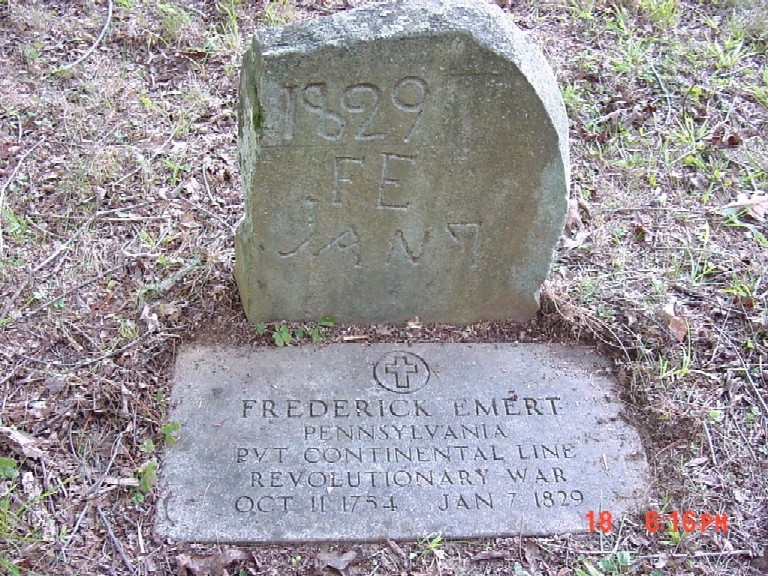
Tombstone of Frederick Emert at Emert Cove Cemetery in Sevier County, Tenn. (Photo: FindAGrave.com /Randy Emert)

Discharged at war’s end, Emert migrated south, eventually settling in what became Emerts Cove, Sevier County, Tennessee, by the early 1790s. There, he farmed the fertile valleys of the Smoky Mountains, raising a family of seven children. The Daughters of the American Revolution recognizes him as Patriot Ancestor #A036640, his service is corroborated by Continental Army rolls, pension affidavits from sons Daniel and Frederick, daughter Barbary Shults, neighbor William Smith (who served with him in the War of 1812), clergyman John Roberts, and Elizabeth Henry (widow of another veteran).

These accounts, filed in 1843–1845 for his widow’s rejected pension claim (numbered R3345V for lack of further proof), emphasize Emert’s tales of army hardships, shared over fireside conversations, underscoring the endurance of ordinary soldiers who secured independence.

Though advanced in years at age 58, Emert answered the call to arms once more during the War of 1812, enlisting for a four-month campaign in the Tennessee militia where he served alongside his neighbor William Smith against British forces. This brief but dedicated service, as attested in affidavits from his Revolutionary War pension file, underscored his lifelong commitment to defending his adopted homeland, even as he managed his farm in Emerts Cove.

Emert passed on January 7, 1829, at age 74, his legacy etched in Tennessee’s landscape and the nation’s freedom. In an era of speculation about unsung heroes, his story—pieced from family lore and military records—reminds us of the quiet valor that built America.

Frederick Emert is the Fifth Great Grandfather of the Columnist Randall Franks.

See Randall’s Revolutionary War documentary The Making of The American’s Creed and short film The American’s Creed.

The Fifer Who Crossed the Delaware: The Night That Saved a Revolution


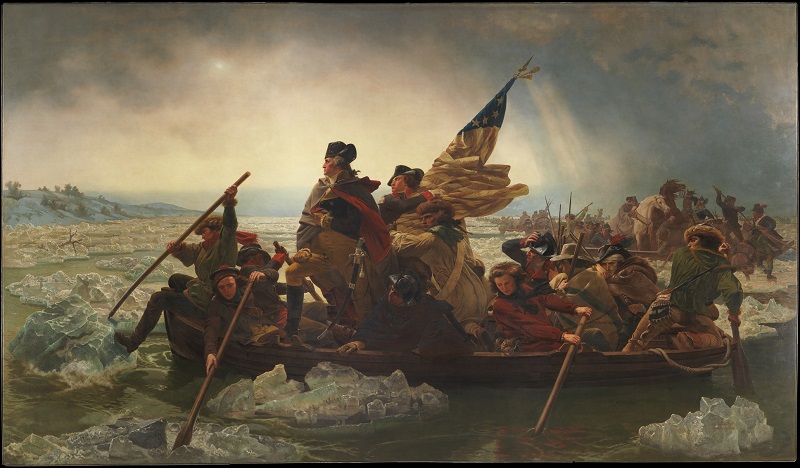
Every Christmas, hundreds of re-enactors gather on the Pennsylvania bank of the Delaware and push replica Durham boats into the black, ice-choked river. They are re-living the night of December 25–26, 1776 — the night George Washington’s ragged army made its desperate gamble to surprise the Hessians at Trenton and, in one audacious stroke, keep the American Revolution alive.

Among the 2,400 frozen men who stumbled ashore in the pre-dawn darkness was a 32-year-old fifer from Lancaster County named William Hedrick. He was no general, no celebrated captain, not even an ordinary musket-toting private. His weapon was eight inches of ebony wood. His job was to pipe the tunes that kept exhausted, frostbitten feet moving in step. By late December 1776 the cause looked lost. The Continental Army had been driven out of New York, chased across New Jersey, and pushed behind the Delaware. Enlistments were expiring. Desertions were epidemic. Congress had fled Philadelphia. Riding with the retreating columns, Thomas Paine scribbled the words that still ring: “These are the times that try men’s souls.

”Washington knew he needed a victory — any victory — before the army simply dissolved on January 1. So he chose the boldest plan imaginable: recross the river in a nor’easter, march nine miles through the night, and strike the Hessian garrison at Trenton at dawn.

William Hedrick’s company of Pennsylvania riflemen, led by Captain James Ross and attached to Major Abraham Ledsour’s battalion, was in the vanguard of that forlorn hope. Pension records and militia rolls place him in the column that formed at McKonkey’s Ferry around four o’clock on Christmas afternoon.

These were not ordinary soldiers. In the elite Pennsylvania rifle companies of 1775–1778, the fifer was first a rifleman who happened to play the fife. When the shooting started, Hedrick laid the instrument aside, shouldered his long rifle, and fought like everyone else.

By the time he reached the Delaware that Christmas night, he was already a hardened veteran. He had marched nearly a thousand miles on foot, fought in the disastrous Battle of Long Island, skirmished almost daily during the four-month retreat across New York and New Jersey, and watched the army shrink from 20,000 to barely 3,000 effectives. He had gone hungry, shoeless, and sleepless for weeks.

Imagine the scene. Ice floes thick enough to gut the boats crashed against the hulls. Men broke a path with oars and poles, advancing only yards at a time. Two horses drowned; two cannon nearly slid overboard. The password was “Victory or Death.” On that night it felt less like inspiration than weather forecast. The crossing took hours longer than planned. Instead of attacking at 5 a.m., the first troops reached Trenton after 8 a.m. — long after sunrise. Surprise seemed lost. Yet the same storm that delayed the Americans kept the Hessian pickets huddled indoors. When the Continentals finally poured down Pennington Road and King Street, many mercenaries were literally still pulling on their boots.

Washington had split his force. Sullivan’s division, including Hedrick’s riflemen, sealed the Assunpink Creek bridge while Greene struck from the north. In forty-five minutes it was over. Colonel Johann Rall lay mortally wounded; nearly 900 Hessians surrendered. The Americans lost only two men — both to the cold, not enemy fire.

On the icy road from the river to the town, Hedrick and the other musicians had played “Roslin Castle,” a haunting Scottish lament turned quickstep, and the insolent new favorite “Yankee Doodle.” The shrill notes cut through the gale and kept men from falling out to die in the snow.

Trenton was not the war’s biggest battle, but it was the most necessary. Ten days later came Princeton, and suddenly recruits were streaming back to the colors, and the Revolution had a pulse again.

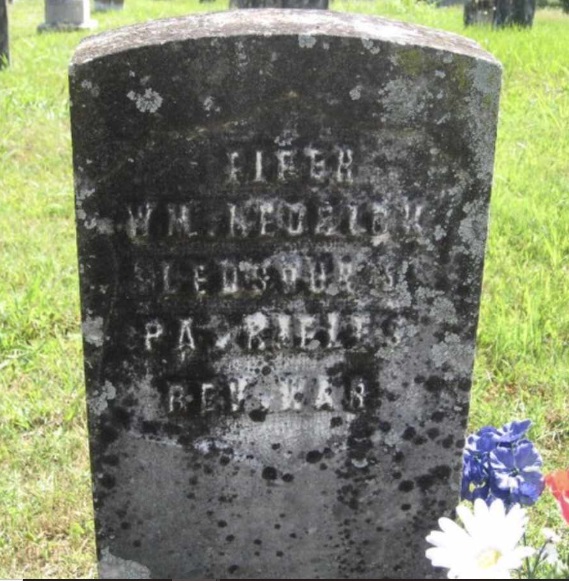
William Hedrick marched on — through the mud of Brandywine, the snows of Valley Forge, the fog of Germantown — until an honorable discharge sent him home. He headed south to the mountains of East Tennessee, raised a large family, helped plant churches and communities in Sullivan, Greene, and Sevier Counties, and lived to the remarkable age of ninety-five. In 1839 he was laid to rest beneath a simple stone at Headrick Chapel Cemetery in Wears Valley, the notes of his fife finally silent.
The paper trail is solid: National Archives pension S.40495, Lancaster County militia rolls of 1777–1778, and sworn statements from comrades who remembered the fifer who played them across the Delaware and stood beside them through the horrors of Valley Forge.

So this Christmas, when you see Leutze’s famous painting on a card or coffee mug, look past the standing Washington. There, among the straining oarsmen and the swirling ice, among the men — no fancy uniform, no epaulets, no glory. A man with just eight inches of wood at his side and the stubborn heartbeat of a nation being born within him.

His name was William Hedrick. He was my paternal six-times-great-grandfather. Because he and thousands like him kept marching that night, we are still here to tell the tale.

“Victory or Death.”
They chose victory.

If you are a man in the Northwest Georgia area and have an interest in honoring the legacies of your patriot ancestors, visit General Nathanael Greene Chapter – Sons of the American Revolution https://www.facebook.com/profile.php?id=61572762870391 to learn more about an organization you can join.

Echoes from King’s Mountain: Ancestors, Sacrifice, and the Songs of Freedom

As we draw nearer to the 250th anniversary of American independence, I find myself reflecting on the ancestors who answered the call to arms, ordinary frontiersmen who became heroes in the fight to free the colonies from British rule.
My fifth-great-grandfather, Charles Kilgore, was one of five Scotch-Irish brothers who heeded the Revolution’s summons. Born in 1744 in County Clare, Ireland, Charles traced his roots to the Kilgours of Fife, Scotland. Family lore connects them to Clan Douglas, fierce warriors who battled for Scottish independence and stood with the Jacobite risings of the 1700s.Around 1763, Charles and his brothers—Hiram, Robert, William, and James—crossed the Atlantic, settling first in North Carolina before pushing to the Virginia frontier. There, Charles married Martha McIlhaney, raised eight children on a 600-acre plantation, and joined the Washington County Militia under Captain James Dysart in Colonel William Campbell’s regiment. His four brothers enlisted alongside him. They were part of the legendary Overmountain Men, rugged settlers from beyond the Appalachian Mountains who embodied the spirit of the frontier.

In late September 1780, these men mobilized after British Major Patrick Ferguson threatened to “march over the mountains, hang their leaders, and lay waste the country with fire and sword.”
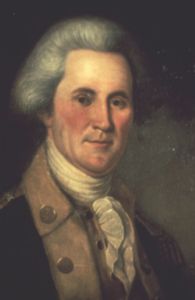
The brothers joined hundreds of others in a grueling 330-mile march over rugged terrain, enduring rain and hardship for two weeks to confront the Loyalists.
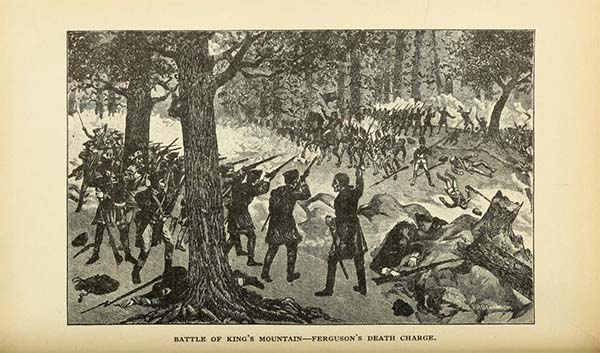
Their defining moment arrived on October 7, 1780, at Kings Mountain—a rocky, wooded spur on the North Carolina-South Carolina border that proved a pivotal turning point in the Southern Campaign of the Revolutionary War.
Roughly 900 Overmountain Men encircled about 1,100 Loyalists perched atop the ridge. Unlike traditional European line battles, the Patriots employed guerrilla tactics suited to the terrain: advancing uphill under cover of trees and rocks, using their accurate long rifles to pick off enemies while dodging bayonet charges.
The Kilgores’ militia charged from the north, pressing through thick smoke and the crack of musket fire. Hiram fell in battle; Robert and Charles were gravely wounded. Yet, they helped secure the summit as Loyalist leader Major Patrick Ferguson was slain, his forces crumbling in just over an hour.
From the southeast, my Sherrill kin—fourth- and fifth-great-grandfathers Adam and Samuel Sr., along with uncles

Uncle Col. John Sevier

Samuel Jr. and George—fought under my uncle Colonel John Sevier, their rifle fire converging with the Virginians’ assault.
On the southern flank, my sixth-great-grandfather Captain John Weir’s “South Fork Boys” pushed forward despite early losses, tightening the pincer that broke the Loyalists.The toll was stark: Loyalists suffered 157 killed, 163 wounded, and 698 captured—nearly their entire force—while Patriots lost only 28 killed and 62 wounded, a testament to their superior marksmanship and resolve.
In the aftermath, nine Loyalist officers were hanged for alleged atrocities, underscoring the war’s brutal, brother-against-brother nature.
This victory demoralized British forces in the South, boosting Patriot morale and prompting Lord Cornwallis to abandon his invasion of North Carolina.
Thomas Jefferson later hailed it as “the joyful annunciation of that turn of the tide of success which terminated the Revolutionary War with the seal of our independence,” paving the way for the decisive siege at Yorktown a year later.
Amid the chaos, my Loyalist-turned-Patriot ancestor, fifth-great-grandfather Captain Billy Green, initially defended the hilltop. Captured and sentenced to hang, he escaped and later realigned with the Patriots. This meant I had family on both sides—an experience echoed throughout history, from Scotland’s clan wars to civil conflicts worldwide.
On that fateful day, all five Kilgores stood shoulder to shoulder, shedding blood in a clash that shifted the war’s momentum. Charles, shot through the body, survived only because Martha and their young daughter Mary braved the wilderness in a wagon to retrieve him and bring him home to Virginia. Robert also recovered from his wounds, but tragically lost his life to Mingo Indians on December 31, 1782, during a hunting expedition. His family then moved in with Charles’s for a time.
Charles earned a pension in 1809 and passed away in Greene County, Tennessee, in 1823. His daughter Rebecca married Adam Sherrill in the 1790s, uniting two families of Kings Mountain veterans in bonds forged through shared sacrifice.


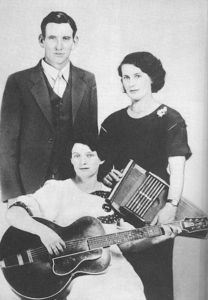
The Carter Family

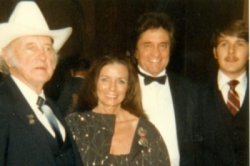
Randall Franks (right) with Johnny and June Carter Cash and Bill Monroe in 1984.

Charles and his kin remind us that the Revolution was won by everyday men and women—farmers, brothers, and families—who rose to extraordinary heights. The five Kilgores symbolize the unbreakable ties that compelled them to leave their homes and fight side by side for freedom. Because they did, generations since have lived without bowing to distant monarchs.
On a personal note, I am privileged to descend from these men. Through the Kilgore roots, I share them as grandfathers with notable figures in Appalachian music: All three original Carter Family members—A.P., Sara, and Maybelle—are my cousins. Sara and Maybelle descend from Charles, like me; A.P. from brother Robert. Thus, connecting me also to the Johnny and June Carter Cash clan. These ancestors’ lives truly gave us all something to sing about. 


A Family’s Sacrifice in the Fight for Independence

As we ease our way toward the 250th anniversary of the founding of the United States in 2026, it’s worth pausing to reflect on the profound sacrifices that birthed our nation. On July 4, 1776, 56 delegates gathered in Philadelphia to adopt the Declaration of Independence, a bold assertion of liberty that ignited a revolution.

Like many Americans, my family tree is deeply entwined with that struggle. Twenty of my ancestors stepped forward as Patriots to fight for independence, while a few aligned with the Loyalists, and others may have served among the British regulars. Their stories unfold across the colonies, in famed battles like Brandywine and King’s Mountain, as well as obscure skirmishes known mostly to historians.

Recently, my research uncovered two more Patriot ancestors—a fifth great-grandfather and a fourth great-granduncle—adding fresh layers to this personal history. One such story centers on my fifth great-grandfather, John Samples, of Richmond County, Georgia. In 1777, he joined the Georgia Militia under captains aligned with Colonel Elijah Clarke, a renowned Patriot leader celebrated for his guerrilla tactics. His service culminated in the Battle of Alligator Creek Bridge on June 30, 1778, during the third and final Patriot attempt to invade British East Florida.

Authorized by Georgia’s assembly, the campaign aimed to seize St. Augustine and halt Loyalist raids, but it was doomed by command disputes between Continental General Robert Howe and Governor John Houstoun. By late May 1778, about 1,300 men—Georgia militia and South Carolina Continentals—had advanced into Florida. On June 29, Howe occupied Fort Tonyn near modern Hilliard, Florida.

The next day, a detachment pursued retreating Loyalist Rangers led by Colonel Thomas Brown south to Alligator Creek, a swampy tributary west of present-day Callahan, Florida, near U.S. Route 301. Likely led by Colonel James Screven’s cavalry and supported by Clarke’s militia of 100–300 men from Richmond and Wilkes Counties, the Patriots assaulted a British redoubt at the bridge. The terrain was unforgiving: dense swamps, a wide ditch, and felled trees that bogged down the cavalry.

Opposing them were British regulars, Loyalist militia (including Brown’s East Florida Rangers), and Native American allies, possibly Creek or Seminole warriors, totaling 200–400 men with a numerical edge. The British unleashed a flanking ambush, sowing chaos amid the lack of distinct uniforms.

The Patriots endured heavy losses: about eight or nine killed, nine wounded, and several captured, according to accounts from the American Battlefield Trust. Clarke himself was severely wounded, and Screven was injured. British casualties were lighter, around four or five killed.

The Patriots retreated, and the expedition unraveled by July 14 due to disease, desertions, and supply failures. John Samples was among those captured in the fray.

He was imprisoned at St. Augustine’s Castillo de San Marcos, where brutal conditions—starvation, disease, and abuse—claimed many lives. Tragically, he died there, the only ancestor I know of who gave his life in the war.

Tory raids later destroyed his Richmond County home, forcing his family to flee.

In the wake of his father’s death, my fourth great-granduncle, Jesse Sampley, enlisted in 1779 at age 15 or 16.

Serving under officers like Ensign William Luker and Captain James Ryan, he fought Tories and British forces until 1783, often in South Carolina and Georgia campaigns.

Jesse’s 1833 pension application and claims for war reimbursements provide the richest details about John’s service and the family’s hardships.

As we approach a decade of semiquincentennial commemorations—from the Declaration in 2026 to the Treaty of Paris in 2033—let us remember these unsung heroes. Their valor forged our freedom. Each year, honor their memory: visit a battlefield, read a history book, or share a family story. In doing so, we keep the spirit of 1776 alive.

Check out Randall’s film The American’s Creed.

Riding Dollar Back to Common Ground

I gripped Dollar’s reins as she spun 180 degrees, testing my rusty riding skills. With effort, I turned it into a full 360, regaining control. It had been 20 years since I’d last swung a leg over a horse, and I’d lost much of my knack. Yet Dollar stayed patient with me as we worked together on the set of The American’s Creed, a historical film set during the American Revolution. Horses, like humans, prefer the company of those they trust—and I was determined to earn hers.

Randall Franks (left) as “Capt. Robert Shields” with Dollar and Butch Culpepper as “Jeremiah Weer” with Charlie on the set of The American’s Creed. (Courtesy: Peach Picked Productions: Ashley Robillard)

I’d spent my childhood glued to westerns, both films and TV shows, dreaming of the open range. My Granddad Bill had lived that life, cowboying out west in his youth at the turn of the 1900s. From what I’ve heard, he was a fine horseman, punching cows and driving steers to market. I never got to learn from him—he passed before I was born—but those old westerns gave me a glimpse of what his adventures might have been like. As an actor, I longed to star in one, though I came up in the era of police dramas like In the Heat of the Night and endless sitcoms.

Filming The American’s Creed gave me a taste of that dream, even if it wasn’t a western. I was nursing a broken leg back to health, and mounting Dollar was a struggle. I climbed up the wrong side, awkwardly lifting my mending leg over the saddle. No doubt she was annoyed—and I couldn’t blame her. In life, we all get irked by folks who rub us the wrong way. But just as Dollar tolerated my fumbling, we often have to push past slights or annoyances to find a way forward.

That day, as I steadied her after her spook, I felt a flicker of the past—those western scenes where a horse bolts and the rider hangs on. Here I was, living it, albeit in a Revolutionary War setting. Over time, Dollar and I found our rhythm, syncing our timing and intuition to nail the scenes. By the end of the shoot, we were old friends. If I ever get to do a western, I’d love to ride with her again.

The greatest lesson came clear: people drift in and out of our lives, some for a moment, others for years. Like Dollar and me, we must seek common ground to avoid facing off like gunslingers in a dusty street. Hopefully, if it comes to that, Dollar would be waiting nearby—not for a getaway, but to carry me off into the sunset. Check out more about the short film, and its documentary at RandallFranks.com/The-Americans-Creed.