The Hidden Side of Life: Trials We All Face

I have come to the conclusion that everyone, no matter how blessed, faces trials.

Some are ordinary: how to pay a bill, find a job, or cope with everyday stress. Others are far heavier. I remember a week a few years back when I was praying for friends and loved ones dealing with heart bypass surgery, Parkinson’s disease, accident recovery, cancer, and stroke. Any of these can feel insurmountable, especially when a doctor uses the word “terminal.”

Thirty-nine years ago I sat with my dad after he received a terminal diagnosis. He chose a treatment that might give him five more years if it worked. Even while facing his own death, his thoughts centered on making sure his family knew how he felt and that they would be all right without him. I never fully accepted how immediate his condition was, and I missed chances to share my feelings with him. Maybe it was the awkwardness of youth or simply not knowing how to say what I felt.

His sudden death left me more open with others for a time, unwilling to leave things unsaid. Over the years, though, I’ve drifted back into the habit of keeping those thoughts inside.
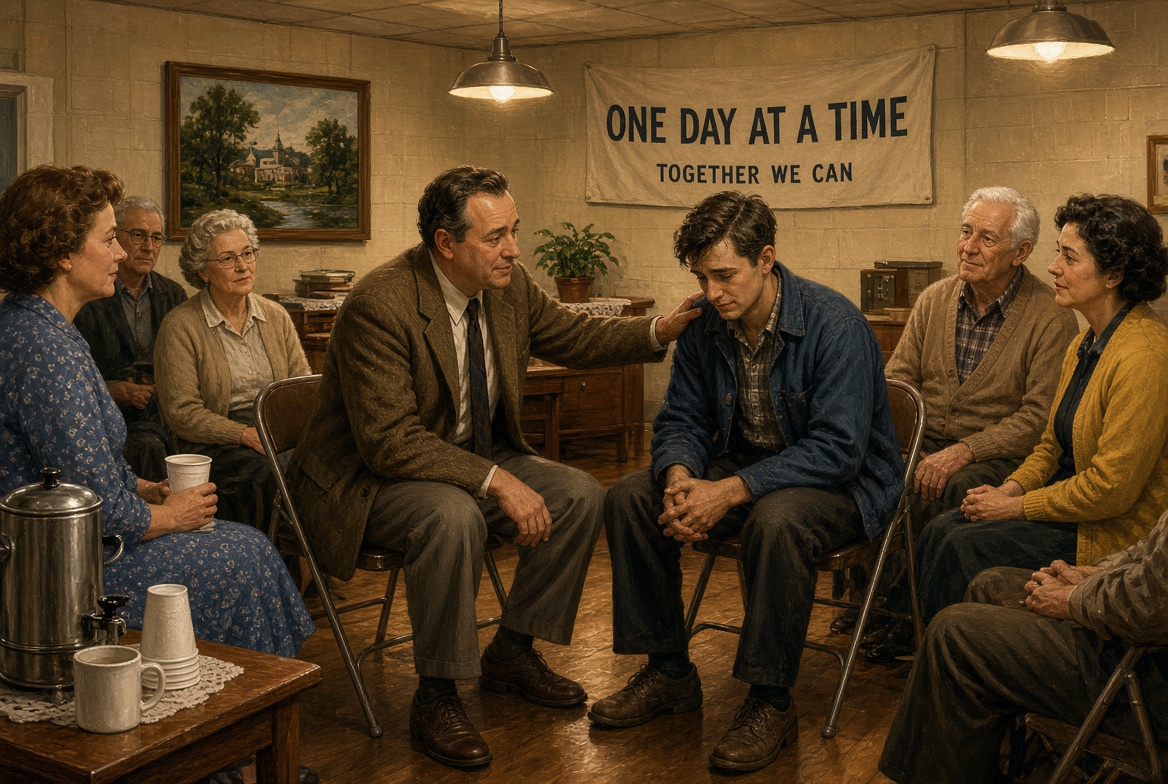
Our home church began a ministry several years ago for people caught in addiction. Has there ever been something you wanted so badly that your body ached and your mind could focus on nothing else?

When most people hear “addiction,” they think of alcohol or drugs. The list is much longer, and the damage is often the same—to the person struggling and to everyone around them. I have yet to meet anyone who cannot be pulled into some activity or fascination that consumes time, money, and energy, sometimes at real cost to themselves or those closest to them.

You may think, “How can I be addicted? I’m a good person,” or “I’m a Christian.” Consider a few less obvious possibilities: exercise, computer use, food, gambling, sex, or limerence (an obsessive romantic attachment). Any of these can become addictive.

Addiction usually involves impaired control, preoccupation with a substance or behavior, continued use despite consequences, and denial. The drive for immediate relief often overrides concern for long-term effects. Stopping suddenly can bring anxiety, irritability, cravings, nausea, and other withdrawal symptoms.

In truth, most of us have addictive tendencies. Unchecked, those tendencies can become addictions. Is there something you feel you have to watch or attend, even when it crowds out other priorities? (I’ve wondered more than once whether following every football or baseball game counts.)

I have spent much of my life encouraging young people to stay away from drugs and alcohol, and I have lost friends and family to both. I chose not to use them myself, yet I know the potential exists in me, just as it does in other members of my extended family. One step in the wrong direction can open a door. I am also a creature of habit. At times I have wrestled with behaviors that felt close to obsessive-compulsive patterns. Having worked through those, I now try to stay alert so I don’t slip into unhealthy routines.

If your church or a local nonprofit offers a recovery program, support it with whatever gifts you have. If a friend needs someone to go with them to a meeting, don’t stay home out of fear that people will assume you have a problem. Just be there.

Addiction is potentially within each of us. Some forms are simply less visible or less stigmatized, but they still affect our lives and the people we love.

Read more of Randall’s writing through his books available in our Store.
Seeing Through The Masks We Wear

Have you ever wondered what lies beyond the face someone is showing you? Are there thoughts running through their head that differ from the words coming out of their mouth or the expression on their face?

There is probably not a soul on earth who has not faced a situation in which someone they respected or liked revealed themselves as someone other than expected.

In a recent small-group Bible study I attended, we discussed how, in the South, it is not unusual to encounter someone who is so sweet and caring, with an amazing ability to turn a phrase, adding “Bless their heart” to deliver a socially acceptable put-down. Others will often smile—or sometimes roll their eyes—if they catch it.

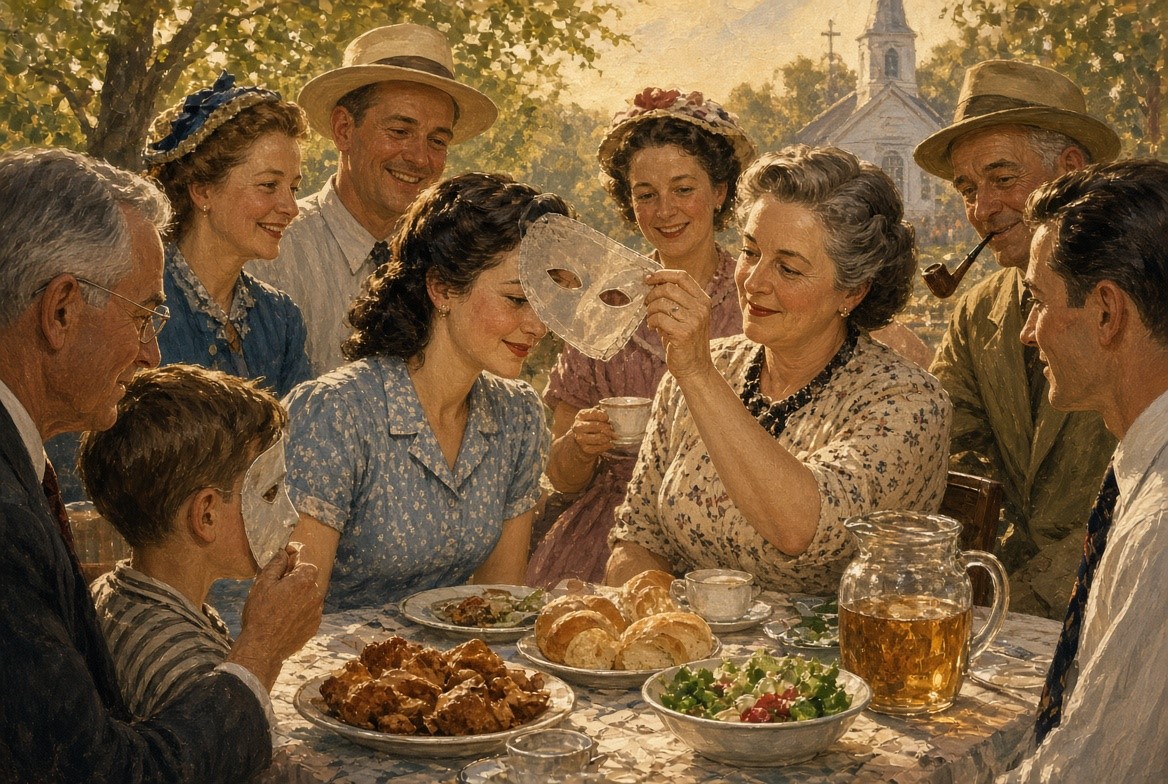
As an actor, I understand that we all wear masks. We begin creating them in childhood to gain acceptance, love, and friendship from our parents, friends, and teachers. Over time we add more of them to help us succeed, get along, and improve our relationships. By a certain point in life we have them for nearly every occasion, almost like the clothes we wear: the spouse or loved-one mask, the parent mask, the close-family mask, the distant-kin mask, the work mask, the club mask, the church mask, the close-friend mask, the acquaintance mask, the professional-peer mask, the classmate mask—and the list goes on.

We are so practiced at keeping them handy that we can change masks mid-conversation if the situation requires it, depending on whom we are with.

The thickness of the mask depends on how much we want the people around us to really know us. The goal is often to wear the thickest mask with strangers and acquaintances, thinning it as relationships grow closer so that, ideally, our true heart can be seen more clearly.

When dating, we often begin with the thickest mask, hoping that as we gradually put on thinner ones our partner will remember the best foot we put forward and forgive what we are really like. In many respects, I think this works against the process of genuine connection, yet the pattern is repeated over and over by each new hopeful seeking a soul mate.

As I have traveled through life, I have watched some of the greatest interpreters of the human condition for film and television. Watching them peel away their own mask and put on someone else’s for a role was an amazing learning process. Through the years, it has given me insight into the underlying intentions of the people I meet and come to know. I have found comfort in knowing that, at least in my experience, you can generally tell when someone is earnest and honest in their deeds and words.

I am still surprised sometimes, though—often when I have not looked closely enough at the wrapping to see beneath the mask and realize that what lies there truly deserves to be hidden from the rest of the world. If we saw it, we would only want to turn away. At times there are those who pose with a smile, then slyly berate another or try to tear them down to elevate their own standing.

I wish I could say that people like this don’t exist, but unfortunately they do. These days, most bad folks don’t even bother to put a mask on except when they are trying to evade being caught.

But the neat thing is, at least from my experience, more good folks are revealed when they remove their mask than bad ones. I pray you are one of the good folks, no matter which mask you are wearing, and I hope you always use your masks to uplift and encourage others.

Read more of Randall’s work in his books in our Store.

Song and Fellowship at the National Quartet Convention

Each fall, folks from around the country gather to celebrate the people who bless them with the Word in song—on radio, from pulpits, and on stages. For more than half a century, the week-long National Quartet Convention has been the mainstay of the Southern Gospel music calendar. Today that reunion of sorts takes place in the mountains of East Tennessee, at the LeConte Center in Pigeon Forge.

It is a week of stage appearances, visits with artists at their booths, the Singing News Fan Awards, and the Southern Gospel Music Hall of Fame inductions—this year Phil Cross, Clarke Beasley, Clayton Inman, and Conrad Cook—along with record-label receptions and get-togethers hosted by artists for the people who follow their careers.

For lovers of quartets, mixed groups, and soloists, there is no better place to catch up, get a photo, buy the latest release, share a piece of anniversary cake, or congratulate an artist on an award.

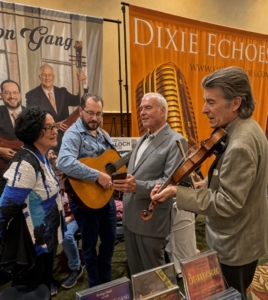
Shaye Smith and Nick Poe of the Chuck Wagon Gang and Randy Shelnut, Sr. of the Dixie Echoes with Randall Franks fiddling on Great Speckled Bird.

I was blessed to attend this year’s event. From the moment I entered the building, I found friends at every turn. I sat and visited a while, then moved through the exhibit halls, seeing groups I knew and many that were new to me. Some of those newer names would later share their gifts on a showcase stage, and sometimes on the main stage.

The musical sets are timed to the minute. Ministries including The Inspirations (2026 Singing News Favorite Quartet, and favorites in the Musician, Lead, Baritone, Bass, and Tenor categories), Jeff Tolbert and Primitive Road (Favorite Band and Young Artist), The Troy Burns Family, Karen Peck and New River (Favorite Soprano and Favorite Song, “I Speak Jesus”), The Chuck Wagon Gang, The Dixie Echoes, Jeff & Sheri Easter (Favorite Duet and Alto), The Perrys, The Kingsmen, Eleton House, and so many others bless the thousands gathered. Day after day, song after song, the love of God flows and lifts those who are there and willing to be carried higher.

The early part of each day includes special musical showcases and preaching from pastors from around the country. You can also catch artists giving television interviews, recording radio-station liners in a quiet corner, or talking with print media.

I would equate the NQC to a recharging station, where artists and music lovers alike can receive a full charge and go out for another year to spread the gospel in song—in small towns, mid-size towns, and big cities across this land.

Whether I was sitting in the audience, standing and talking with artists in the exhibit area, or taking out my fiddle to play a few tunes with longtime friends, I came away happier, hopeful, and more content to face the world.

I encourage you to make plans to attend the National Quartet Convention in Pigeon Forge next fall (natqc.com). More than that, I ask you to support the gospel groups who come to your town. If you see them in concert at a local auditorium, buy a ticket, fill a seat, bring a smile, and go home blessed. If they are in a nearby church, attend and put a generous donation in the offering.

The life they lead to uplift us is not an easy one. Your support could make the difference in a bill being paid, the bus being filled with fuel, or the group choosing between hamburgers and bologna.

Bless others so they may bless you with their gifts. If you love gospel music, show love to those who leave their homes and families to share it with us.

Read more of Randall’s writings through his books in our Store.

Black Ice, Truck on My Tail, Road My Ancestors Walked

I pushed on through the mountains, the Chevy Lumina taking the curves with surprising accuracy. Snow lay along the roads as I watched for black ice on the interstate.

I had hit black ice before, when I was about 20. I exited Atlanta’s I-285 at Doraville, heading home from a concert in Marietta. About 20 feet onto the circular ramp, the car spun out of control. Using what I had learned in driver’s ed a few years earlier, I did not fight it. I turned into the spin and prayed until the car came to rest, facing oncoming traffic.

I was blessed that it was about 2 a.m. and no one was exiting behind me. I let the car slip backward off the ice, turned around, and drove on, feeling as if I had just walked out of the scariest scene in a horror film.

Now, crossing that same kind of country, I thought of my ancestors making their way west through these mountains without the advantages of modern travel. I am sure my heart pounded much as theirs did when a bear came close, or when they tried to avoid a hunting party in the woods. Time and technology do not change the basics of the human condition. We still face fears, some imagined, some real.

Then I looked in the rearview mirror. Headlights seemed to be on top of me. My heart raced as Jim and Jesse’s “Diesel on My Tail,” a song I once recorded, began to feel like prophecy. I hugged the curves, trying to stay ahead, but I was not going fast enough in the dark, icy conditions to suit the trucker.

I moved into the other lane, even though the ice looked worse there. In the mirror, no matter where I went, the truck stayed behind me. Maybe it was only the turning roads. I kept pushing, hoping to reach the flatlands.
Finally, as we cleared the Appalachians, the truck passed and sped off into the night.

I continued home from North Carolina, more relaxed now that the ice was behind me. My greatest concern was keeping my mind occupied and my eyes open.

What makes such moments worthwhile is that they remind us the world is beautiful and filled with God’s creations, and that we can still find ourselves with a racing heart and a mind given over to fear. How we react, knowing God is with us in everything, shows whether we can keep walking the path our ancestors walked: one step at a time, into the unknown.

Read more of Randall’s writings in his books available in the Store.