Heroes or Anti-heroes: Where Have All the Good Guys Gone?

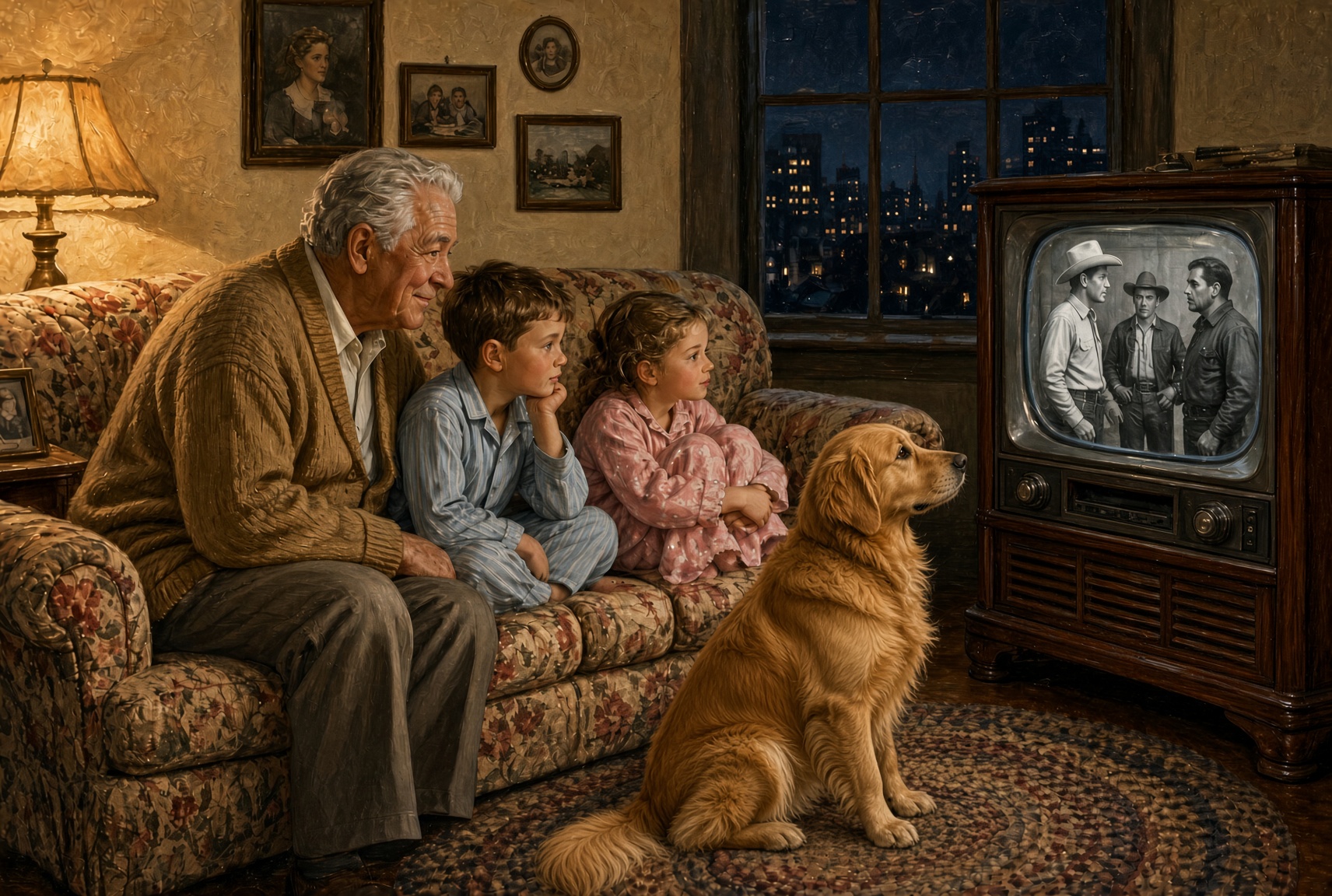
From my earliest days of watching Westerns, sci-fi shows, and family sitcoms, I was inspired by heroes who stepped up for the underdog, brought the bullies down, put criminals to justice, and defended the innocent.

Those lessons came from a generation of men and women who had fought World War II alongside America’s allies, then came home to write, produce, act, make music, and give us moral plays. Many of them had been reluctant heroes in real life, and they hoped to raise generations that treated one another well, fought for the right things, and still believed in tomorrow.

As the years went on and those legendary creators stepped off their stages, much of what was made for our entertainment turned darker. Antiheroes became a staple. People doing bad things became the main characters, and too often the writers and directors asked us to admire them. The old moral play was turned upside down.

Clear-cut good winning over evil became, well, less evil winning over more evil—and we were told the less-evil person was a hero worth looking up to.

That shift, along with similar changes in popular songs, helped erode the moral lessons Baby Boomers and Generation X were weaned on. With each new generation, writers, directors, actors, and songwriters have reflected a slightly different idea of what is good, what is bad, who is a hero, and who is evil.

People talk about a generation gap. I believe this is one of the few periods in American history when four generations—Baby Boomers through Generation Z—have occupied the same country with different moral compasses at their center.

Many of our founders said this country would succeed only if a moral, largely Christian people upheld the principles in our founding documents. As we move further from a shared sense of right and wrong, it becomes harder to keep the country and its future stable, and harder to find leaders in every field who look out for all of us.

What will the future hold for those of us raised on Roy Rogers, Gene Autry, Captain Kirk, and the fathers and mothers of The Andy Griffith Show, Father Knows Best, and Leave It to Beaver?

I fear a measure of disappointment. We now watch people raised on antiheroes—The Sopranos, Breaking Bad, and that earlier 1970s turn toward Clint Eastwood’s Dirty Harry and Charles Bronson’s Paul Kersey in Death Wish—alongside sitcom parents more interested in themselves while the children run the house, rather than being trained up in a positive way.

Will we ever go back to what it was? No. Are there still chances for redeeming lessons in television, film, and music? I think so. In every generation there are still people inspired by the good. They can be lights among their peers, and that may make the long-term difference.

Are you one of them? Can you inspire heroes rather than antiheroes? Can you write music that teaches something worth keeping? Maybe it is time to step up. Maybe the Greatest Generation did leave a lasting mark—passed down in their creativity and in everyday heroism.

Read more of Randall’s writings in his books at our Store.

A Long Stride : In My Father’s Footprints

Sometimes I wish I could find my way back to a simpler time, when things felt good, problems belonged to someone else, and worries were few and far between.

Lately my memories keep reaching back to the days when I was a boy and my father still held the center of the house.

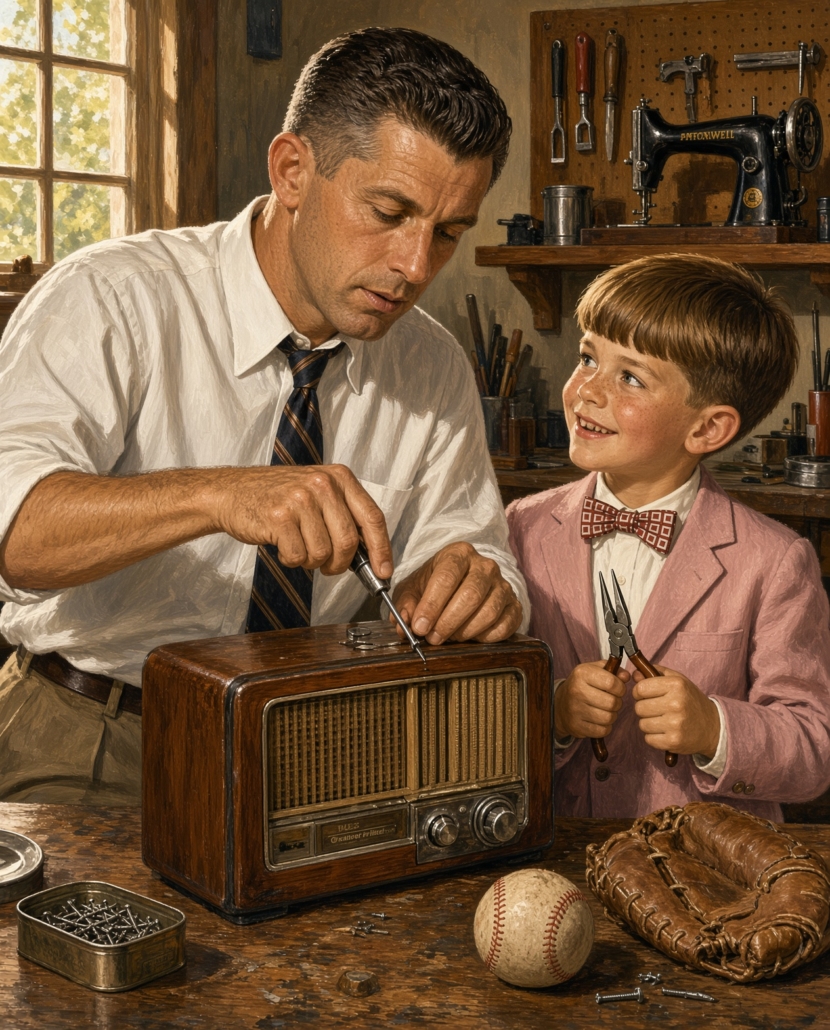
Upon his shoulders lay the challenges of the household: the bills, the unexpected repairs—plumbing, electrical, sewer, and so much more. If the television or the radio died, if the typewriter, the sewing machine, the vacuum, or even a light went out, it was Dad to the rescue. He was the fix-all and be-all of our world.

When I think of the years he was with us, I remember feeling safe whenever he was near. His stories of youth filled the car on road trips, especially when we had a chance to see something of our history. I wish I had scribbled those tales down so I could share them with you now. He could spin a yarn I imagine was passed down from his grandfather, who was said to have the same spark.

I lost a good deal of time with him to a sleep that would overtake him and hold him for hours. Once he fell into it, he was gone and could not be roused. I still wonder where he went in that slumber. Perhaps, like me today, he was dreaming of a simpler time when his own father stood at the center of his world—a place where sleep lifted the tasks, the fears, and the responsibilities. No matter. He always woke refreshed and went back at it full steam.

He taught me to pitch a baseball and to play cards. More than that, he taught the lessons of life and the skills of fixing and building—the things he believed a man should know. Men, in his world, worked, provided, taught boys to become men, advised, and solved problems. They stood ready to protect the women and the young. My mother seldom needed protecting; she was a force to be reckoned with herself.

Dad left us too soon, at 54. I miss him every day, especially when I catch myself using a lesson he left me. I wish I could once more set my little shoes in the footprints he made as he walked ahead. I hope I measure up to that stride.

Read more of Randall’s writing at the Store.

Conundrums In Life, What to Do?

We all face major conundrums in life that leave us wondering what we should do next.
I have been blessed with only a handful of such moments. Day-to-day matters usually require a quick decision and then forward momentum.

Sometimes, though, we encounter an issue—in our personal life or our business—that sends our minds into overdrive. These challenges often demand significant money or intense emotion. The outcome may correct the problem or inflict pain on us or someone we love.

Of late I seem to be facing several such situations at once. I toil over the decision-making process, only to conclude again and again that there is little I can do. You cannot stop an act of God from creating circumstances that throw friends’ and associates’ livelihoods into turmoil.

You can offer support, try to assist, and create possible paths forward, yet you are ultimately chipping away at a need far larger than any short-term effort can fully meet. Life can change on a dime. A loved one faces a health crisis that leaves you unsure how to help. You know you should do something, but what? They may refuse your help. You cannot persuade them—with all the love and compassion you can muster—to take the steps you believe are in their best interest. Push too hard and they push you away, leaving you powerless. Sometimes their condition itself prevents them from even recognizing they are in trouble.

These are the conundrums that leave us lost in uncertainty.

We seek advice from experts—people who, from a distance, feel they know the solution. We receive lists of possible actions. Yet as we study those lists we are still confronted by the original obstacles: money and pain.

In times like these I turn to prayer, hoping God will illuminate a path that offers the soonest and best relief. Sometimes the answer is not forthcoming. That silence can itself be an answer—God’s way of telling us we already know what to do; we simply need to get up off the couch and do it.

May all your conundrums be solved quickly and easily, making life better than a cool breeze on a hot summer afternoon.

To read more writings from Randall Franks, visit his books at our store.