

Beneath Leaves: Finding Renewal When Worry Piles High

There are seasons in life when worries, sorrows, fears, and quiet depressions gather like autumn leaves drifting from the branches. One by one they fall— a health scare, a strained relationship, financial strain, the ache of loneliness, or simply the relentless news of the world—until they form a thick, damp blanket over the ground. The roots that once fed our soul, drawing nourishment from faith, friendship, purpose, and simple joys, lie hidden beneath. In that shadowed place, it becomes hard to see daylight, harder still to believe spring will ever return.

Even the markers of renewal can feel distant or mocking. Easter arrives with its promise of resurrection and families gathering around tables laden with ham, dyed eggs, and laughter. Spring unfurls tender green shoots and birdsong. For many, these are moments of uplift. Yet for others, they add another layer to the pile: the contrast between outward celebration and inward heaviness only presses the leaves down more tightly. The beauty meant to heal can sometimes underscore how far we feel from blooming ourselves.

I wish the remedy were as straightforward as stepping into sunshine and saying, “It’s a beautiful day—grab a rake, clear the debris, and let the flowers push through.” In truth, I’ve tried that approach more times than I can count. A brisk walk, a forced smile, a playlist of upbeat songs—sometimes they shift the mood for an hour or two. But when the weight has settled long enough, the potential beneath begins to wither. The soul’s tender shoots, starved of light and air, curl inward. What was once vibrant growth risks becoming brittle and dry.

In my own lowest seasons, I’ve learned there is no quick sweep of the rake that suffices. Instead, the way forward is to reach deeper—down through the layers, straight to the roots themselves.

For me, those roots are twofold. First, the living Word of God, which has been the steady food of my spirit since I first opened a Bible as a youth. When sadness clouds everything, I don’t always feel like reading, but I do it anyway—sometimes just a single Psalm, or a few verses from Isaiah promising that God gives strength to the weary. I read slowly, letting the words sink in like rain after drought. “Come to me, all who labor and are heavy laden, and I will give you rest” (Matthew 11:28). Those aren’t abstract platitudes when you’re buried; they become oxygen.

The second root is people—the ones who care about me, and the ones who need care. Isolation feeds the pile; connection scatters it.

I remember one November a few years back when grief over a family loss had me retreating inward for weeks. The leaves felt suffocating. One Saturday, almost on autopilot, I answered a call from a friend who was in the hospital. I thought he might need someone to talk with so I went, to listen and pass the time. We talked for hours—mostly him talking, me listening.

Driving home that night, something shifted. My own sorrow hadn’t vanished, but it occupied less space. In the mirror of his pain, mine looked smaller—not diminished in importance, but placed in perspective. Helping him didn’t erase my burden; it redistributed the weight. I breathed more easily, as though a few leaves had been lifted away.

That pattern has repeated itself since. When worry permeates every moment, threatening to steal my breath, I step toward someone else’s need. A phone call to check on an elderly friend. Volunteering at the food pantry. Listening to an acquaintance who’s struggling. Each small act of reaching out reminds me I’m not alone in the hole—and sometimes, in joining others to dig, I find my own hands pulling me upward.

It’s counter intuitive: when you feel most trapped, the path to freedom often lies in helping set someone else free. The effort required to encourage, to serve, to show up replaces suffocating rumination with purposeful motion. Problems that loomed gigantic shrink when held next to another’s hardship. Kindness becomes the wind that scatters leaves.

Of course, this isn’t a cure-all. Some burdens require professional help—and seeking it is itself an act of courage and connection. Nor does reaching out magically dissolve every worry. But it does lighten the load enough to glimpse daylight again.

So if the pile feels heavy this season, don’t wait for the wind to do the work. Head to the shed—or the hardware store—and pick up that rake. Better yet, grab a shovel too. Start clearing space around you: a conversation, a kind deed, a verse that speaks directly to your heart. Root yourself deeper in God’s promises and in the lives of those around you.

In time, you may notice the first green shoots breaking through. Hope, fragile at first, begins to rise. Kindness takes root. Enthusiasm stirs. The very act of tending others’ gardens revives your own.

Spring always comes. Sometimes we just need to rake away what’s covering it—and in helping others uncover their light, we rediscover ours.

Read more of Randall’s work in Seeing Faith : A Devotional.
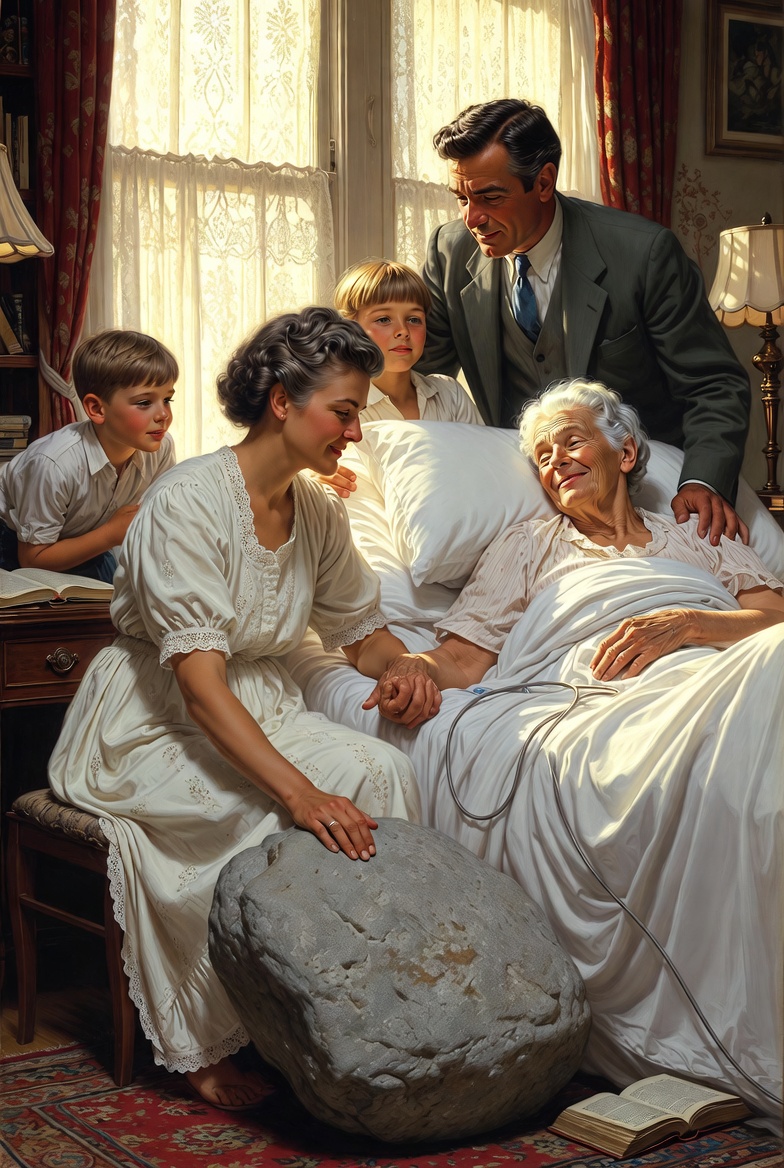
May Your Days Be Many and Your Painful Moments Few

There are many times in my life when I have searched for the reason someone I care about becomes ill or suffers through a series of events.

I have sat by the bedside, watching tubes connected to a loved one’s body, and seen people struggle to find a new normal after a health crisis.

I have witnessed the emotional anguish when relationships and family issues inflict such pain that “suffering” is the only word that fits.

Often we look to God and cry, “Why? They are so good. They give in so many ways. Why do they have to suffer?”Then I remember: suffering is simply part of the human condition. It does not matter how good or how flawed we are. Suffering comes when it comes.Although our own choices can certainly bring self-inflicted pain, everyone receives a portion of hardship at some point — through heartache, illness, sudden accident, loss, or even the simplest of occurrences.The real question is how we handle it. Do we wallow in the suffering? Do we use it to evoke sympathy and feed a sense of entitlement?

We all carry a piece of the same heavy stone — the one life forces us to pound our days against until it yields pain. Some manage to lay it down and walk on. Others carry it with them every day.

Should we suffer gracefully? Is that even possible? I believe it is — for some. I have watched people endure devastating circumstances with the strength of steel, emerging stronger on the other side.I have also seen others face death with quiet dignity, trying to lighten the burden for those they leave behind.

Do my sufferings compare to yours? Never let yourself be drawn into that conversation. When someone is hurting, lift their load if you can, and encourage them to keep moving rather than measuring pain against pain. Hopefully they will not feel the need to pass their stone on to someone else.

Our calling is to uplift those who cross our path — but never to enable self-pity to swallow them whole.

Does God play a role in these experiences? Some blame Him when life turns cruel. Others reach for Him in the fiercest storm. For me, I can only say that when I seek Him in my darkest moments, He meets me with comfort in His perfect time.

The answer, if it is to be found at all, must be discovered within each of us as we walk through what life — and love — places before us.

I pray your days be many and your painful moments few.

Read more from Randall in Seeing Faith : A Devotional or other books in the store

Frontier Guardians : A Legacy of Patriot Sacrifice

In the quiet hills of Ottway, Greene County, Tennessee, the small Malone Cemetery guards a powerful story of generational sacrifice. Here lie two Revolutionary-era veterans: John Joseph Malone Sr. (1724–1783) and his son, John Malone Jr. (1752–1823). Father and son, buried side by side, their graves mark not just a family plot, but a testament to the raw courage that secured America’s western frontier.
John Joseph Malone Sr.’s path to patriotism began in Somerset County, Maryland, where he was born and raised a family with wife Sarah Hart. As colonial tensions simmered, he saw early militia duty in Maryland: in 1757 or 1758, he served in Captain Thomas Norris’ Company, with payment delayed until 1767 (£1 10s for 30 days of attendance). Before long, the pull of western lands drew him southward. By 1774, records place him—and remarkably, his young adult son—in the thick of Lord Dunmore’s War, a brutal prelude to the Revolution.

Serving together in Captain David Looney’s Company of Virginia militia (from Fincastle County), the Malones helped defend settlers against Shawnee raids over the Ohio Valley. Their unit was assigned to guard the Clinch River frontier, patrolling under Lieutenants Daniel Boone, Gilbert Christian, and John Cox to protect settlements while the main Virginia forces engaged elsewhere.
Notably, John Sr.’s other sons, William (b. ~1759) and George (b. ~1760), also served in this conflict, contributing to the family’s collective defense efforts.
The broader war exploded on October 10, 1774, at the Battle of Point Pleasant—a thunderous clash at the confluence of the Ohio and Kanawha Rivers. In foggy dawn light, Chief Cornstalk’s 300–500 warriors attempted a surprise assault on Colonel Andrew Lewis’s 1,100 Virginians. What followed was a ferocious all-day fight: rifle fire cracking through the trees, warriors shouting war cries from concealed positions, militiamen holding lines in desperate hand-to-hand combat.Cornstalk himself rallied his men with the legendary cry, “Be strong! Be strong!” Yet the Virginians prevailed, though at grievous cost—75 killed and 140 wounded in what some called the bloodiest frontier battle against Native forces. The victory forced a treaty opening Kentucky to settlement and stoked revolutionary fires against British policies seen as favoring Native allies.
By the mid-1770s, the Malones had migrated to the Holston River settlements (future eastern Tennessee). In 1775, a John Malone (likely Sr. or Jr.) appeared in Captain George Matthews’ Company from Augusta County, Virginia, amid escalating patriot mobilizations.
In 1777, John Sr. joined fellow settlers in signing a bold petition affirming patriot loyalty and seeking North Carolina’s protection amid Tory and Cherokee threats. Throughout the Revolutionary War, his service shifted to vital local defense: scouting raids, guarding forts, and holding the volatile frontier where British-incited attacks nearly unraveled the southern cause.
Evoking the rugged riflemen of the 1770s backcountry—ordinary farmers like Malone, armed with long rifles and unyielding resolve.
Malone did not live to see final victory, dying in 1783—the year peace was signed—and resting in the cemetery that bears his name. His son, also a veteran, joined him decades later. Both received postwar land grants for their service.
Though not always listed in early official DAR rolls, their patriot status endures through grave markers, militia records (including those qualifying some descendants for modern SAR/DAR membership), and family tradition.
In an era of Yorktown glory, the Malones remind us: Liberty was won in forgotten riverbank battles and watchful frontier nights, often by fathers and sons standing together.
As America’s 250th anniversary nears, stories like this call us to remember the hidden heroes in our own family trees. Who fought unseen in yours?
Read more about his family in A Mountain Pearl : Appalachian Reminiscing and Recipes available at www.RandallFranks.com/Store .
John Joseph Malone, Sr. is the maternal sixth great grandfather of the author.

Loving Beyond Measure : Being There When It Matters Most

Some of the most difficult times to watch are when someone we know is trying to be there for a loved one who is coming to the end of their journey. As I think back through the years, I remember watching my parents as they reached out to support friends or relatives in such times.

If the loved one was elsewhere, they would close up the business, and off they’d go for an undetermined amount of time to just be present. There to be called upon if needed for an extra pair of hands and legs to: run errands, do day-to-day tasks, cook, or just simply sit, talk, laugh, console, remember, and pray.

I saw my parents do this time and time again. I know they drew no financial benefit from what they were doing. Their only reward was in knowing they were serving Christ with their actions.

Sometimes their presence reached beyond the caregivers to the patient, and I know that brought peace over each of them when they knew they had comforted someone as they prepared to cross over.

As a small boy, I watched this routine many times as they said goodbye to former co-workers, neighbors, and friends from throughout their lives, and of course, relatives of every description who had impacted them. I vaguely remember one period in my childhood when I felt I was spending more time in hospitals and funeral homes than at school, but death comes at God’s appointment, not on our timetables.

I am now at a similar point in my life, as they were when they were saying goodbye to so many. So, I have become readily cognizant that, like my folks, many of those I know are being called—some old, some young—but it seems to happen more with every passing year. As I reflect on what I can I do to support their loved ones, I think back on the model that my parents gave me. I try to simply be present whenever possible to offer support and help them walk down the path I have already walked. I know that hope, comfort, and strength should be offered along the path, and I only pray that I can be an instrument to provide some aspect of these to all concerned along the final journey.

Most of us know someone who is facing this point in life. What are you doing to support them and their circle of caregivers? I encourage you to find some way to make a difference; you may be able to leave a message of love that changes a life forever and passes a legacy of love to your children as they see how you help others in a time of life we all must face.

Read more of Randall’s writings in Seeing Faith : A Devotional .