Cast into Memory: Reflections on a Fishing Trip

Ripples float endlessly across the lake as a large frog croaks in the distance.
The line running from the end of my pole drifts slightly with the light current, pulling away to my left as the red-and-white float bobs along with the ripples.

Much of my first fishing adventure had been spent simply trying to get the worm-baited hook into the water. My childhood attempts at fishing with my dad, especially early on, often mirrored the classic episode of The Andy Griffith Show in which Howard Sprague spends more time with his hook caught in a tree—or his own pants—than in the water.

In retrospect, my dad’s patience as he taught me the basics and answered my endless questions was remarkable: Why do fish eat worms? Why do we have to put the hook through the worm—can’t we just throw them in and let the fish eat them? Why do we need a float on the line? And why do I seem to do better when I cast the line behind me instead of in front?

These are just a few of the questions I still remember.My father was a lot like me—outdoor sports weren’t really his thing. Yet he believed it was important for me to learn them, and more importantly, for us to share the experiences he had once enjoyed with his own father and uncles. In the midst of those simple lessons, deeper truths were quietly passed along.

The bonds created between a father and son through positive shared experiences; a growing respect for the natural world and the people and creatures who share it with us; and a clearer understanding of what is expected of you when you become a man.

I am so grateful he took that time with me. Often, those moments seemed strategically placed around the toughest points in my life, when I needed his input, his lessons, his hope, and his insights the most.

By establishing that groundwork when I was young, our relationship had a smoother path as the years passed. Even as an older teen, when I began testing the boundaries by asserting my own authority, we were able to work through those tense moments. What could have driven us apart instead became teachable experiences that strengthened our bond.

Perhaps my father’s early passing forever set my perspective of our relationship in the warm nostalgia of youth. We never quite reached the “best friends” stage that often develops between fathers and adult sons, because he was still very much in the role of dad. That role would never have fully ended, of course, but after college, as I took on more responsibility for my own life, I had hoped our conversations could have taken on a different, more equal form.

It is this time of year when my father’s memory feels closest. We shared so much during the warm months of the year. I am thankful that God placed me in a family with two parents who were present and actively involved. So many young people do not have that blessing. As the news of the world seeps into my awareness, I can’t help but wonder how many troubling headlines might have been prevented if more mothers and fathers had been present and participating in their children’s lives.

Are you present in your children’s lives? Are you teaching them the lessons they need? Do they show respect for other people, and creatures? If not, may I suggest a fishing trip?

There is something iconic and idyllic about those opening shots of The Andy Griffith Show, with Andy and Opie Taylor walking along a country road, fishing poles over their shoulders. Funny how so many of us still long for that kind of simplicity. We may never fully reclaim it, but it never hurts to take the walk.“So, take down your fishin’ pole.”

Find more stories from Randall in his books in our STORE.

A Narrow Escape from the Battle of Wyoming

Retreating on foot through the smoke and chaos, young Sergeant Giles Parman pulled his musket close and slipped into an overgrown thicket, using a fallen oak log as cover. Three Iroquois warriors passed within yards of him, their war cries echoing as they hunted stragglers. That desperate moment of survival would haunt him for the rest of his life.

One of the greatest motivating forces in wartime is the stories of fellow countrymen who suffer at the hands of the enemy. My 6th great-grandparents, Giles and Elizabeth Parman, lived such a story—one deeply interwoven with one of the Revolutionary War’s most devastating frontier defeats.

The Battle of Wyoming, also known as the Wyoming Massacre, occurred on July 3, 1778. What began as a military engagement soon became a sensationalized horror that spread across the colonies, fueling outrage and patriotic resolve.

Giles Franklin Parman Sr. (SAR Patriot # P-265930), born in 1758 in the Wyoming Valley, and his wife Elizabeth Penn were raising two young children on their roughly 100-acre homestead in the Plymouth District. At the time, this area was part of Northampton County, Pennsylvania (later Luzerne County). The Wyoming Valley itself formed a fertile, canoe-shaped corridor stretching 20 to 25 miles along the North Branch of the Susquehanna River and measuring about 3 to 6 miles wide between the flanking Appalachian mountain ridges.

Word of the invading force spread rapidly through the valley’s tight-knit farming communities. A mixed army of British-allied Loyalist Rangers—about 110 men under Major John Butler—and roughly 460–600 Iroquois warriors, primarily Seneca led by chiefs Sayenqueraghta (Old Smoke) and Cornplanter, had entered the northern valley around June 30–July 1. They quickly overran smaller outposts, destroying farms, running off livestock, and killing or capturing some residents in the prelude to the main assault.

At about age 19–20, Giles was already serving in the Pennsylvania militia, which required all able-bodied men aged 18–53 to answer the call. As a sergeant in the Northampton County Militia, he likely led a small squad of 10–20 local farmers. With his own homestead threatened and his young family at risk, he probably loaded Elizabeth and the children into a wagon and hurried them to the safety of Forty Fort (near modern Kingston/Wilkes-Barre), the main Patriot stronghold, before mustering with his men.

Inside Forty Fort, a heated debate raged among the roughly 375 Patriot defenders (five companies of militia plus a small Continental detachment). Lieutenant Colonel Zebulon Butler, a Continental officer home on furlough, and Colonel Nathan Denison urged caution, advising the men to remain behind the stockade and await reinforcements. Hot-headed subordinates, including Captain Lazarus Stewart, demanded an immediate offensive to protect homes and families. The majority voted to march out.

On the hot afternoon of July 3, the Patriot force—accompanied by fife and drum playing “St. Patrick’s Day in the Morning”—advanced northward from Forty Fort to open ground near Kingston. Giles and his men joined the formation as the Patriots established a battle line and initially pushed back the Loyalist Rangers with disciplined volleys. The crack of musket fire filled the air, but the line’s terrifying collapse soon became apparent amid smoke and screams as the right flank gave way under the hidden assault by Iroquois warriors.

Giles and his squad were suddenly inundated by war cries and a galling fire that shattered the Patriot line. The battle turned into a chaotic rout within 30–45 minutes. Panic spread as men fled toward the river, woods, or forts. Historical estimates place Patriot deaths at 160–300 or more in the fighting and immediate pursuit, with many scalped or killed while trying to escape. Loyalist and Iroquois losses remained light.

Giles survived the battle and made a desperate way back toward his family, with pursuers close behind. The scene around him was one of horror—neighbors cut down, the valley’s defenders broken in what colonists quickly called a “massacre.”

The exact path Giles and his young family took in the immediate aftermath has been lost to time. Did they remain sheltered in Forty Fort? Or did they risk returning briefly to their Plymouth District homestead to salvage what they could?

On July 4, Colonel Denison surrendered the fort under terms negotiated with Major Butler: the defenders would not take up arms again, and private property would ostensibly be respected. Family accounts and lore suggest Giles continued fighting for a total of about seven years in militia service (a figure repeated alongside his friend Michael Girdner), so he may not have been present for the formal surrender—allowing him to keep defending the region without strictly honoring the agreement.

Despite the capitulation, discipline among some Iroquois warriors broke. In the hours and days that followed, scattered killings, plundering, and burnings occurred across the valley. Homes and farms were looted and torched; livestock was driven off. While Major Butler largely restrained his white troops and claimed no non-combatants were harmed, the frontier reality included real brutality and revenge—motivated in part by earlier Patriot raids on Iroquois villages. Exaggerated tales of atrocities (including stories of the debated “Bloody Rock”) spread rapidly through colonial newspapers, inflaming public fury and helping inspire the 1779 Sullivan Expedition against the Iroquois.

Giles and Elizabeth helped bury and mourn neighbors and friends. They endured the “Great Runaway”—the desperate flight of hundreds of women, children, and elderly into the mountains and swamps, where many perished from exposure. Giles continued militia duties protecting the frontier through much of the remaining war, a common pattern for Northampton County men focused on local defense rather than distant Continental campaigns.

After the war, the family remained in Pennsylvania for a time. Giles sold and migrated westward around 1792–1793 to Greene County, Tennessee, settling along the Nolichucky River. There he served as a justice of the peace, road overseer, election inspector, and helped found the Flat Branch/New Providence Baptist Church in 1803. Elizabeth died before January 10, 1799. Giles then remarried Phoebe (Gilbert) Woolsey. Across both marriages, he raised roughly 11–12 children. Later, the family moved to Knox County, Kentucky (near modern Corbin), where Giles received a land grant, built a plantation on the Cumberland River, and raised horses. He died there in 1832.

Giles represents the archetypal Revolutionary frontier Patriot: an ordinary young farmer and family man thrust into extraordinary circumstances. Unlike officers or Continental soldiers in major eastern battles, he and thousands like him in the Pennsylvania and New York back country fought a grinding, personal war of home defense against raids that blurred the lines between military action and civilian terror. His survival at Wyoming, continued service, and subsequent life as a community leader and westward migrant embody the Revolutionary promise—defending liberty on the edge of settlement, then helping build new communities in Tennessee and Kentucky as the nation expanded. Giles’s life mirrors the resilience of countless unsung Patriots who paid the price for the freedoms that followed.

Read more of Randall’s writings in his others books found at Randall Franks Store .

No man is an island: The lasting effect of friends

John Donne wrote, centuries ago, “No man is an island.”

Sometimes I catch myself living as though I were one anyway.

If we are lucky we surround ourselves with family, friends, and acquaintances. Yet how often do we truly belong to one another? Some of us seldom leave the self-imposed exile of our personal islands long enough to share a sunset, a walk on the beach, or the sight of a kite snapping in the sea breeze.

When I stand before the mirror, the man looking back at me is no longer the little boy who once stood there. I wonder: Did the choices I made widen his world, or did they simply add another layer of sand to the shoreline of his isolation? Have I built bridges to the mainland, or have I merely reinforced the water around me?

Life has a way of answering that question when we least expect it. A note arrives, a memory surfaces, a few words on a screen remind us that Donne was right: no matter how isolated we try to become, we remain part of the main.

Years ago the connections came by letter and long phone calls. Today our islands come equipped with an umbilical cord called the internet. I can scroll through the status updates of hundreds of “friends” without ever speaking to a soul. The illusion of connection is effortless — and sometimes genuinely helpful. Not long ago a childhood friend posted a simple message wishing to right some old, perceived wrongs and wipe the slate clean. In minutes we were talking again after decades of silence.

So the technology can build bridges. But it can also keep us staring at screens instead of looking into one another’s faces. We trade handshakes for heart emojis, shared laughter for shared posts. That is a tremendous loss.

In the end, friends — real, present, flesh-and-blood friends — are what pull us off our islands and onto the continent Donne described. Their lasting effect is not measured in likes or follows. It is measured in the simple, irreplaceable moments when we stand together on the same patch of sand, watching the same kite dance against the sky.

Read more from Randall Franks in his Encouragers book series.

What’s Next? A Question Fuels a Lifetime of Achievement

I can still remember standing in the doorway of the kitchen as a young boy, watching my mother tackle one business project after another from the kitchen table which served as he desk. She moved with purpose and quiet intensity—papers spread across the table, phone pressed to her ear, always thinking several steps ahead. The moment she completed one task, she would barely pause before saying with renewed energy, “What’s Next?”

In many respects, that simple question has shaped my entire life and career. I finish one task, complete one project, or reach a significant goal, then almost immediately refocus my attention on whatever challenge or opportunity lies ahead.

By moving steadily from endeavor to endeavor while always keeping our eyes fixed forward, we can achieve far more than we ever thought possible. Success becomes less a final destination and more a series of stepping stones leading to something greater.

Many people, however, choose to rest upon the completion of their objectives. They spend days, weeks, or even longer looking back, reliving and recounting their victories. Celebration and gratitude are healthy and necessary—but only if they remain a moment, not a lifestyle. It’s remarkably easy to let past successes quietly erode our forward momentum. We become emotionally attached to the ways we’ve always done things, much like a runner who keeps glancing back at the competitors instead of focusing on the finish line ahead. Markets evolve. Technology advances. Customer needs and expectations shift. Without the discipline to keep asking “What’s Next?”, it’s all too easy to become stagnant.

What’s Next?

The answer might be: I need to honestly re-evaluate why the latest project did not surpass the success of an earlier one. What lessons went unlearned? Where did complacency creep in? This kind of fearless reflection turns yesterday’s results into tomorrow’s fuel.

What’s Next?

The answer might be: I should chart a bold new path—one that brings us closer to achieving a goal we never even dared to imagine possible. One that stretches our capabilities and inspires everyone around us.

What’s Next?

The answer might be: I simply need to pause each evening and ask myself the same question my mother lived by, then take one small step in that direction.

God grants each of us the ability to imagine it, the will to strive toward it, and the hope to achieve it. The real question is whether we will have the courage to keep asking, even when the path feels uncertain.

I pray that your “it”—whatever goal or calling stirs in your heart right now—enlightens, emboldens, and uplifts the world, and that it gives fresh courage to all of us who continue to wonder, “What’s Next?”

Read more about Randall’s life in Encouragers I, II, and III.

Beneath Leaves: Finding Renewal When Worry Piles High

There are seasons in life when worries, sorrows, fears, and quiet depressions gather like autumn leaves drifting from the branches. One by one they fall— a health scare, a strained relationship, financial strain, the ache of loneliness, or simply the relentless news of the world—until they form a thick, damp blanket over the ground. The roots that once fed our soul, drawing nourishment from faith, friendship, purpose, and simple joys, lie hidden beneath. In that shadowed place, it becomes hard to see daylight, harder still to believe spring will ever return.

Even the markers of renewal can feel distant or mocking. Easter arrives with its promise of resurrection and families gathering around tables laden with ham, dyed eggs, and laughter. Spring unfurls tender green shoots and birdsong. For many, these are moments of uplift. Yet for others, they add another layer to the pile: the contrast between outward celebration and inward heaviness only presses the leaves down more tightly. The beauty meant to heal can sometimes underscore how far we feel from blooming ourselves.

I wish the remedy were as straightforward as stepping into sunshine and saying, “It’s a beautiful day—grab a rake, clear the debris, and let the flowers push through.” In truth, I’ve tried that approach more times than I can count. A brisk walk, a forced smile, a playlist of upbeat songs—sometimes they shift the mood for an hour or two. But when the weight has settled long enough, the potential beneath begins to wither. The soul’s tender shoots, starved of light and air, curl inward. What was once vibrant growth risks becoming brittle and dry.

In my own lowest seasons, I’ve learned there is no quick sweep of the rake that suffices. Instead, the way forward is to reach deeper—down through the layers, straight to the roots themselves.

For me, those roots are twofold. First, the living Word of God, which has been the steady food of my spirit since I first opened a Bible as a youth. When sadness clouds everything, I don’t always feel like reading, but I do it anyway—sometimes just a single Psalm, or a few verses from Isaiah promising that God gives strength to the weary. I read slowly, letting the words sink in like rain after drought. “Come to me, all who labor and are heavy laden, and I will give you rest” (Matthew 11:28). Those aren’t abstract platitudes when you’re buried; they become oxygen.

The second root is people—the ones who care about me, and the ones who need care. Isolation feeds the pile; connection scatters it.

I remember one November a few years back when grief over a family loss had me retreating inward for weeks. The leaves felt suffocating. One Saturday, almost on autopilot, I answered a call from a friend who was in the hospital. I thought he might need someone to talk with so I went, to listen and pass the time. We talked for hours—mostly him talking, me listening.

Driving home that night, something shifted. My own sorrow hadn’t vanished, but it occupied less space. In the mirror of his pain, mine looked smaller—not diminished in importance, but placed in perspective. Helping him didn’t erase my burden; it redistributed the weight. I breathed more easily, as though a few leaves had been lifted away.

That pattern has repeated itself since. When worry permeates every moment, threatening to steal my breath, I step toward someone else’s need. A phone call to check on an elderly friend. Volunteering at the food pantry. Listening to an acquaintance who’s struggling. Each small act of reaching out reminds me I’m not alone in the hole—and sometimes, in joining others to dig, I find my own hands pulling me upward.

It’s counter intuitive: when you feel most trapped, the path to freedom often lies in helping set someone else free. The effort required to encourage, to serve, to show up replaces suffocating rumination with purposeful motion. Problems that loomed gigantic shrink when held next to another’s hardship. Kindness becomes the wind that scatters leaves.

Of course, this isn’t a cure-all. Some burdens require professional help—and seeking it is itself an act of courage and connection. Nor does reaching out magically dissolve every worry. But it does lighten the load enough to glimpse daylight again.

So if the pile feels heavy this season, don’t wait for the wind to do the work. Head to the shed—or the hardware store—and pick up that rake. Better yet, grab a shovel too. Start clearing space around you: a conversation, a kind deed, a verse that speaks directly to your heart. Root yourself deeper in God’s promises and in the lives of those around you.

In time, you may notice the first green shoots breaking through. Hope, fragile at first, begins to rise. Kindness takes root. Enthusiasm stirs. The very act of tending others’ gardens revives your own.

Spring always comes. Sometimes we just need to rake away what’s covering it—and in helping others uncover their light, we rediscover ours.

Read more of Randall’s work in Seeing Faith : A Devotional.

May Your Days Be Many and Your Painful Moments Few

There are many times in my life when I have searched for the reason someone I care about becomes ill or suffers through a series of events.

I have sat by the bedside, watching tubes connected to a loved one’s body, and seen people struggle to find a new normal after a health crisis.

I have witnessed the emotional anguish when relationships and family issues inflict such pain that “suffering” is the only word that fits.

Often we look to God and cry, “Why? They are so good. They give in so many ways. Why do they have to suffer?”Then I remember: suffering is simply part of the human condition. It does not matter how good or how flawed we are. Suffering comes when it comes.Although our own choices can certainly bring self-inflicted pain, everyone receives a portion of hardship at some point — through heartache, illness, sudden accident, loss, or even the simplest of occurrences.The real question is how we handle it. Do we wallow in the suffering? Do we use it to evoke sympathy and feed a sense of entitlement?

We all carry a piece of the same heavy stone — the one life forces us to pound our days against until it yields pain. Some manage to lay it down and walk on. Others carry it with them every day.

Should we suffer gracefully? Is that even possible? I believe it is — for some. I have watched people endure devastating circumstances with the strength of steel, emerging stronger on the other side.I have also seen others face death with quiet dignity, trying to lighten the burden for those they leave behind.

Do my sufferings compare to yours? Never let yourself be drawn into that conversation. When someone is hurting, lift their load if you can, and encourage them to keep moving rather than measuring pain against pain. Hopefully they will not feel the need to pass their stone on to someone else.

Our calling is to uplift those who cross our path — but never to enable self-pity to swallow them whole.

Does God play a role in these experiences? Some blame Him when life turns cruel. Others reach for Him in the fiercest storm. For me, I can only say that when I seek Him in my darkest moments, He meets me with comfort in His perfect time.

The answer, if it is to be found at all, must be discovered within each of us as we walk through what life — and love — places before us.

I pray your days be many and your painful moments few.

Read more from Randall in Seeing Faith : A Devotional or other books in the store

Frontier Guardians : A Legacy of Patriot Sacrifice

In the quiet hills of Ottway, Greene County, Tennessee, the small Malone Cemetery guards a powerful story of generational sacrifice. Here lie two Revolutionary-era veterans: John Joseph Malone Sr. (1724–1783) and his son, John Malone Jr. (1752–1823). Father and son, buried side by side, their graves mark not just a family plot, but a testament to the raw courage that secured America’s western frontier.
John Joseph Malone Sr.’s path to patriotism began in Somerset County, Maryland, where he was born and raised a family with wife Sarah Hart. As colonial tensions simmered, he saw early militia duty in Maryland: in 1757 or 1758, he served in Captain Thomas Norris’ Company, with payment delayed until 1767 (£1 10s for 30 days of attendance). Before long, the pull of western lands drew him southward. By 1774, records place him—and remarkably, his young adult son—in the thick of Lord Dunmore’s War, a brutal prelude to the Revolution.
Serving together in Captain David Looney’s Company of Virginia militia (from Fincastle County), the Malones helped defend settlers against Shawnee raids over the Ohio Valley. Their unit was assigned to guard the Clinch River frontier, patrolling under Lieutenants Daniel Boone, Gilbert Christian, and John Cox to protect settlements while the main Virginia forces engaged elsewhere.
Notably, John Sr.’s other sons, William (b. ~1759) and George (b. ~1760), also served in this conflict, contributing to the family’s collective defense efforts.
The broader war exploded on October 10, 1774, at the Battle of Point Pleasant—a thunderous clash at the confluence of the Ohio and Kanawha Rivers. In foggy dawn light, Chief Cornstalk’s 300–500 warriors attempted a surprise assault on Colonel Andrew Lewis’s 1,100 Virginians. What followed was a ferocious all-day fight: rifle fire cracking through the trees, warriors shouting war cries from concealed positions, militiamen holding lines in desperate hand-to-hand combat.Cornstalk himself rallied his men with the legendary cry, “Be strong! Be strong!” Yet the Virginians prevailed, though at grievous cost—75 killed and 140 wounded in what some called the bloodiest frontier battle against Native forces. The victory forced a treaty opening Kentucky to settlement and stoked revolutionary fires against British policies seen as favoring Native allies.
By the mid-1770s, the Malones had migrated to the Holston River settlements (future eastern Tennessee). In 1775, a John Malone (likely Sr. or Jr.) appeared in Captain George Matthews’ Company from Augusta County, Virginia, amid escalating patriot mobilizations.
In 1777, John Sr. joined fellow settlers in signing a bold petition affirming patriot loyalty and seeking North Carolina’s protection amid Tory and Cherokee threats. Throughout the Revolutionary War, his service shifted to vital local defense: scouting raids, guarding forts, and holding the volatile frontier where British-incited attacks nearly unraveled the southern cause.
Evoking the rugged riflemen of the 1770s backcountry—ordinary farmers like Malone, armed with long rifles and unyielding resolve.
Malone did not live to see final victory, dying in 1783—the year peace was signed—and resting in the cemetery that bears his name. His son, also a veteran, joined him decades later. Both received postwar land grants for their service.
Though not always listed in early official DAR rolls, their patriot status endures through grave markers, militia records (including those qualifying some descendants for modern SAR/DAR membership), and family tradition.
In an era of Yorktown glory, the Malones remind us: Liberty was won in forgotten riverbank battles and watchful frontier nights, often by fathers and sons standing together.
As America’s 250th anniversary nears, stories like this call us to remember the hidden heroes in our own family trees. Who fought unseen in yours?
Read more about his family in A Mountain Pearl : Appalachian Reminiscing and Recipes available at www.RandallFranks.com/Store .
John Joseph Malone, Sr. is the maternal sixth great grandfather of the author.

Loving Beyond Measure : Being There When It Matters Most

Some of the most difficult times to watch are when someone we know is trying to be there for a loved one who is coming to the end of their journey. As I think back through the years, I remember watching my parents as they reached out to support friends or relatives in such times.

If the loved one was elsewhere, they would close up the business, and off they’d go for an undetermined amount of time to just be present. There to be called upon if needed for an extra pair of hands and legs to: run errands, do day-to-day tasks, cook, or just simply sit, talk, laugh, console, remember, and pray.

I saw my parents do this time and time again. I know they drew no financial benefit from what they were doing. Their only reward was in knowing they were serving Christ with their actions.

Sometimes their presence reached beyond the caregivers to the patient, and I know that brought peace over each of them when they knew they had comforted someone as they prepared to cross over.

As a small boy, I watched this routine many times as they said goodbye to former co-workers, neighbors, and friends from throughout their lives, and of course, relatives of every description who had impacted them. I vaguely remember one period in my childhood when I felt I was spending more time in hospitals and funeral homes than at school, but death comes at God’s appointment, not on our timetables.

I am now at a similar point in my life, as they were when they were saying goodbye to so many. So, I have become readily cognizant that, like my folks, many of those I know are being called—some old, some young—but it seems to happen more with every passing year. As I reflect on what I can I do to support their loved ones, I think back on the model that my parents gave me. I try to simply be present whenever possible to offer support and help them walk down the path I have already walked. I know that hope, comfort, and strength should be offered along the path, and I only pray that I can be an instrument to provide some aspect of these to all concerned along the final journey.

Most of us know someone who is facing this point in life. What are you doing to support them and their circle of caregivers? I encourage you to find some way to make a difference; you may be able to leave a message of love that changes a life forever and passes a legacy of love to your children as they see how you help others in a time of life we all must face.

Read more of Randall’s writings in Seeing Faith : A Devotional .

Dirt Road Wisdom: The Gift of Grandparental Grace

THIS COLUMN MARKS THE OUR 25TH ANNIVERSARY IN SOUTHERN STYLE

“Thank you for all the years of allowing me to share my thoughts with you!” Randall Franks

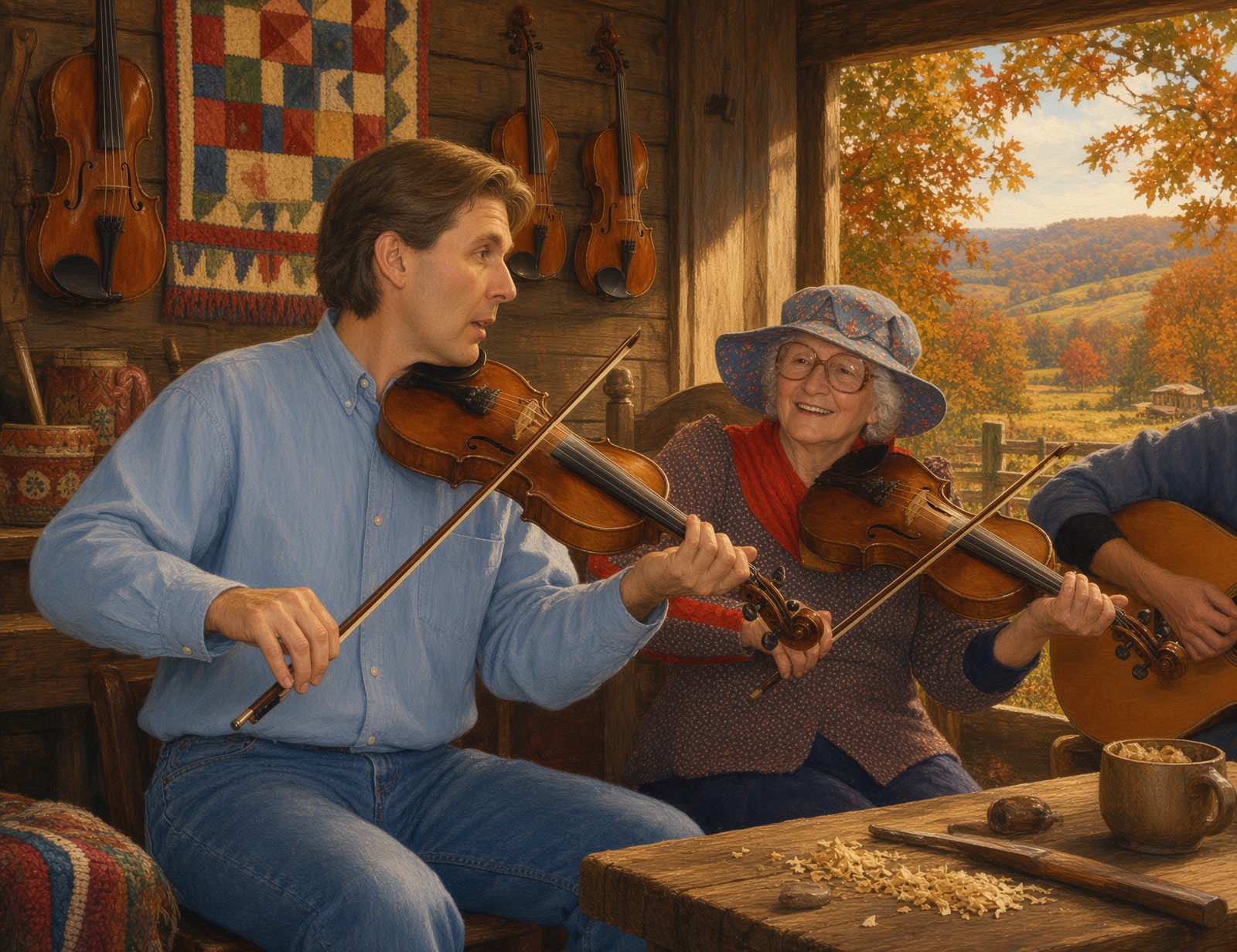
As I stumbled along the dirt road, I would occasionally reach up and slip my hand into Grandpa Jesse‘s. When an independent streak struck, I would pull it back, managing my steps all on my own—at least for a few feet—before repeating the process once again.
No matter what I did, I could look up into his face and see a smile beaming back at me. What an amazing gift is the special bond that grows between a loving grandparent and a grandchild.
They can give so much love, and many—like mine—had the desire to share a lifetime of experience. I thank God that mine gave me the insights at a young age to listen and learn.
I think one of the greatest lessons shared with me was how to handle yourself when you realize you’ve wronged someone. It could be as simple as a misunderstanding or as serious as a downright disagreement.
From their example, I saw that one should admit a mistake and apologize to move the relationship forward. If you’re the injured party, take the first step: express your concerns and give the other person an easy opportunity to make amends.
If they choose not to, then you’ve done all you can to mend the fences.
Unfortunately, folks aren’t always in the same place at the same time.
Although Christianity teaches us to forgive, that’s an area where I’ve seen loved ones and friends struggle throughout my life.
I struggle with it myself. Oftentimes, I fall back on hardened lessons passed down through generations, rooted in centuries of tribal or clan conflicts and feuds.
I’ve watched loving, caring people—who would give you the shirt off their back—get up on their hind legs and growl when a situation involved an ancestral enemy, an ostracized family member, or a former friend.
While I received these lessons through oral stories, I’ve worked to distance myself from carrying such disputes into my own life. Some even go back beyond written records. They do add color to the stories I share, but for me, the feuds are long past.
As time passes in my life, I find I have to work harder not to add to the list with my own experiences.
It would be easy to simply write someone off—as was often the practice—and have no more to do with them once they’ve done you wrong and won’t apologize or admit a mistake.
But unless continuing that relationship is destructive, I’m striving to avoid falling into the footsteps left by my mountain highland kin through the centuries. That’s not to say there might not be a situation that calls for their approach, but I don’t know if I’m up for a good sword fight, pistols at ten paces, or gathering the clan for feudin’ anytime in the near future.
So, I think the approaches mentioned earlier might be best for all concerned. Of course, the other person does have to be concerned. If they’re not, they probably shouldn’t be that important to your life anyway.

Read more about Randall’s experiences in Appalachia in his books such as A Mountain Pearl, and Seeing Faith. Visit www.RandallFranks.com/Store

From Recess to Real Life: Childhood Friends Shaped My World

I crowded into the MARTA bus headed toward downtown Atlanta. I grabbed a seat as the bus filled up. A Black woman in a gray dress and heels got on, and I noticed there was no available seat, so I rose and moved toward the back, giving her my seat. As I got situated near the rear door, I wrapped my arm around the bus rail and placed my feet appropriately to keep me steady as the bus stopped and started along the rest of the trip to Central City Park. As I stood there, I started looking at the man sitting near me and realized it was Mr. Olivares. He was heading to his job downtown. I had not seen him in years, and initially he did not recognize me.
I had grown tremendously since I used to run through his living room alongside his children who were near my age—Paul and Vivian.
I met Paul in about third grade after his family emigrated from South America. The family included at least two youths near my age and some older siblings as well. I don’t know what drew me to Paul initially.
Through most of my elementary school experience, all the students were white, despite going to school after integration and during a program referred to as M-to-M transfer, where the county would bus students to schools that were demographically different.
As best I recall, Paul was the first student from a different country or culture that I met—especially someone speaking a different language: Spanish.
We became fast friends and began playing together during recess at school. Soon, I started visiting his home and joining his family for dinner, and he would visit ours as well. I began learning enough Spanish to get by as I visited his home and spent time among his siblings.
I guess it was my parents’ open and caring attitude toward people—whom some Southern whites of that era may have viewed differently because of color, culture, or faith—that allowed me the freedom to reach out and not feel I was doing something out of the ordinary.
In fact, perhaps it was the early boundaries that my own parents had faced as they overcame the “hillbilly” stereotypes while migrating from Appalachia into the city and seeking acceptance in Atlanta society that helped them later form the attitudes that shaped me.
So the fact that Paul was from somewhere else never fazed me as a child; it just made our time together of greater interest to me.
At some point, I lost my friend Paul when his parents were able to move him from public school to private school.
I still remember the conversation when he asked me to see if my parents would consider moving me as well. We did discuss it, but my folks stuck with the public school route, so our diverging paths forced us to focus on new friendships. Sadly, I had no need to speak Spanish anymore until I reached my studies in high school, and by then, it was like starting over completely.
It would be a while before Dresden Elementary would see another student who was not white; the next family would be Chinese from Hong Kong. In my grade was Nin Chung Szeto, and once again, I found another friend. In this case, however, I didn’t learn Chinese, but in two years’ time, I certainly had an impact as I helped teach Nin Chung English. I am sure he was burdened by my Southern accent for years. Like Paul, his path also diverged as his family moved west. We kept in touch by letters for some time, but eventually the practice faded. Still, I knew that Nin Chung—by then, he had chosen the name John—was carving out his own future in America.
When the seat next to Mr. Olivares opened up, I sat down and reintroduced myself, explaining that I was on my way to classes at Georgia State University. He caught me up on Paul and Vivian. I asked him to pass my greetings to them, and Mr. Olivares and I would regularly exchange greetings as we both commuted. It would be years later, in a Winn-Dixie grocery line, when Paul and I would next meet. Now, both out of college and making our own lives, we were miles away from those young boys we had been when our friendship started. Though we said we would get together sometime, we were in different places and did not follow through.
While the paths that life had in store for Paul, John, and me were not ones that would keep us connected, for me those youthful experiences enriched my life and allowed me to continue expanding my opportunities to know more about the people I meet, whether from a world away or just down the street.
Find more stories from Randall’s youth experiences in his Encouragers Book Series www.RandallFranks.com/Store .