

Posts

Heroes or Anti-heroes: Where Have All the Good Guys Gone?

From my earliest days of watching Westerns, sci-fi shows, and family sitcoms, I was inspired by heroes who stepped up for the underdog, brought the bullies down, put criminals to justice, and defended the innocent.

Those lessons came from a generation of men and women who had fought World War II alongside America’s allies, then came home to write, produce, act, make music, and give us moral plays. Many of them had been reluctant heroes in real life, and they hoped to raise generations that treated one another well, fought for the right things, and still believed in tomorrow.
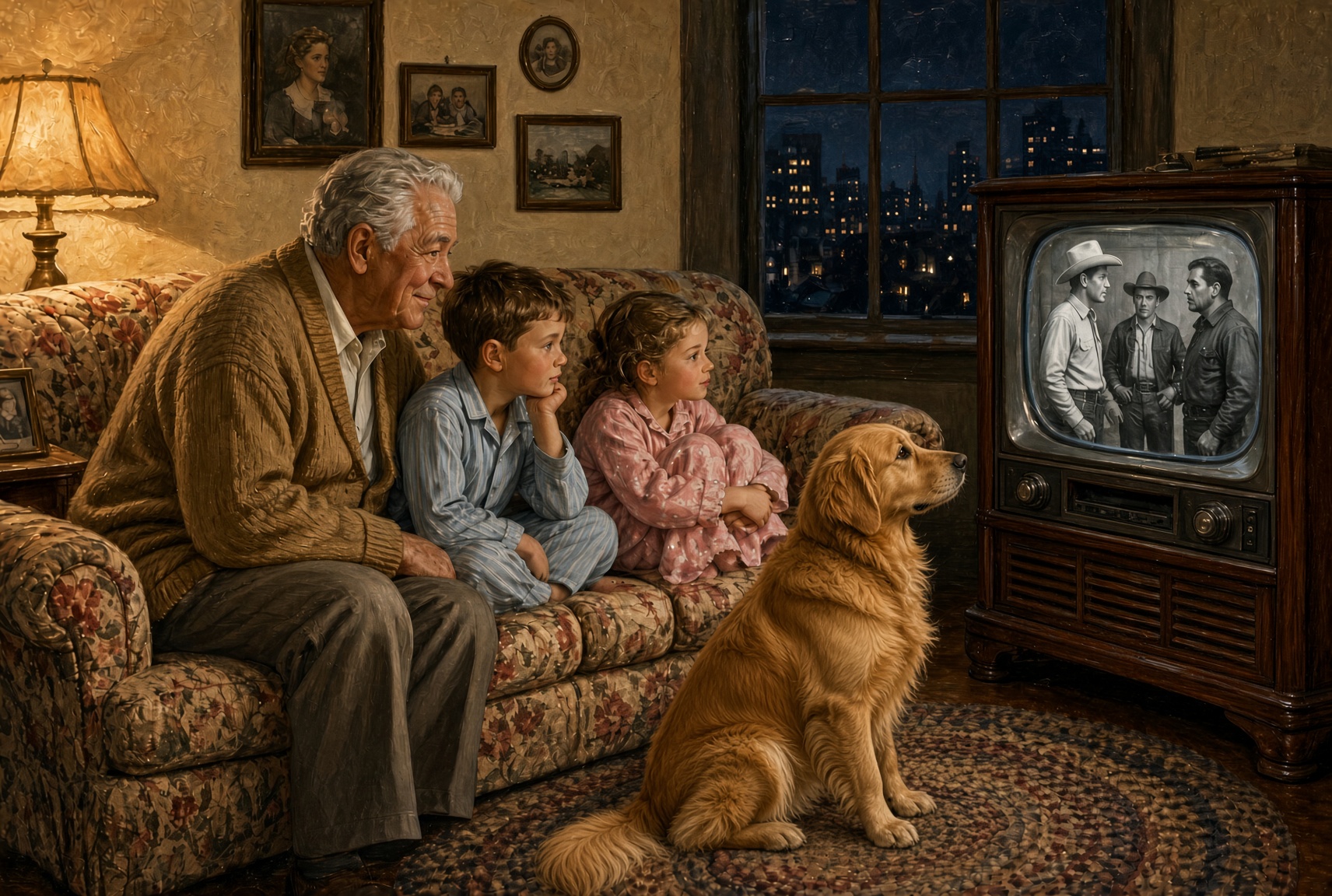
As the years went on and those legendary creators stepped off their stages, much of what was made for our entertainment turned darker. Antiheroes became a staple. People doing bad things became the main characters, and too often the writers and directors asked us to admire them. The old moral play was turned upside down.

Clear-cut good winning over evil became, well, less evil winning over more evil—and we were told the less-evil person was a hero worth looking up to.

That shift, along with similar changes in popular songs, helped erode the moral lessons Baby Boomers and Generation X were weaned on. With each new generation, writers, directors, actors, and songwriters have reflected a slightly different idea of what is good, what is bad, who is a hero, and who is evil.

People talk about a generation gap. I believe this is one of the few periods in American history when four generations—Baby Boomers through Generation Z—have occupied the same country with different moral compasses at their center.

Many of our founders said this country would succeed only if a moral, largely Christian people upheld the principles in our founding documents. As we move further from a shared sense of right and wrong, it becomes harder to keep the country and its future stable, and harder to find leaders in every field who look out for all of us.

What will the future hold for those of us raised on Roy Rogers, Gene Autry, Captain Kirk, and the fathers and mothers of The Andy Griffith Show, Father Knows Best, and Leave It to Beaver?

I fear a measure of disappointment. We now watch people raised on antiheroes—The Sopranos, Breaking Bad, and that earlier 1970s turn toward Clint Eastwood’s Dirty Harry and Charles Bronson’s Paul Kersey in Death Wish—alongside sitcom parents more interested in themselves while the children run the house, rather than being trained up in a positive way.

Will we ever go back to what it was? No. Are there still chances for redeeming lessons in television, film, and music? I think so. In every generation there are still people inspired by the good. They can be lights among their peers, and that may make the long-term difference.

Are you one of them? Can you inspire heroes rather than antiheroes? Can you write music that teaches something worth keeping? Maybe it is time to step up. Maybe the Greatest Generation did leave a lasting mark—passed down in their creativity and in everyday heroism.

Read more of Randall’s writings in his books at our Store.

The show must go on

Social media outlets these days are filled with living room concerts, musicians pickin’ away to empty performance halls, one-on-ones from their decks and every corner of performers’ spaces.
The current pandemic has resulted in performers’ slates of appearances being cleared for months to come. I am in that same boat. Many performers are now struggling like everyone else, founding themselves sheltering away from work.
People are often impressed by the glamour they think makes up such a large portion of stars’ lives, but like your hometown businesses, often performers are struggling to keep the doors open behind the scenes, and their employees paid. I encourage you, if you are able, and see these online concerts, and if they are asking for donations, or sharing merchandise that you can buy, please do. We are all in this together but even despite these cancellations, it reminds me of the old adage – the show must go on. Here is one of my stories of just that kind of fortitude.
As I drove into the McReynold’s farm outside Nashville, in my mind I was preparing for another weekend out on the road with Grand Ole Opry stars Jim and Jesse. Jesse and his late wife Darlene opened their home to me and I often stayed overnight in the two-story farmhouse where they raised their family. When the brothers joined the Opry, they bought a farm which they both continue to live on.
In many ways, I became an extended member of the family. When I drove into the driveway, I noticed the back of the bus opened up. Underneath the bus, I found Jesse tangled between what makes a diesel engine tick. Folks who are used to seeing stars with their hair slicked back in the sparkling stage attire would not have recognized this Bluegrass Hall of Famer as he climbed from beneath the bus in his ragged baseball cap and gray coveralls covered with grease. Jesse is a mechanical whiz.
Country Music Hall of Famer Charlie Louvin and I became acquainted while I was still in my teens. I remember one time he and I sat down and discussed the merits of a career in music. He told me then that he had spent most of his life working for a bus and a band. Keeping those two things on the road had taken most of what he made. He reflected on an early decision to select music over a job at the post office. At the time he said if he had taken that post office job, he would be retired and drawing a pension now. I have not had the chance to talk with him since he and his late brother Ira’s induction in the Hall of Fame. I know if he had made the other choice it would have been a great loss to the world but it goes to show that even stars sometimes wonder about their life choices.
Concert goers don’t often realize what is involved in putting on a stage show. The performers in many cases gather at their home base and load the bus or van with equipment, sales material, personal effects and enough snack food to tide them through the trip. It is not unusual to climb aboard and ride for 10-12 hours to the venue. After arriving, they figure out where things go and then unload sound equipment and sales material.  After setting everything up ready for the arrival of the audience, performers then go and throw a little water on their face, slick back their hair and put on their stage clothes.
We arrived somewhere in Ohio.  Bellevue, I think. Members of Jim and Jesse’s band, the Virginia Boys, and I had went through the set-up process with Georgia Music Hall of Famers, The Lewis Family, who were sharing the bill that night. Everything was set and we were all ready to go on. I was standing back stage waiting anxiously as Jim and Jesse went through their first set. They would usually bring me on about 10-15 minutes into the show. The Lewis Family’s sound equipment was on the stage. I don’t remember the exact conversation that led up to it, but Travis Lewis, who usually watched the controls, and I were joking backstage. “I said it is liable to blow when I go out there.”
As the audience laughed at my first punch line, I hit the first chord. The sound system blew. I was standing there with some of America’s most talented musicians ready to play and no way for the audience to hear us. Thanks to the fast work of Travis, Little Roy Lewis and a couple of others, they got the system up and running. Needless to say, for any entertainer, standing in front of audience, trying to keep them entertained as the sound system is being fixed is less than a glamorous situation.
When the show is over, after visiting with the folks in the audience, the groups have to tear down the equipment, load up and hit the road for the next gig and do it all over again.
What I have found through the years is that stars who tend to take care of things themselves have the longest and most productive careers.
I’d rather be more like Jesse, putting on the grease covered coveralls to keep things going than having everything served on a silver platter.
But I’ll never again joke about blowing out the sound system again. You don’t reckon it was my singing, do you?