Posts

Heroes or Anti-heroes: Where Have All the Good Guys Gone?

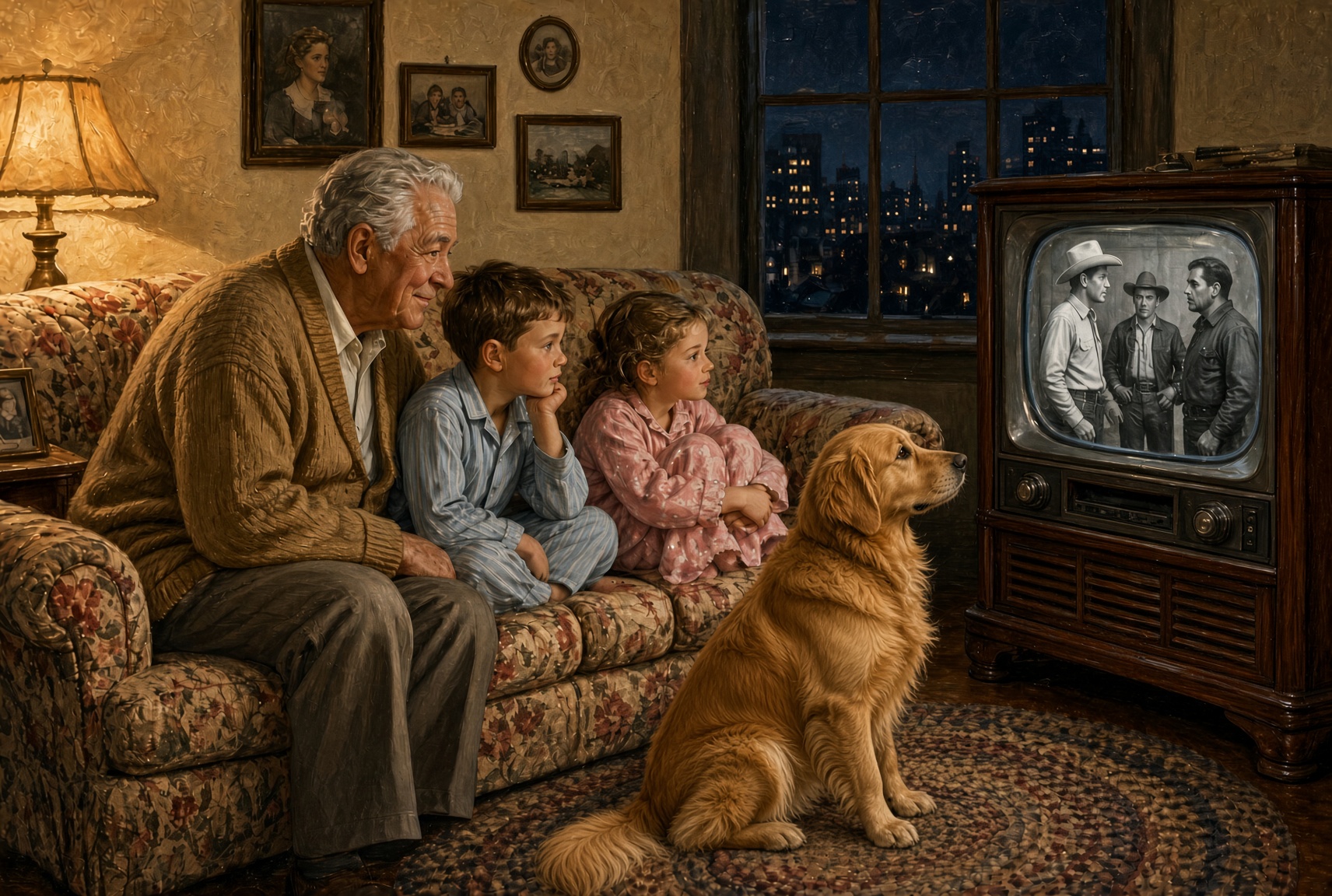
From my earliest days of watching Westerns, sci-fi shows, and family sitcoms, I was inspired by heroes who stepped up for the underdog, brought the bullies down, put criminals to justice, and defended the innocent.

Those lessons came from a generation of men and women who had fought World War II alongside America’s allies, then came home to write, produce, act, make music, and give us moral plays. Many of them had been reluctant heroes in real life, and they hoped to raise generations that treated one another well, fought for the right things, and still believed in tomorrow.
As the years went on and those legendary creators stepped off their stages, much of what was made for our entertainment turned darker. Antiheroes became a staple. People doing bad things became the main characters, and too often the writers and directors asked us to admire them. The old moral play was turned upside down.

Clear-cut good winning over evil became, well, less evil winning over more evil—and we were told the less-evil person was a hero worth looking up to.

That shift, along with similar changes in popular songs, helped erode the moral lessons Baby Boomers and Generation X were weaned on. With each new generation, writers, directors, actors, and songwriters have reflected a slightly different idea of what is good, what is bad, who is a hero, and who is evil.

People talk about a generation gap. I believe this is one of the few periods in American history when four generations—Baby Boomers through Generation Z—have occupied the same country with different moral compasses at their center.

Many of our founders said this country would succeed only if a moral, largely Christian people upheld the principles in our founding documents. As we move further from a shared sense of right and wrong, it becomes harder to keep the country and its future stable, and harder to find leaders in every field who look out for all of us.

What will the future hold for those of us raised on Roy Rogers, Gene Autry, Captain Kirk, and the fathers and mothers of The Andy Griffith Show, Father Knows Best, and Leave It to Beaver?

I fear a measure of disappointment. We now watch people raised on antiheroes—The Sopranos, Breaking Bad, and that earlier 1970s turn toward Clint Eastwood’s Dirty Harry and Charles Bronson’s Paul Kersey in Death Wish—alongside sitcom parents more interested in themselves while the children run the house, rather than being trained up in a positive way.

Will we ever go back to what it was? No. Are there still chances for redeeming lessons in television, film, and music? I think so. In every generation there are still people inspired by the good. They can be lights among their peers, and that may make the long-term difference.

Are you one of them? Can you inspire heroes rather than antiheroes? Can you write music that teaches something worth keeping? Maybe it is time to step up. Maybe the Greatest Generation did leave a lasting mark—passed down in their creativity and in everyday heroism.

Read more of Randall’s writings in his books at our Store.
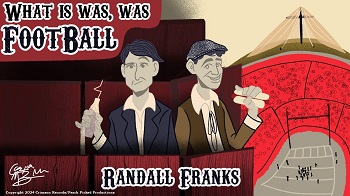
Actor/entertainer Randall Franks releases new single as tribute to Andy Griffith

Appalachian humorist Randall Franks and Crimson Records are pleased to announce the release of a new comedy performance from the award-winning performer: “What It Was, Was Football.“
Support Our Efforts – Download Recording Please:
Itunes: https://music.apple.com/us/album/the-americans-creed/1743671704
Amazon Music: https://www.amazon.com/dp/B0D2WGJ1Y5/
Radio programmers via AirPlay Direct https://airplaydirect.com/music/RandallFranksTheAmericansCreed/
Written by Andy Griffith, the monologue is the story of a Southern Christian revival worker setting up a revival tent who stops to grab a bite to eat but is swept up in the fervor of a crowd of folks headed on a wondrous adventure to watch something that he never had seen before. He then describes what he saw.
Randall’s version of the classic comedy story is now available to radio programmers via AirPlay Direct and on streaming services. For nearly thirty years, Randall Franks, “Officer Randy Goode” from TV’s “In the Heat of the Night,” has consistently included Appalachian humor in his performances. The late Appalachian scholar Loyal Jones recognized him as a unique voice in Southern humor in his book “Country Music Humorists and Comedians” reflected through his shows and comedy releases such as “Tunes and Tales from Tunnel Hill” (1995), “Comedy Down Home” (1999), and “Keep ‘Em Smilin’” (2016). His comedy recordings and his comedic acting performances on TV and in films are among the most beloved by his audience.
“Like many, one of the people who greatly inspired my career is the late Andy Griffith,” Franks said. “He did what many young Southern performers hope to do in combining acting, comedy and music into a decades-long career while creating several long-lasting TV series.”
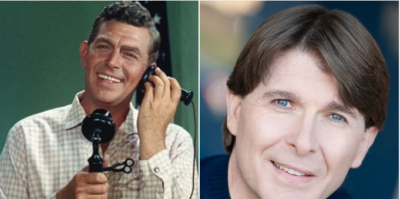
Franks attributed “The Andy Griffith Show” as being one of the reasons he became a musical entertainer with its features of the Dillards as “The Darlings.”
“I included Andy and the Dillards in my “Encouragers” book series sharing the impact he and they had on my life and career,” he said.
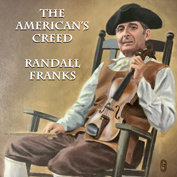
His new album also includes music from his film “The American’s Creed,” live appearances from his Hollywood Hillbilly Jamboree and 40th Anniversary recordings of Randall appearing live with Bill Monroe and the Blue Grass Boys – Wayne Lewis, Blake Williams and the late Tater Tate. Franks recently launched a new web page highlighting his time with the legendary music icon at www.RandallFranks.com/Bill-Monroe-and-the-Blue-Grass-Boys . Funds raised from these recordings benefit the Share America Foundation, Inc. and its Pearl and Floyd Franks Appalachian music scholarships.
                                                                                                                              __________________________________
The Single – What It Was, Was Football

“What It Was, Was Football” is Randall’s latest single release and is a tribute to the classic TV actor and comedian Andy Griffith who released it 70 years ago charting in Billboard’s Top 10 in February 1954. “There was probably not another person who had a greater impact in most Southern homes than Andy,” Franks said.
As a special addition to his #7 AirPlay Direct Global Americana Album “The American’s Creed,” the multiple music hall of famer recorded Griffith’s career beginning monologue “What It Was, Was Football.”
“Using my own comedy style, I have re-created what I felt was magical about his amazing hit,” he said. “It is available for all radio stations just in time for high school and college football seasons. I hope that radio around the country might give it a spin recognizing the 70th Anniversary and my paying tribute to this great performer.”
To the classic monologue, he added hints of his unique fiddle stylings including support from Gospel and Bluegrass music personalities: Mark Wheeler on guitar; Lewis Phillips on banjo; Steve Easter on resonator guitar; Jeff Easter on piano; Travis Lewis on acoustic bass; and the late Grand Ole Opry star Jesse McReynolds on mandolin.

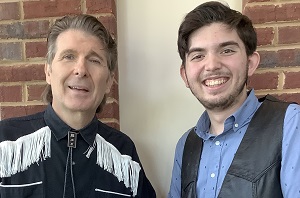
Randall Franks pauses with Artist Colton Brown who created the artwork for the What It Was, Was Football video.

“What It Was, Was Football” is now available from Crimson Records for radio programmers via AirPlay Direct or by requesting a direct download here. It is also available on popular digital streaming platforms such as Amazon here or Itunes here, or can be seen featuring a unique artwork by Colton Brown on Randall Franks TV on YouTube (https://youtu.be/VxFDUQP_n1M), Rumble (https://rumble.com/v5e30dh-what-it-was-was-football-randall-franks.html), and Brighteon (https://www.brighteon.com/deaaf5e3-efc1-43c1-8357-74335bf81f39). 


                                                                                                                              __________________________________

 
Trivia: 

Are the two actors Randall Franks and Andy Griffith who played notable comedic Southern police officers related?

Yes, Randall and Andy are quadruple country cousins as they share at least four sets of grandparents in their family trees being related to each other through each of Andy’s grandparents – the Griffiths, Taylors, Nunns and Cassells and both of Randall’s parents.

Sources: Franks and Related Lines Genealogies – FamilySearch and Ancestry 

                                                                                                                              __________________________________


About Randall Franks
Randall Franks is a former NBC and CBS actor; an award-winning author of 11 books with his latest being “Seeing Faith: A Devotional” and a murder mystery “A Badge or an Old Guitar;” a journalist and a syndicated columnist who inspires millions of readers in the South and Midwest each week.
The International Bluegrass Hall of Fame Legend and Grand Ole Opry guest star marks his 40th Anniversary of debuting for the show this October.
He is an Independent Country Music, America’s Old Time Country Music, Atlanta Country Music and Tri-State Gospel Music halls of fame member and a Georgia Music Hall of Fame honoree with a long list of awards in multiple music genres. Through his Share America Foundation, he inspires youth to learn and share the music of Appalachia.
Georgia honored him for his service and philanthropy to the people of Georgia for helping raise millions to assist those in need. He starred and co-starred in four TV series and in 18 films for Hallmark, CBS and UpTV. He shared in numerous acting awards including for his latest films “The Cricket’s Dance” and “The American’s Creed.” 
He is a 2024 Inspirational Vocalist and Musician of the Year nominee and his song “God’s Children” went to #1 on the Cashbox charts in 2023. He currently hosts the music-fueled TV show “Appalachian Sounds.”
To TV fans, he is known best as “Officer Randy Goode” from the drama “In the Heat of the Night.” 

A little Goober each day is a must

As we watch television classics, there are many character actors that have made their marks and found niches that have allowed them to keep in front of the American public for years and years.

One of those actors was introduced to the American television family in the 1960s.

Read more