There are seasons in life when worries, sorrows, fears, and quiet depressions gather like autumn leaves drifting from the branches. One by one they fall— a health scare, a strained relationship, financial strain, the ache of loneliness, or simply the relentless news of the world—until they form a thick, damp blanket over the ground. The roots that once fed our soul, drawing nourishment from faith, friendship, purpose, and simple joys, lie hidden beneath. In that shadowed place, it becomes hard to see daylight, harder still to believe spring will ever return.
Even the markers of renewal can feel distant or mocking. Easter arrives with its promise of resurrection and families gathering around tables laden with ham, dyed eggs, and laughter. Spring unfurls tender green shoots and birdsong. For many, these are moments of uplift. Yet for others, they add another layer to the pile: the contrast between outward celebration and inward heaviness only presses the leaves down more tightly. The beauty meant to heal can sometimes underscore how far we feel from blooming ourselves.
I wish the remedy were as straightforward as stepping into sunshine and saying, “It’s a beautiful day—grab a rake, clear the debris, and let the flowers push through.” In truth, I’ve tried that approach more times than I can count. A brisk walk, a forced smile, a playlist of upbeat songs—sometimes they shift the mood for an hour or two. But when the weight has settled long enough, the potential beneath begins to wither. The soul’s tender shoots, starved of light and air, curl inward. What was once vibrant growth risks becoming brittle and dry.
In my own lowest seasons, I’ve learned there is no quick sweep of the rake that suffices. Instead, the way forward is to reach deeper—down through the layers, straight to the roots themselves.
For me, those roots are twofold. First, the living Word of God, which has been the steady food of my spirit since I first opened a Bible as a youth. When sadness clouds everything, I don’t always feel like reading, but I do it anyway—sometimes just a single Psalm, or a few verses from Isaiah promising that God gives strength to the weary. I read slowly, letting the words sink in like rain after drought. “Come to me, all who labor and are heavy laden, and I will give you rest” (Matthew 11:28). Those aren’t abstract platitudes when you’re buried; they become oxygen.
The second root is people—the ones who care about me, and the ones who need care. Isolation feeds the pile; connection scatters it.
I remember one November a few years back when grief over a family loss had me retreating inward for weeks. The leaves felt suffocating. One Saturday, almost on autopilot, I answered a call from a friend who was in the hospital. I thought he might need someone to talk with so I went, to listen and pass the time. We talked for hours—mostly him talking, me listening.
Driving home that night, something shifted. My own sorrow hadn’t vanished, but it occupied less space. In the mirror of his pain, mine looked smaller—not diminished in importance, but placed in perspective. Helping him didn’t erase my burden; it redistributed the weight. I breathed more easily, as though a few leaves had been lifted away.
That pattern has repeated itself since. When worry permeates every moment, threatening to steal my breath, I step toward someone else’s need. A phone call to check on an elderly friend. Volunteering at the food pantry. Listening to an acquaintance who’s struggling. Each small act of reaching out reminds me I’m not alone in the hole—and sometimes, in joining others to dig, I find my own hands pulling me upward.
It’s counter intuitive: when you feel most trapped, the path to freedom often lies in helping set someone else free. The effort required to encourage, to serve, to show up replaces suffocating rumination with purposeful motion. Problems that loomed gigantic shrink when held next to another’s hardship. Kindness becomes the wind that scatters leaves.
Of course, this isn’t a cure-all. Some burdens require professional help—and seeking it is itself an act of courage and connection. Nor does reaching out magically dissolve every worry. But it does lighten the load enough to glimpse daylight again.
So if the pile feels heavy this season, don’t wait for the wind to do the work. Head to the shed—or the hardware store—and pick up that rake. Better yet, grab a shovel too. Start clearing space around you: a conversation, a kind deed, a verse that speaks directly to your heart. Root yourself deeper in God’s promises and in the lives of those around you.
In time, you may notice the first green shoots breaking through. Hope, fragile at first, begins to rise. Kindness takes root. Enthusiasm stirs. The very act of tending others’ gardens revives your own.
Spring always comes. Sometimes we just need to rake away what’s covering it—and in helping others uncover their light, we rediscover ours.
Read more of Randall’s work in Seeing Faith : A Devotional.




 I can still remember standing in the doorway of the kitchen as a young boy, watching my mother tackle one business project after another from the kitchen table which served as he desk. She moved with purpose and quiet intensity—papers spread across the table, phone pressed to her ear, always thinking several steps ahead. The moment she completed one task, she would barely pause before saying with renewed energy, “What’s Next?”
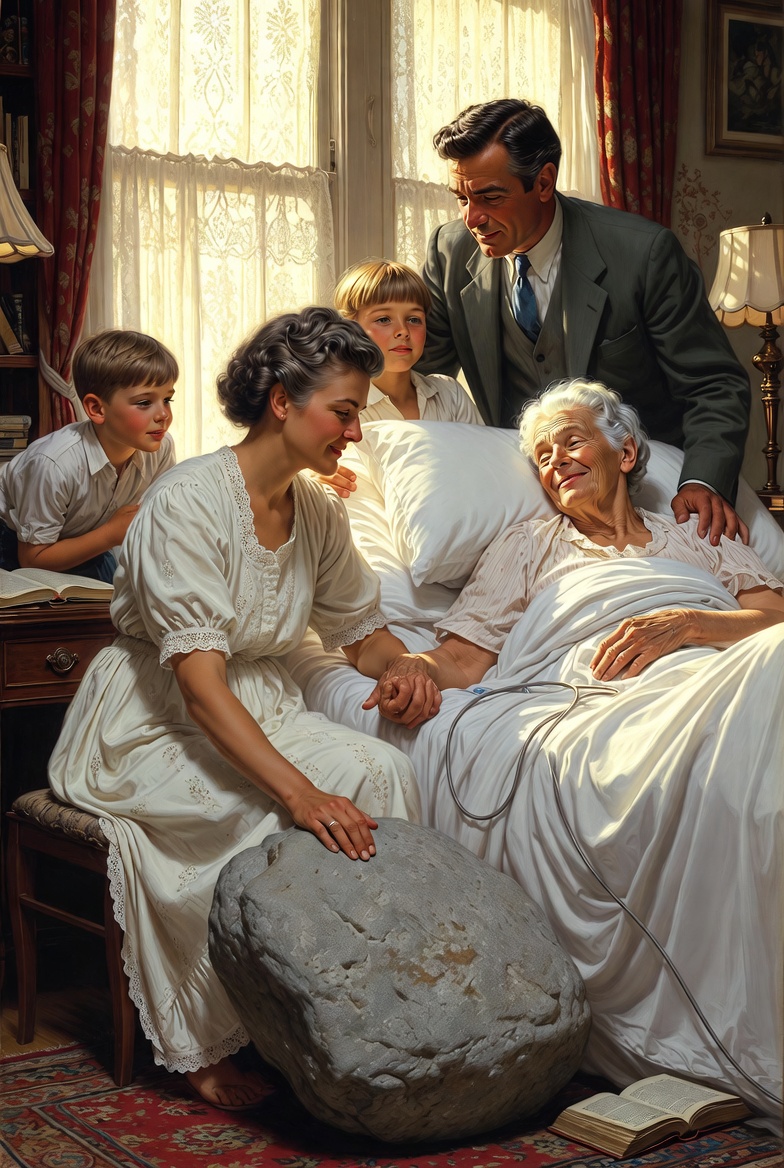 I have sat by the bedside, watching tubes connected to a loved one’s body, and seen people struggle to find a new normal after a health crisis.
 John Joseph Malone Sr.’s path to patriotism began in Somerset County, Maryland, where he was born and raised a family with wife Sarah Hart. As colonial tensions simmered, he saw early militia duty in Maryland: in 1757 or 1758, he served in Captain Thomas Norris’ Company, with payment delayed until 1767 (£1 10s for 30 days of attendance). Before long, the pull of western lands drew him southward. By 1774, records place him—and remarkably, his young adult son—in the thick of Lord Dunmore’s War, a brutal prelude to the Revolution.
 I crowded into the MARTA bus headed toward downtown Atlanta. I grabbed a seat as the bus filled up. A Black woman in a gray dress and heels got on, and I noticed there was no available seat, so I rose and moved toward the back, giving her my seat. As I got situated near the rear door, I wrapped my arm around the bus rail and placed my feet appropriately to keep me steady as the bus stopped and started along the rest of the trip to Central City Park. As I stood there, I started looking at the man sitting near me and realized it was Mr. Olivares. He was heading to his job downtown. I had not seen him in years, and initially he did not recognize me.