

Cast into Memory: Reflections on a Fishing Trip
Ripples float endlessly across the lake as a large frog croaks in the distance.
The line running from the end of my pole drifts slightly with the light current, pulling away to my left as the red-and-white float bobs along with the ripples.
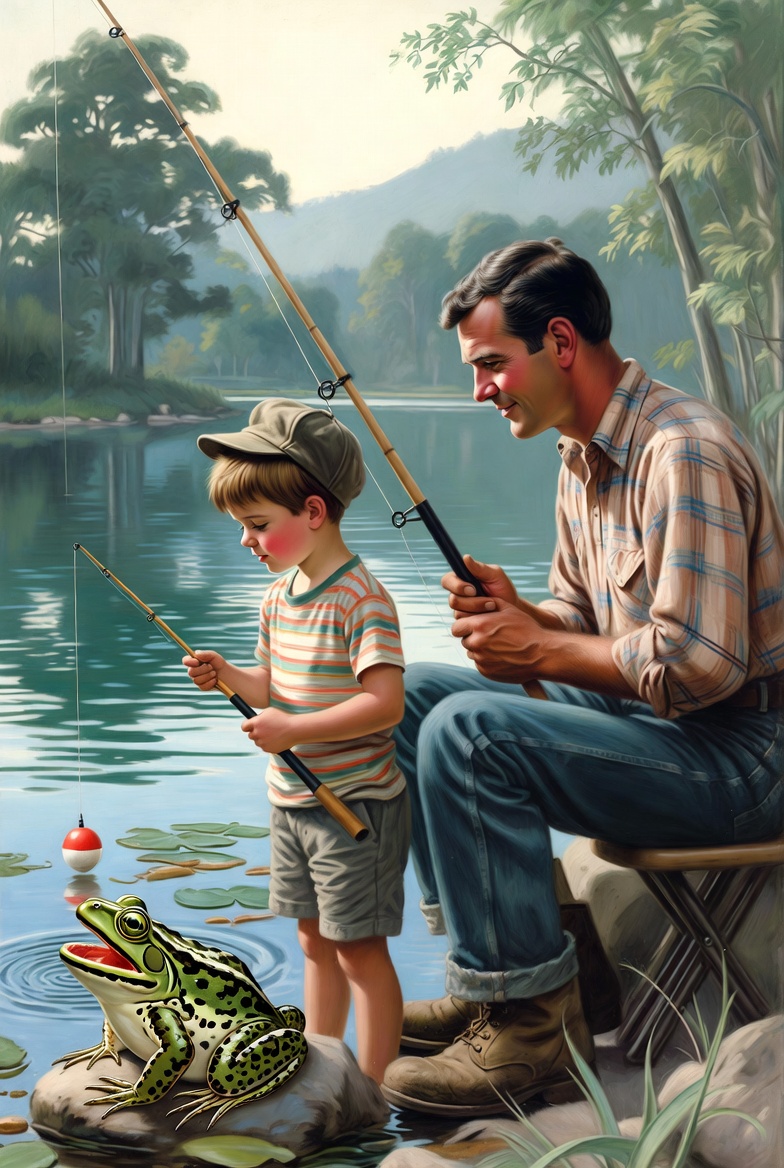 Much of my first fishing adventure had been spent simply trying to get the worm-baited hook into the water. My childhood attempts at fishing with my dad, especially early on, often mirrored the classic episode of The Andy Griffith Show in which Howard Sprague spends more time with his hook caught in a tree—or his own pants—than in the water.
In retrospect, my dad’s patience as he taught me the basics and answered my endless questions was remarkable: Why do fish eat worms? Why do we have to put the hook through the worm—can’t we just throw them in and let the fish eat them? Why do we need a float on the line? And why do I seem to do better when I cast the line behind me instead of in front?
These are just a few of the questions I still remember.My father was a lot like me—outdoor sports weren’t really his thing. Yet he believed it was important for me to learn them, and more importantly, for us to share the experiences he had once enjoyed with his own father and uncles. In the midst of those simple lessons, deeper truths were quietly passed along.
The bonds created between a father and son through positive shared experiences; a growing respect for the natural world and the people and creatures who share it with us; and a clearer understanding of what is expected of you when you become a man.
I am so grateful he took that time with me. Often, those moments seemed strategically placed around the toughest points in my life, when I needed his input, his lessons, his hope, and his insights the most.
By establishing that groundwork when I was young, our relationship had a smoother path as the years passed. Even as an older teen, when I began testing the boundaries by asserting my own authority, we were able to work through those tense moments. What could have driven us apart instead became teachable experiences that strengthened our bond.
Perhaps my father’s early passing forever set my perspective of our relationship in the warm nostalgia of youth. We never quite reached the “best friends” stage that often develops between fathers and adult sons, because he was still very much in the role of dad. That role would never have fully ended, of course, but after college, as I took on more responsibility for my own life, I had hoped our conversations could have taken on a different, more equal form.
It is this time of year when my father’s memory feels closest. We shared so much during the warm months of the year. I am thankful that God placed me in a family with two parents who were present and actively involved. So many young people do not have that blessing. As the news of the world seeps into my awareness, I can’t help but wonder how many troubling headlines might have been prevented if more mothers and fathers had been present and participating in their children’s lives.
Are you present in your children’s lives? Are you teaching them the lessons they need? Do they show respect for other people, and creatures? If not, may I suggest a fishing trip?
There is something iconic and idyllic about those opening shots of The Andy Griffith Show, with Andy and Opie Taylor walking along a country road, fishing poles over their shoulders. Funny how so many of us still long for that kind of simplicity. We may never fully reclaim it, but it never hurts to take the walk.“So, take down your fishin’ pole.”
Find more stories from Randall in his books in our STORE.



