Brothers Divided: A Frontier Family’s Revolution Sacrifice

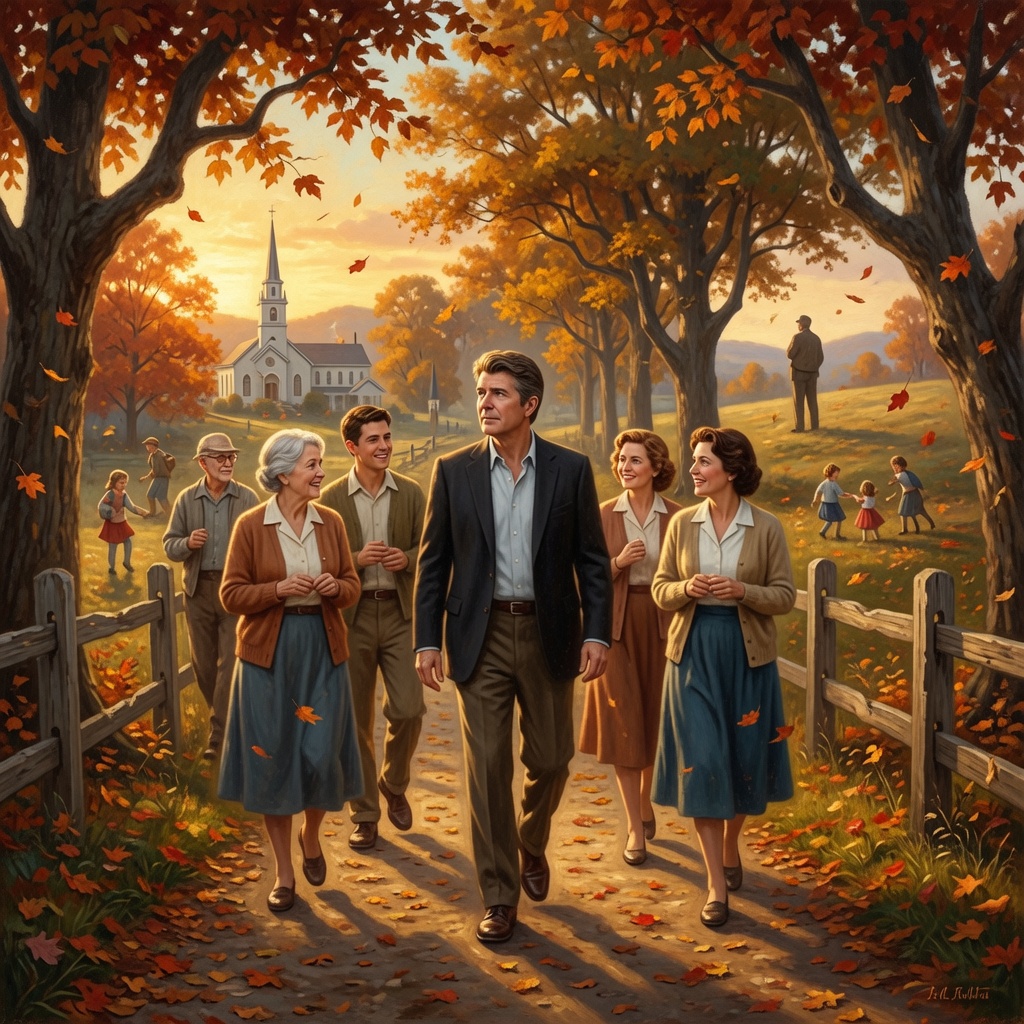
A Depiction of Joshua Moses engagement at capture.

Imagine fleeing on horseback through the thick South Carolina underbrush, only to feel the sting of a British dragoon’s sword slashing your arm as you deflect a blow meant for your head. This was the harrowing fate of Joshua Moses in 1781, a North Carolina militiaman captured while visiting kin near the Wateree River. Wounded four times—a deep head cut, an arm laceration, a shoulder pierce, and a minor gash—he was bound and marched toward the chaos of battle. But Joshua’s story, like his family’s, reflects the deeper tensions of a war that pitted neighbor against neighbor and brother against the call to arms.

Life on the colonial frontier demanded every hand to tend farms and protect families. When whispers of rebellion against England rippled through the land in the 1770s, they ignited fierce divisions. In Anson County, North Carolina—home to the Moses clan—Loyalists (Tories) were a formidable force. Continental General Nathanael Greene estimated in 1781 that up to half of North Carolinians were Tories, dominating about half the state’s counties, including backcountry areas like Anson. Petitions from the era show roughly 227 Anson residents pledging loyalty to the Crown, compared to about 355 who had earlier protested colonial grievances as Regulators—a movement that often fed into Patriot support. This near-even split made open rebellion risky; many families chose neutrality to survive raids and reprisals.

John Moses Sr. and his wife, Jane, had settled in Anson County by the 1760s, raising likely four sons—John Jr., Joshua, Samuel, and Robert—and two daughters to adulthood before the war escalated. John Sr. likely died sometime after 1763, leaving Jane a widow in a turbulent time. As conflict engulfed the South, the pull to fight tugged at the brothers’ hearts, but someone had to keep the home fires burning amid Loyalist threats. Samuel stayed behind, farming and safeguarding the family stead, while Robert also remained neutral, later settling near the Wateree. Joshua and John Jr., however, answered the call.

John Jr., the eldest, had migrated south to South Carolina by the early 1780s, near the Wateree River. This was the heart of the brutal Southern Campaign, where British forces occupied much of the state, and local militias waged guerrilla warfare alongside Continentals under Greene. As a private in the South Carolina militia, John served 110 days in 1781 and 1782—short bursts of duty that might have included sieges like Ninety-Six or Augusta, or clashes with Loyalist partisans. His service, documented in state audited accounts, earned him a modest indent for pay, though no federal pension followed.

Meanwhile, back in Anson, Joshua (1748–1836) volunteered under Captain Williams in Colonel Thomas Wade’s regiment (DAR Ancestor #A082368). His unit patrolled Drowning Creek near the NC-SC border, scouting for Loyalists. In one skirmish on Brown’s Creek, they routed a Tory band without fatalities—a gritty echo of the Carolinas’ internal strife. After seven months, Joshua’s company received parole, sending him home on call.

Fate wasn’t done with him. Venturing to the Wateree—likely to check on John Jr. and Robert—Joshua was ambushed alone by dragoons. Captured and wounded, he was hauled toward Eutaw Springs (September 8, 1781), guarded amid the battle’s roar before transfer to Charleston’s crowded provost prison and then James Island. Nine months of harsh captivity followed. In a daring escape, Joshua and comrades paddled an old pirogue for three starving days, reaching Greene’s forces on the Ashley River. Greene granted rations and leave, with the war winding down after Yorktown’s surrender in October 1781. Credited with 16 months total (including imprisonment), Joshua later drew a $53.33 annual pension from 1831. Post-war, the brothers scattered into the wilderness they helped secure: Joshua to Whitley County, Kentucky, around 1813; Samuel to Monroe County, Tennessee; John Jr. and Robert to Jasper County, Georgia. Separated by miles, they carried shared memories of a divided era, passing tales of sacrifice down generations.

Let us never forget that farmers and frontiersmen bled to forge this nation. Patriots Joshua and John Moses Jr. are the uncles of this columnist, who descends from their brother Samuel of Monroe County, Tennessee who helped keep the home fires burning amidst the Loyalist threats.

The descendants of Samuel are included in Randall’s book A Mountain Pearl : Appalachian Reminscing and Recipes

Snow and the Pot-Bellied Stove : An Appalachian Memory

As I placed the log into the black cast-iron stove, I watched the orange sparks rise from the burning embers within its belly in Grandma’s parlor.

I often stood at its front, hopeful that it would make me feel warmer. It usually did—at least on one side, until I turned and let the other warm.

Of course, I was usually one in a line of young cousins who had just come in from playing in the snow, each wishing to take their turn at the fire.

Snow could be beautiful as a child, as you looked out the frosted pane while it gently drifted up against the cracks in the side of the house.

I remember my first snowman like it was yesterday: rolling those balls into nearly perfect spheres and stacking them until it resembled Burl Ives’ character in “Rudolph the Red-Nosed Reindeer.”No matter how hard I tried, though, I never got mine to sing, dance, or tell any stories—but it was fun trying.

Venturing out in the snow wasn’t an easy task from our home, though, because it always involved being bundled in full winter wear. For my mother, that meant a shiny blue coat that made you resemble the Michelin Man, with layers upon layers beneath.

First came the white, waffled long johns, then your regular clothes—shirt and pants—followed by a pullover sweater that, if seen by any hungry wolf, would send it running for its life. Finally, that puffy blue coat. But that wasn’t everything: You still needed the itchy wool hat and the hand-knitted scarf from our neighbor. The coat’s hood came up over all of it, of course.

So, when you walked outside, you resembled the girl in Willy Wonka who ate the blueberry gum. If you fell down, you’d roll until you hit something to stop you.

This approach to dressing was always a drawback in a snowball battle, because you couldn’t see anything that wasn’t directly in front of you.

Despite the drawbacks, when you did score a snowball victory, it was all worth it. Besides, in that outfit, no matter how hard they threw, you barely felt it—unless they hit you in the face.

The adventure would end when I heard my mother or grandmother calling my name from the porch. I knew then it was time to head in, so I’d stop by the woodpile and pick up a few logs on my way.

Before I could feed them to the stove, though, I’d have to peel off those now-wet clothes.

Once deflated, I’d grab the wood by the door and head into the parlor. Picking up the glove we used for the hot handle, I’d open the door and shove the logs inside, watching the glow of warmth as I warmed my hands in front of it.

Around me were my mom and dad seated on the couch, my grandmother in her rocker, two aunts resting on kitchen chairs near the stove, and a couple of cousins playing board games on the floor. The laughter rose as gently in that room as the snow fell outside, sometimes seeming to cover the howling winds that passed us by.

I always hated to see the evening end, when it was time for the laughter to turn to sleep. We’d trade the stove for a stack of handmade quilts, keeping us warm on an old iron bed as we watched our breath rise while the snow fell outside our windowpane.

Find more stories of Appalachia in Randall’s book “A Mountain Pearl : Appalachian Reminiscing and Recipes”

Doing Things Right : It’s Never Too Soon For Skills

As I entered adulthood, my late father had already passed away, leaving me as the man of the house. This meant that the various tasks he once handled now fell to me. Household repairs were suddenly my responsibility—either to tackle myself or to hire someone reliable at a reasonable cost. Yard work had been part of my routine for several years, with occasional help on special projects.
I had worked side by side with my father as he built an outbuilding, where he taught me the essentials: framing, flooring, roofing, leveling, sawing, and everything in between. I gained similar hands-on experience with my Uncle Clarence when we completely gutted and renovated a bathroom. The demolition phase initially excited me, especially removing the cast iron tub to repair the subfloor. We used a small sledgehammer to break out the tile and mesh around the tub and floor. What started as fun quickly turned into hard work—lots of it. Over several weeks, we transformed a 1950s bathroom into a 1970s one, and I learned about plumbing, tile work, building a sturdy subfloor, and all the details that went with it.

Learning from all

Not all experiences were as instructive. I once hired a friend’s father to paint the house exterior, including the eaves and shutters, and to build a new back gate. Unfortunately, he wasn’t as meticulous as my parents about doing things right. Upon closer inspection, I discovered shortcuts that bordered on sloppy—and one that was downright foolish. When the gate didn’t fit properly or open and close as it should, instead of taking the time to fix it correctly, he chipped off the end of a brick wall. It was only three bricks, but you don’t damage masonry just to make wood fit. Needless to say, that didn’t go over well, but the damage was done, and there was no undoing it.

Well Experienced Make Good Teachers

Another repair arose when the hot water heater failed, requiring a full replacement. I couldn’t afford a professional plumber, but it was soldered in place, so I turned to my old boss at Dairy Queen, Joe Wyche, for whom I still did occasional odd jobs. He not only taught me the process but stayed to help complete it. The lessons he imparted, along with many others over the years, have paid dividends—I’ve replaced several water heaters in my lifetime.
Since those early days of stepping into the role of man of the house, a lifetime has passed filled with such responsibilities. There are only a couple of tasks I haven’t done or wasn’t taught, even if I never had to apply them. For instance, while I’ve repaired sheetrock, I’ve never installed it from scratch. I was close once, on a project my late mother wanted, but she changed her mind before we reached that step.
All these experiences predated the internet era, when we could simply watch instructional videos. It’s a real blessing to have that resource now, and I’ve used it for some auto repairs. The message I hope to convey is that life can be a series of doing things right or a pattern of sloppiness. My late mother used to say, “When you make a repair or build something, do it as if you were going to live in it yourself.” If you truly care about what you have, you’ll do it right the first time.
I feel fortunate to have had men and women in my life who taught me this principle. You may not have had that advantage, but you can certainly choose that outcome.
Make the decision: Do things right.
As the Bible reminds us in Colossians 3:23: “Whatever you do, work heartily, as for the Lord and not for men.”
Read more life incites in Randall’s Seeing Faith : A Devotional 

Echoes of Valor: Frederick Emert’s Revolutionary Odyssey

Amid the crisp autumn air of September 1777, Private Johan Frederick Emert huddled near a flickering campfire along the banks of Brandywine Creek in Pennsylvania, his woolen coat—part of the standard Continental Army uniform, dyed a faded blue and frayed from months of marching—draped over his shoulders against the evening chill cleaning his musket.

Around him, the dense woods rustled with the movements of fellow soldiers from his Pennsylvania regiment, their tricorn hats tilted low as they cleaned muskets or shared meager rations of hardtack and salted pork. The distant rumble of artillery echoed from British lines, a grim reminder of the day’s fierce engagement where Emert and his comrades had charged through smoke-filled fields, dodging grapeshot and bayonets in a desperate stand against General Howe’s advancing forces. 

Born on October 11, 1754, in Berks County, Pennsylvania, to German immigrant parents, Emert enlisted as a private in the Continental Army around the war’s early days, likely in 1776, joining the 3rd Pennsylvania Regiment under Captain John Huling and Colonels Arthur St. Clair and Joseph Wood, part of the Pennsylvania Line under Brigadier General Anthony Wayne.

This unit was dispatched in May 1776 to bolster Colonel Benedict Arnold’s retreating forces in the northern theater. Emert’s movements indicate he would have been stationed at Fort Ticonderoga, where soldiers endured harsh conditions—fortifying defenses, drilling daily, and guarding against British incursions amid the rugged wilderness of upstate New York.

Compatriots’ recollections, passed down through family oral histories, paint a picture of Emert’s likely participation in the naval clash at Lake Champlain in October 1776, where American forces delayed a British invasion from Canada. As a private, his day-to-day activities would have involved sentry duty on the lakeshore, maintaining vessels or earthworks, and foraging for supplies in a landscape of dense forests and biting cold, all while facing shortages that left the army “suffering for provisions,” as he later recounted to neighbors.

By 1777, Emert’s regiment had shifted south, aligning under General George Washington. He fought at the Battle of Brandywine on September 11, where the Continentals attempted to block the British advance on Philadelphia. Amid the chaos of musket volleys and cannon fire, Emert would have maneuvered through open fields and wooded ravines, reloading his flintlock musket under pressure while coordinating with messmates like Peter Wallwur and Isaac Stewal—fellow soldiers he mentioned in stories shared years later. The defeat led to a retreat, but Emert pressed on, likely engaging in the subsequent Battle of Germantown on October 4, a foggy assault on British positions where close-quarters combat tested the resolve of Wayne’s men.

After a brief return home—where he married Barbara Anne Neidig—Emert was drafted again but hired a substitute, unwilling to leave his new bride. Soon after, another draft prompted him to enlist voluntarily for the war’s duration, committing to nearly seven years of service in total. His path under Washington and Wayne included stints near Quebec, possibly as part of northern campaigns or garrison duties, where harsh winters meant enduring frozen outposts and limited rations. In 1779, while residing in Rockland Township, Berks County, he further contributed through patriotic service by paying a supply tax to support the Continental cause.

Emert’s service culminated at the Siege of Yorktown in October 1781, a pivotal encirclement where French and American forces trapped Lord Cornwallis’s army. As a private in the trenches, he would have dug fortifications under fire, stood watch during bombardments, and witnessed the British surrender—a moment he vividly described to his children, who recalled seeing his honorable discharge papers before they were lost in a house fire.

Tombstone of Frederick Emert at Emert Cove Cemetery in Sevier County, Tenn. (Photo: FindAGrave.com /Randy Emert)

Discharged at war’s end, Emert migrated south, eventually settling in what became Emerts Cove, Sevier County, Tennessee, by the early 1790s. There, he farmed the fertile valleys of the Smoky Mountains, raising a family of seven children. The Daughters of the American Revolution recognizes him as Patriot Ancestor #A036640, his service is corroborated by Continental Army rolls, pension affidavits from sons Daniel and Frederick, daughter Barbary Shults, neighbor William Smith (who served with him in the War of 1812), clergyman John Roberts, and Elizabeth Henry (widow of another veteran).

These accounts, filed in 1843–1845 for his widow’s rejected pension claim (numbered R3345V for lack of further proof), emphasize Emert’s tales of army hardships, shared over fireside conversations, underscoring the endurance of ordinary soldiers who secured independence.

Though advanced in years at age 58, Emert answered the call to arms once more during the War of 1812, enlisting for a four-month campaign in the Tennessee militia where he served alongside his neighbor William Smith against British forces. This brief but dedicated service, as attested in affidavits from his Revolutionary War pension file, underscored his lifelong commitment to defending his adopted homeland, even as he managed his farm in Emerts Cove.

Emert passed on January 7, 1829, at age 74, his legacy etched in Tennessee’s landscape and the nation’s freedom. In an era of speculation about unsung heroes, his story—pieced from family lore and military records—reminds us of the quiet valor that built America.

Frederick Emert is the Fifth Great Grandfather of the Columnist Randall Franks.

See Randall’s Revolutionary War documentary The Making of The American’s Creed and short film The American’s Creed.

The Art of Deliberate Decisions : Pacing a Response

Life presents us with countless crossroads—moments that can reshape our futures. Some offer greater wealth or a dream job. Others might be a romantic opportunity or even a simple choice: attend this party or that event?

We don’t always handle these decisions wisely. Sometimes we act impulsively, on the spur of the moment. Other times, we agonize for hours, weighing every angle.

Early in my career, I learned this lesson the hard way. I grew frustrated when an employer ignored a union rule that affected my earnings. Earning my union membership hadn’t been easy, so I rashly spoke up. What I failed to foresee was the fallout: the backlash from higher-ups poisoned relationships with colleagues who bore the brunt of the reaction. In the end, I relented, but the damage to goodwill was done.

As a young man, I often charged ahead without considering consequences. Poor choices revealed themselves quickly; better ones proved their worth over time. But haste rarely served me well—it short-circuited opportunities I already had in hand, simply because I misread situations or people.

Wisdom isn’t innate for everyone; many of us acquire it through experience. For me, it came gradually, as I learned to navigate life’s unpredictable currents.

I observed this in my parents. They deliberated carefully over major choices, sometimes debating intensely yet respectfully about what was best for our family. Watching their methodical approach slowly shaped my own thinking.

Later, when film roles came my way, I adopted a similar deliberateness. I’d study the script, consider the character’s impact on my career and reputation, and ask: Does this align with my values? If a project conflicted with my faith in God or my moral principles, I’d decline politely—”Thank you for the opportunity”—and move on. Only once did this bite me: producers seemed surprised by my refusal, and no further offers came from them.

Yet a closed door can lead to better ones. Life rewards those who choose wisely, often opening unexpected paths.

This thoughtful approach extended beyond acting. People began seeking my advice on career and life matters, eventually leading to my election to public office.

Life is full of lessons from our mistakes. When we apply them, we refine our decision-making—and others notice, trusting us to guide them too.

Have I always made the best choices? No. But life is an ongoing experiment in growth. With faith as our compass, God presents doors; we decide which to walk through. If we’re blessed with discernment, we choose the ones that lead to fulfillment.

Read more of Randall’s thoughts in Seeing Faith : A Devotional

Turning Over a New Leaf : Let Go of the Baggage

We all carry baggage through life—emotional weights from things we’ve done or things done to us. No matter the source, this baggage slows our journey, making us slaves to it. We feel compelled to pick it up and haul it everywhere, in everything we do.

I understand why we cling to it. For many, that burden defines our identity; without it, who are we? Some adopt a “poor, pitiful me” mindset, like Eeyore from Winnie the Pooh—constantly seeking pity from others. Others carry a chip on their shoulder, daring the world to knock it off, always ready for a fight.

Both postures drain immense energy, mentally and emotionally, just to maintain them. There are likely other ways we manifest this baggage, but these two capture the extremes.

Early Experiences

Early in life, I leaned toward the chip-on-the-shoulder style. Deep hurt fueled an “I’ll show you” attitude: I’d work harder, excel faster, strive for perfection, and achieve heights others only dreamed of. In many ways, it served me well—it channeled anger into drive and success. But underneath, it wasn’t healthy. Holding onto grudges against specific people prevented a more balanced life. I might have paused to smell the roses, nurtured relationships instead of sabotaging them to avoid hurt, or allowed vulnerability.

Would I go back and drop that chip entirely? At this stage, probably not—it shaped who I am today. Yet I was profoundly relieved when I finally unpacked the bitterness, anger, and pain from my psyche. Those people had moved on long ago, but I’d kept them neatly packed in my emotional bag. Opening it and pouring everything out was liberating. There was another season when I became more like Eeyore. Life’s trials left me missing out on milestones others enjoyed—a lasting relationship, family, an identity beyond career. It felt like “keeping up with the Joneses,” but circumstances denied me even the chance to try. That self-pity entrenched me in a rut, robbing joy from everyday life.

Finding a path

Eventually, I dumped that baggage too—the pain sustaining it—and moved forward lighter. Do I still carry some? Yes. Is it good for me? No. I work to unpack it piece by piece, aiming for a lighter load so my steps have bounce instead of thud.

As a lifelong Christian, I’ve walked with Jesus, relying on Him. Yet for years, I feared surrendering these burdens fully, even knowing He invites us to cast them on Him. Each time I’ve emptied my bag, it’s been through recognizing God’s grace and Jesus’ daily help in releasing hurts, overcoming anger, and living more abundantly.

I’m not there yet—the big trunks are now an overnight bag. I hope to empty it completely before my journey ends. The load is already so much lighter.

Read more of Randall’s inspiring thoughts in Seeing Faith : A Devotional .

New Year’s Fixin’s – A Lesson in Being Neighborly

It was a blustery cold morning as Kitty and Pearl began their walk over to Maudie Pearson’s house. They carried tins full of green collards, black-eyed peas and ham hocks and some cornbread.
“This seems like an odd meal to take Miss Maudie,” Pearl said.
“It’s News Year’s Day fixin’s,” Kitty said.
“If she eats these she will have all the luck and money she needs in the next year,” Kitty said.
As they walked across the field to the tenant shack where eighty year-old Maudie lived, their steps barely marked the frozen ground which months before would have allowed them to sink a foot deep with each step.
Kitty’s walk was long and gated since she carried the extra weight of another family member inside her.
“Momma, when will the new baby come,” Pearl asked.
“When its ready,” she said. “I feel it should come any day now.”
Maudie welcomed them at the door and asked them to sit a spell.
“You folks sure surprised me coming on such a cold day,” Maudie said.
“I knew you wouldn’t feel up to cookin’ much, so we wanted to bring you blessings for the New Year,” Kitty said.
“And it looks like you will have a new blessing soon,” Maudie said as she placed her hand on Kitty’s belly.
The threesome sat near the warm fire and shared some hot cider as Maudie showed off a quilt top she was working diligently to finish.
Kitty said they best be getting back.
“The men folk will be home from hunting soon, and they might think we run off,” she said.
Kitty and Pearl took small steps on the way back. Kitty’s pace became slower and slower as she fell on her knees to the ground.
The pain doubled her over.
“Momma,” Pearl called to her, “What’s wrong?”
“It’s time,” Kitty exclaimed.
“What do I do?” Pearl asked.
“Help me and let’s get back to Maudie’s,” she said.
Pearl helped her up, and the duo made their way back to the tenant house.
Maudie said, “Land sakes I knew it would not be long.”
She helped her into the bed and told Pearl to fetch some water from the well and put it in the fire to boil.
Pearl did, and then she placed a damp cloth on Kitty’s head to ease the sweat rolling from her brow. Every few moments intense pain brought Kitty’s shrill scream of agony.
“What can we do?” Pearl said.
“We are doing all we can; the rest is up to God and the little one,” Maudie said.
After a while the screaming stopped, the pain subsided, and in Maudie’s arms was a brand new baby boy.
“Well it looks like the blessings of the New Year have arrived,” Maudie said.
Maudie reached over, picked up the new quilt she was making and wrapped the boy inside, laying him beside Kitty.
“He’ll get it a little early,” she said. “I was hoping to finish it before he came. I’ll do the rest a little later. He needs it more now.”
As the little baby looked up at Maudie and smiled, a shared grin was passed to Kitty and Pearl.
Kitty looked at Pearl and said, “Sharing blessings goes a long ways, little one. Just look what a few greens, peas and cornbread gave to us today.

From the book “A Mountain Pearl: Appalachian Reminiscing and Recipes” and available at www.RandallFranks.com/Store

WISHING ALL A BLESSED AND HAPPY NEW YEAR!

The Fifer Who Crossed the Delaware: The Night That Saved a Revolution


Every Christmas, hundreds of re-enactors gather on the Pennsylvania bank of the Delaware and push replica Durham boats into the black, ice-choked river. They are re-living the night of December 25–26, 1776 — the night George Washington’s ragged army made its desperate gamble to surprise the Hessians at Trenton and, in one audacious stroke, keep the American Revolution alive.

Among the 2,400 frozen men who stumbled ashore in the pre-dawn darkness was a 32-year-old fifer from Lancaster County named William Hedrick. He was no general, no celebrated captain, not even an ordinary musket-toting private. His weapon was eight inches of ebony wood. His job was to pipe the tunes that kept exhausted, frostbitten feet moving in step. By late December 1776 the cause looked lost. The Continental Army had been driven out of New York, chased across New Jersey, and pushed behind the Delaware. Enlistments were expiring. Desertions were epidemic. Congress had fled Philadelphia. Riding with the retreating columns, Thomas Paine scribbled the words that still ring: “These are the times that try men’s souls.

”Washington knew he needed a victory — any victory — before the army simply dissolved on January 1. So he chose the boldest plan imaginable: recross the river in a nor’easter, march nine miles through the night, and strike the Hessian garrison at Trenton at dawn.

William Hedrick’s company of Pennsylvania riflemen, led by Captain James Ross and attached to Major Abraham Ledsour’s battalion, was in the vanguard of that forlorn hope. Pension records and militia rolls place him in the column that formed at McKonkey’s Ferry around four o’clock on Christmas afternoon.

These were not ordinary soldiers. In the elite Pennsylvania rifle companies of 1775–1778, the fifer was first a rifleman who happened to play the fife. When the shooting started, Hedrick laid the instrument aside, shouldered his long rifle, and fought like everyone else.

By the time he reached the Delaware that Christmas night, he was already a hardened veteran. He had marched nearly a thousand miles on foot, fought in the disastrous Battle of Long Island, skirmished almost daily during the four-month retreat across New York and New Jersey, and watched the army shrink from 20,000 to barely 3,000 effectives. He had gone hungry, shoeless, and sleepless for weeks.

Imagine the scene. Ice floes thick enough to gut the boats crashed against the hulls. Men broke a path with oars and poles, advancing only yards at a time. Two horses drowned; two cannon nearly slid overboard. The password was “Victory or Death.” On that night it felt less like inspiration than weather forecast. The crossing took hours longer than planned. Instead of attacking at 5 a.m., the first troops reached Trenton after 8 a.m. — long after sunrise. Surprise seemed lost. Yet the same storm that delayed the Americans kept the Hessian pickets huddled indoors. When the Continentals finally poured down Pennington Road and King Street, many mercenaries were literally still pulling on their boots.

Washington had split his force. Sullivan’s division, including Hedrick’s riflemen, sealed the Assunpink Creek bridge while Greene struck from the north. In forty-five minutes it was over. Colonel Johann Rall lay mortally wounded; nearly 900 Hessians surrendered. The Americans lost only two men — both to the cold, not enemy fire.

On the icy road from the river to the town, Hedrick and the other musicians had played “Roslin Castle,” a haunting Scottish lament turned quickstep, and the insolent new favorite “Yankee Doodle.” The shrill notes cut through the gale and kept men from falling out to die in the snow.

Trenton was not the war’s biggest battle, but it was the most necessary. Ten days later came Princeton, and suddenly recruits were streaming back to the colors, and the Revolution had a pulse again.

William Hedrick marched on — through the mud of Brandywine, the snows of Valley Forge, the fog of Germantown — until an honorable discharge sent him home. He headed south to the mountains of East Tennessee, raised a large family, helped plant churches and communities in Sullivan, Greene, and Sevier Counties, and lived to the remarkable age of ninety-five. In 1839 he was laid to rest beneath a simple stone at Headrick Chapel Cemetery in Wears Valley, the notes of his fife finally silent.

The paper trail is solid: National Archives pension S.40495, Lancaster County militia rolls of 1777–1778, and sworn statements from comrades who remembered the fifer who played them across the Delaware and stood beside them through the horrors of Valley Forge.

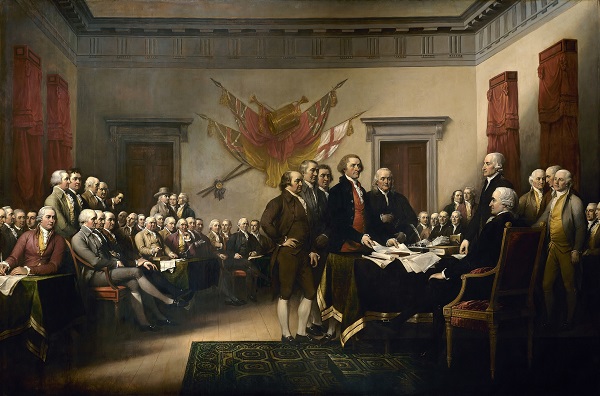
So this Christmas, when you see Leutze’s famous painting on a card or coffee mug, look past the standing Washington. There, among the straining oarsmen and the swirling ice, among the men — no fancy uniform, no epaulets, no glory. A man with just eight inches of wood at his side and the stubborn heartbeat of a nation being born within him.

His name was William Hedrick. He was my paternal six-times-great-grandfather. Because he and thousands like him kept marching that night, we are still here to tell the tale.

“Victory or Death.”
They chose victory.

If you are a man in the Northwest Georgia area and have an interest in honoring the legacies of your patriot ancestors, visit General Nathanael Greene Chapter – Sons of the American Revolution https://www.facebook.com/profile.php?id=61572762870391 to learn more about an organization you can join.

Giving What Really Matters

As a five-year-old, I pressed my nose against the Western Auto window and fell in love. There it sat—the shiniest red Radio Flyer wagon I’d ever seen. Its chrome hubcaps practically winked at me, whispering, “Take me home.” At least that’s what my little-kid brain heard.

Christmas was simpler then. My friends and I came from similar working-class homes. If things were going well, we each got one “big” gift and a couple of practical ones—tube socks, a flannel shirt, maybe a dress shirt for church.

As years passed, the dream in the window changed: a Red Ryder BB gun, a Matchbox racetrack, model airplanes and ships, then a bicycle. Eventually the dreams outgrew my parents’ budget. I saved lawn-mowing money for a candy-red English racer while they supplied smaller gifts that matched whatever I’d bought myself.

Once I was old enough to earn real money and stopped making the lopsided clay ashtrays, I settled into my own gift-giving routine. For Dad: handkerchiefs and Old Spice aftershave. For Mom: L’origan perfume, (she never changed brands), a box of chocolate-covered cherries, and one unique item I’d hunted for all year.

Yet our tree was never buried in presents—two or three gifts each, that was it. What we lacked in quantity, we made up for in generosity toward others. Mom baked for neighbors. We filled food boxes for families in need. Dad spent evenings in the garage restoring donated toys for children who might otherwise wake up to nothing.

That’s what my parents taught me Christmas is really about: using whatever God has given you to lift someone else up.

For me, those gifts turned out to be music and acting. Every December I sang at church or performed at nursing homes, watching eyes light up brighter than any string of tree lights.

Christmas doesn’t require big price tags. Sometimes the best giving is simply sharing whatever talent, time, or kindness you have to offer.

This season, I hope you discover the deeper joy that comes from giving quality instead of quantity—and from meeting needs rather than feeding wants.

May the bliss of Christmas find you in the giving.

From Niagara Falls to Forever: Remembering A Brother’s Love

As a toddler at Niagara Falls, I was determined to catch one of the huge fish I saw jumping in the churning water below the walkway. I stuck my leg through the railing, then maneuvered my head to follow. In my little mind there was no danger — only the thrill of grabbing that fish. I never considered that success might send me tumbling over the falls right along with it.

Randall and Alan Franks (Photo: Floyd Franks)

Thankfully, my older brother Alan wasn’t distracted that day. Several years my senior, he yanked me back to safety and ended my fishing career before it began. He saved my life, even if, at the time, I only saw him as the one who wouldn’t let me do what I was sure I could do.

I’m the youngest of three boys. Alan, the middle one, was my half-brother — Dad’s son from his first marriage. He lived mostly with his mom, Melba, and his stepdad, in Blairsville coming to stay with us on some weekends, alternate holidays, and summer vacations in Atlanta. When we were little, those visits were pure fun; we always found games and mischief to share. I’m sure for him it often felt like babysitting his pesky little brother.
Alan loved his mom Melba with all his heart, but he was blessed to have a second mom in my mother too. She didn’t hesitate to hold his feet to the fire, push him to reach his potential, and set him straight when she thought he was veering off course. The same she did for me. He used to laugh that Mom was a “ball of fire,” and none of us wanted to be in her path when she got on a roll.
He also had two dads. Like me, his relationship with our father could be strained at times; part of that age-old struggle when a boy starts becoming a man and tries to step out from under his father’s shadow.
By the time he charged into his mid-to-late teens, I was just starting elementary school. His heavy-metal albums and glorious afro cracked me up. For a while in his late teens he came to live with us, and I loved having him around — even if we had almost nothing in common and he was far more interested in girls than in playing with me. I remember he once talked about training to become an EMT. Life moved on. He fell in love, married Carolyn, started a family in another town, and our time together shrank to holidays, funerals, and the occasional pass-through visit.
Rotary-dial phone calls kept Mom and Dad updated on his adventures: first a job at the First National Bank of Chatsworth, then running a little place called The Chili Dog (restaurants were a subject our family knew plenty about), and always the latest news about my nieces. Eventually he joined with his brother Donny in his dream to start Atlanta Carpet Company, where he worked the rest of his life. When we lost Dad far too young, one more tether between us loosened.
Still, he was my brother — a gift from God and from our parents. After Dad was gone, whenever I hit rough patches I turned to my brothers for advice, especially about the ladies in my life. Alan had been married twice — first to Carolyn, later to Jane — so he and my brother Jerry always had more experience than I did. I treasured their wisdom, even when I was too stubborn to follow it right away.
As adults we related better — talking about life, the world, our family, and hopes for the future. His kids gave him grandchildren, and more recently great-grandchildren. 
Sometimes we get urges for a reason. Earlier this year, while performing in eastern Georgia, I felt a strong pull to reroute my drive home through Gainesville, stop in, and maybe share supper with Alan. The sensible side of me looked at the three-hour drive and the monstrous traffic I was driving in and decided on a phone call.

A few hours ago, from this writing, that same phone rang. A doctor was on the line — she’d found my number in his

Alan Franks

contacts. She told me Alan had suffered a massive cardiac arrest and they were still working on him.

Tonight that earlier decision haunts me. Yes, we talked and messaged a few times after that missed visit, but I lost my last chance to sit across a table from him in this life. I will always regret not listening to that urge.
I am comforted, though, by how proud he was of my recent music honors.
Not long ago he wrote: “Congratulations to my Lil brother who got all the talents which left me with none! LOL. The man can definitely saw a fiddle. I have always loved to hear you play. I will never forget the cross-country road trip we took with Dad and Pearl — Atlanta to Arkansas to Ohio to Niagara Falls to Canada and back home through Cherokee, N.C. You was a little guy then and drove me completely nuts in the back seat of the old blue Chevy making up songs and singing them. LOL. You have always been talented Lil bro. The award was much deserved.”
Moments like that mean little without family to share them with. Countless times I’ve been grateful Alan was there to cheer me on over the years. And there were just as many times — heart broken by a woman or by a career stumble — when I’d drive a couple of hours just to sit while he tinkered, or spill my guts on his couch about things I could only tell my brothers.
I was privileged to do the same for him — celebrate when he caught a big bass in a tournament, brag about his success in commercial carpeting, or listen to the latest story about one of his kids or grandkids.
I’ll miss my brother terribly. Tonight, with tears hitting the keyboard, I keep thinking about those boyhood rides in the back of Mom’s 1964 Chevy Malibu or Dad’s light-green 1969 Chevy truck, wherever Mom and Dad were hauling us. The destination didn’t matter. What mattered was that we were together.
I know we will be again.
Alan was an active supporter in our charity benefiting youth with the Pearl and Floyd Franks Scholarship through the Share America Foundation, Inc. If you are inclined to give a gift in his memory visit online: http://ShareAmericaFoundation.org
or by mail: P.O. Box 42, Tunnel Hill, GA 30755.