
From Recess to Real Life: Childhood Friends Shaped My World
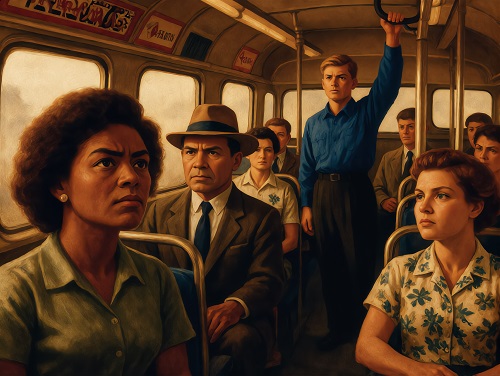 I crowded into the MARTA bus headed toward downtown Atlanta. I grabbed a seat as the bus filled up. A Black woman in a gray dress and heels got on, and I noticed there was no available seat, so I rose and moved toward the back, giving her my seat. As I got situated near the rear door, I wrapped my arm around the bus rail and placed my feet appropriately to keep me steady as the bus stopped and started along the rest of the trip to Central City Park. As I stood there, I started looking at the man sitting near me and realized it was Mr. Olivares. He was heading to his job downtown. I had not seen him in years, and initially he did not recognize me.
I had grown tremendously since I used to run through his living room alongside his children who were near my age—Paul and Vivian.
I met Paul in about third grade after his family emigrated from South America. The family included at least two youths near my age and some older siblings as well. I don’t know what drew me to Paul initially.
Through most of my elementary school experience, all the students were white, despite going to school after integration and during a program referred to as M-to-M transfer, where the county would bus students to schools that were demographically different.
As best I recall, Paul was the first student from a different country or culture that I met—especially someone speaking a different language: Spanish.
We became fast friends and began playing together during recess at school. Soon, I started visiting his home and joining his family for dinner, and he would visit ours as well. I began learning enough Spanish to get by as I visited his home and spent time among his siblings.
I guess it was my parents’ open and caring attitude toward people—whom some Southern whites of that era may have viewed differently because of color, culture, or faith—that allowed me the freedom to reach out and not feel I was doing something out of the ordinary.
In fact, perhaps it was the early boundaries that my own parents had faced as they overcame the “hillbilly” stereotypes while migrating from Appalachia into the city and seeking acceptance in Atlanta society that helped them later form the attitudes that shaped me.
So the fact that Paul was from somewhere else never fazed me as a child; it just made our time together of greater interest to me.
At some point, I lost my friend Paul when his parents were able to move him from public school to private school.
I still remember the conversation when he asked me to see if my parents would consider moving me as well. We did discuss it, but my folks stuck with the public school route, so our diverging paths forced us to focus on new friendships. Sadly, I had no need to speak Spanish anymore until I reached my studies in high school, and by then, it was like starting over completely.
It would be a while before Dresden Elementary would see another student who was not white; the next family would be Chinese from Hong Kong. In my grade was Nin Chung Szeto, and once again, I found another friend. In this case, however, I didn’t learn Chinese, but in two years’ time, I certainly had an impact as I helped teach Nin Chung English. I am sure he was burdened by my Southern accent for years. Like Paul, his path also diverged as his family moved west. We kept in touch by letters for some time, but eventually the practice faded. Still, I knew that Nin Chung—by then, he had chosen the name John—was carving out his own future in America.
When the seat next to Mr. Olivares opened up, I sat down and reintroduced myself, explaining that I was on my way to classes at Georgia State University. He caught me up on Paul and Vivian. I asked him to pass my greetings to them, and Mr. Olivares and I would regularly exchange greetings as we both commuted. It would be years later, in a Winn-Dixie grocery line, when Paul and I would next meet. Now, both out of college and making our own lives, we were miles away from those young boys we had been when our friendship started. Though we said we would get together sometime, we were in different places and did not follow through.
While the paths that life had in store for Paul, John, and me were not ones that would keep us connected, for me those youthful experiences enriched my life and allowed me to continue expanding my opportunities to know more about the people I meet, whether from a world away or just down the street.
Find more stories from Randall’s youth experiences in his Encouragers Book Series www.RandallFranks.com/Store .



