Frontier Guardians : A Legacy of Patriot Sacrifice
In the quiet hills of Ottway, Greene County, Tennessee, the small Malone Cemetery guards a powerful story of generational sacrifice. Here lie two Revolutionary-era veterans: John Joseph Malone Sr. (1724–1783) and his son, John Malone Jr. (1752–1823). Father and son, buried side by side, their graves mark not just a family plot, but a testament to the raw courage that secured America’s western frontier.
 John Joseph Malone Sr.’s path to patriotism began in Somerset County, Maryland, where he was born and raised a family with wife Sarah Hart. As colonial tensions simmered, he saw early militia duty in Maryland: in 1757 or 1758, he served in Captain Thomas Norris’ Company, with payment delayed until 1767 (£1 10s for 30 days of attendance). Before long, the pull of western lands drew him southward. By 1774, records place him—and remarkably, his young adult son—in the thick of Lord Dunmore’s War, a brutal prelude to the Revolution.
Serving together in Captain David Looney’s Company of Virginia militia (from Fincastle County), the Malones helped defend settlers against Shawnee raids over the Ohio Valley. Their unit was assigned to guard the Clinch River frontier, patrolling under Lieutenants Daniel Boone, Gilbert Christian, and John Cox to protect settlements while the main Virginia forces engaged elsewhere.
Notably, John Sr.’s other sons, William (b. ~1759) and George (b. ~1760), also served in this conflict, contributing to the family’s collective defense efforts.
The broader war exploded on October 10, 1774, at the Battle of Point Pleasant—a thunderous clash at the confluence of the Ohio and Kanawha Rivers. In foggy dawn light, Chief Cornstalk’s 300–500 warriors attempted a surprise assault on Colonel Andrew Lewis’s 1,100 Virginians. What followed was a ferocious all-day fight: rifle fire cracking through the trees, warriors shouting war cries from concealed positions, militiamen holding lines in desperate hand-to-hand combat.Cornstalk himself rallied his men with the legendary cry, “Be strong! Be strong!” Yet the Virginians prevailed, though at grievous cost—75 killed and 140 wounded in what some called the bloodiest frontier battle against Native forces. The victory forced a treaty opening Kentucky to settlement and stoked revolutionary fires against British policies seen as favoring Native allies.
By the mid-1770s, the Malones had migrated to the Holston River settlements (future eastern Tennessee). In 1775, a John Malone (likely Sr. or Jr.) appeared in Captain George Matthews’ Company from Augusta County, Virginia, amid escalating patriot mobilizations.
In 1777, John Sr. joined fellow settlers in signing a bold petition affirming patriot loyalty and seeking North Carolina’s protection amid Tory and Cherokee threats. Throughout the Revolutionary War, his service shifted to vital local defense: scouting raids, guarding forts, and holding the volatile frontier where British-incited attacks nearly unraveled the southern cause.
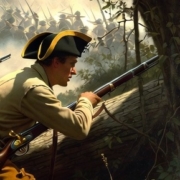
Evoking the rugged riflemen of the 1770s backcountry—ordinary farmers like Malone, armed with long rifles and unyielding resolve.
Malone did not live to see final victory, dying in 1783—the year peace was signed—and resting in the cemetery that bears his name. His son, also a veteran, joined him decades later. Both received postwar land grants for their service.
Though not always listed in early official DAR rolls, their patriot status endures through grave markers, militia records (including those qualifying some descendants for modern SAR/DAR membership), and family tradition.
In an era of Yorktown glory, the Malones remind us: Liberty was won in forgotten riverbank battles and watchful frontier nights, often by fathers and sons standing together.
As America’s 250th anniversary nears, stories like this call us to remember the hidden heroes in our own family trees. Who fought unseen in yours?
Read more about his family in A Mountain Pearl : Appalachian Reminiscing and Recipes available at www.RandallFranks.com/Store .
John Joseph Malone, Sr. is the maternal sixth great grandfather of the author.