
The Fifer Who Crossed the Delaware: The Night That Saved a Revolution
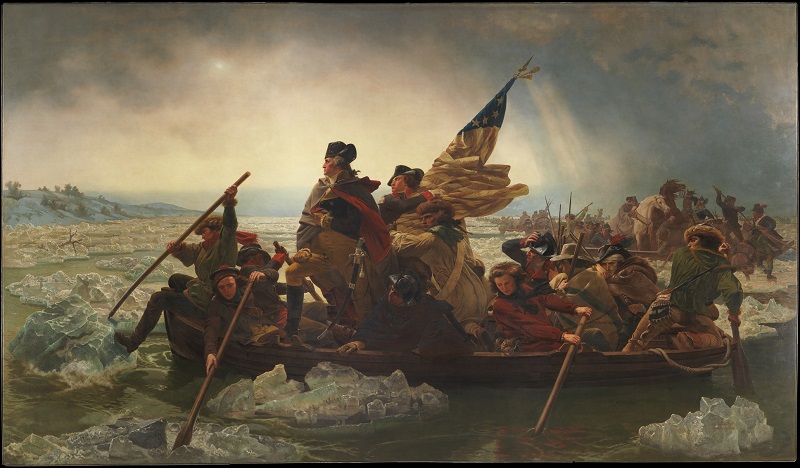
Every Christmas, hundreds of re-enactors gather on the Pennsylvania bank of the Delaware and push replica Durham boats into the black, ice-choked river. They are re-living the night of December 25–26, 1776 — the night George Washington’s ragged army made its desperate gamble to surprise the Hessians at Trenton and, in one audacious stroke, keep the American Revolution alive.
Among the 2,400 frozen men who stumbled ashore in the pre-dawn darkness was a 32-year-old fifer from Lancaster County named William Hedrick. He was no general, no celebrated captain, not even an ordinary musket-toting private. His weapon was eight inches of ebony wood. His job was to pipe the tunes that kept exhausted, frostbitten feet moving in step. By late December 1776 the cause looked lost. The Continental Army had been driven out of New York, chased across New Jersey, and pushed behind the Delaware. Enlistments were expiring. Desertions were epidemic. Congress had fled Philadelphia. Riding with the retreating columns, Thomas Paine scribbled the words that still ring: “These are the times that try men’s souls.
”Washington knew he needed a victory — any victory — before the army simply dissolved on January 1. So he chose the boldest plan imaginable: recross the river in a nor’easter, march nine miles through the night, and strike the Hessian garrison at Trenton at dawn.
William Hedrick’s company of Pennsylvania riflemen, led by Captain James Ross and attached to Major Abraham Ledsour’s battalion, was in the vanguard of that forlorn hope. Pension records and militia rolls place him in the column that formed at McKonkey’s Ferry around four o’clock on Christmas afternoon.
These were not ordinary soldiers. In the elite Pennsylvania rifle companies of 1775–1778, the fifer was first a rifleman who happened to play the fife. When the shooting started, Hedrick laid the instrument aside, shouldered his long rifle, and fought like everyone else.
By the time he reached the Delaware that Christmas night, he was already a hardened veteran. He had marched nearly a thousand miles on foot, fought in the disastrous Battle of Long Island, skirmished almost daily during the four-month retreat across New York and New Jersey, and watched the army shrink from 20,000 to barely 3,000 effectives. He had gone hungry, shoeless, and sleepless for weeks.
Imagine the scene. Ice floes thick enough to gut the boats crashed against the hulls. Men broke a path with oars and poles, advancing only yards at a time. Two horses drowned; two cannon nearly slid overboard. The password was “Victory or Death.” On that night it felt less like inspiration than weather forecast. The crossing took hours longer than planned. Instead of attacking at 5 a.m., the first troops reached Trenton after 8 a.m. — long after sunrise. Surprise seemed lost. Yet the same storm that delayed the Americans kept the Hessian pickets huddled indoors. When the Continentals finally poured down Pennington Road and King Street, many mercenaries were literally still pulling on their boots.
Washington had split his force. Sullivan’s division, including Hedrick’s riflemen, sealed the Assunpink Creek bridge while Greene struck from the north. In forty-five minutes it was over. Colonel Johann Rall lay mortally wounded; nearly 900 Hessians surrendered. The Americans lost only two men — both to the cold, not enemy fire.
On the icy road from the river to the town, Hedrick and the other musicians had played “Roslin Castle,” a haunting Scottish lament turned quickstep, and the insolent new favorite “Yankee Doodle.” The shrill notes cut through the gale and kept men from falling out to die in the snow.
Trenton was not the war’s biggest battle, but it was the most necessary. Ten days later came Princeton, and suddenly recruits were streaming back to the colors, and the Revolution had a pulse again.
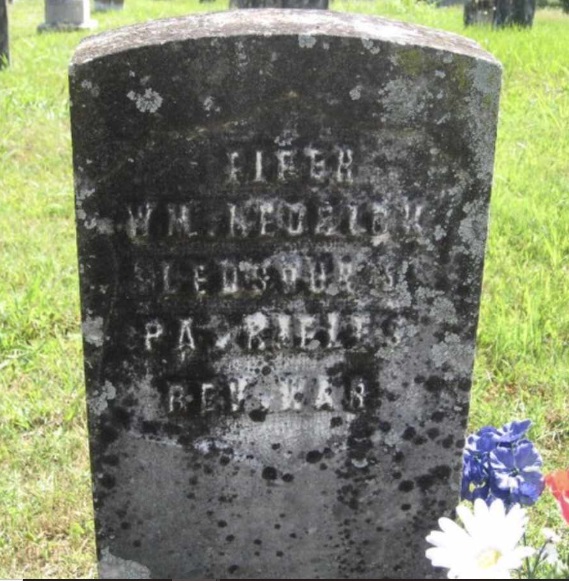 William Hedrick marched on — through the mud of Brandywine, the snows of Valley Forge, the fog of Germantown — until an honorable discharge sent him home. He headed south to the mountains of East Tennessee, raised a large family, helped plant churches and communities in Sullivan, Greene, and Sevier Counties, and lived to the remarkable age of ninety-five. In 1839 he was laid to rest beneath a simple stone at Headrick Chapel Cemetery in Wears Valley, the notes of his fife finally silent.
The paper trail is solid: National Archives pension S.40495, Lancaster County militia rolls of 1777–1778, and sworn statements from comrades who remembered the fifer who played them across the Delaware and stood beside them through the horrors of Valley Forge.
So this Christmas, when you see Leutze’s famous painting on a card or coffee mug, look past the standing Washington. There, among the straining oarsmen and the swirling ice, among the men — no fancy uniform, no epaulets, no glory. A man with just eight inches of wood at his side and the stubborn heartbeat of a nation being born within him.
His name was William Hedrick. He was my paternal six-times-great-grandfather. Because he and thousands like him kept marching that night, we are still here to tell the tale.
“Victory or Death.”
They chose victory.
If you are a man in the Northwest Georgia area and have an interest in honoring the legacies of your patriot ancestors, visit General Nathanael Greene Chapter – Sons of the American Revolution https://www.facebook.com/profile.php?id=61572762870391 to learn more about an organization you can join.