

The Fiddle’s Enduring Tune in American History
The fiddle has an amazing history in the American experience. It first crossed the Atlantic with European settlers, where violins played the music of both upper classes and common folk, uplifting and entertaining through hard times.
Whether in a seated concert with a string quartet or kicking up heels at a cotillion or barn dance, the fiddle became the centerpiece of American music for much of our nation’s first 200 years. It crossed the Appalachians with early frontiersmen and traveled waterways with trappers and explorers.
During early conflicts like the Revolutionary War, the War of 1812, the Mexican-American War, and the Civil War, it wasn’t unusual to hear a fiddle sawing away beside a campfire as soldiers recuperated from battle. Fiddlers often provided rare moments of uplift amid gruesome experiences. Tunes like “Soldier’s Joy” weren’t just melodies—they reflected how the fiddle’s sound boosted morale.
The instrument journeyed west in Conestoga wagons and on horseback, providing the soundtrack to settlement after settlement. It remained at the heart of dances well into the 20th century. As music ventured into recording and radio, fiddlers led the way, with the first country stars often being fiddle players or string bands.
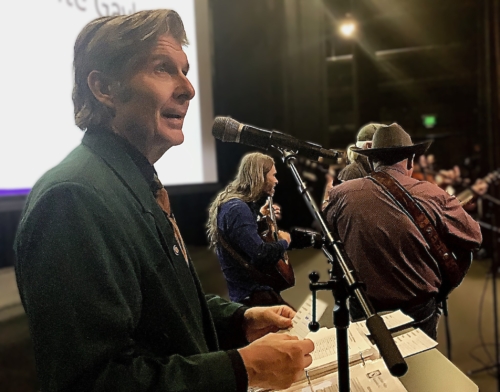
Randall Franks hosts the Grand Master Fiddler Championship at the Turner Theater. (GMFC Photo)
As a fiddler myself, I’m proud of the music passed down from my great-grandfather and those before him. I learned from Appalachia’s early stars and carry a bit of them with me. Over the years, the fiddle has adapted to regional styles, reflecting the lives and tastes of its players.
I’m honored to be in my 18th year as celebrity host of the Grand Master Fiddle Championship, carrying on the tradition of Grand Ole Opry legends like Porter Wagoner and Roy Acuff.
Dozens of fiddlers of all ages gathered just outside Music City in Franklin, at the Mockingbird and Turner Theaters at the Factory, to test their mettle. Classic fiddling sprang from their instruments, delighting spectators. Competitors traveled from across the U.S. and Canada to vie for the coveted Grand Master Fiddler title, originally created by the Grand Ole Opry in 1972. Past winners like Tristan Paskvan, Tristan Clarridge, and Bobby Taylor (2025 Dr. Perry Harris Award recipient) made a special appearance during the Opry’s 100th anniversary celebration, enthralling the audience.
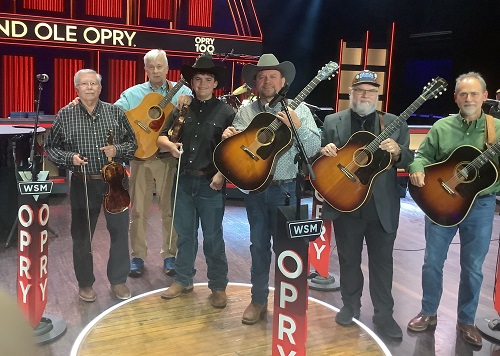
The Grand Master Fiddler Championship on stage at The Grand Ole Opry. (GMFC Photo: Randall Franks)
On Saturday, young fiddlers—from about age 4 to 15—showed off their hot licks. Many overcame nervousness to deliver amazing performances and rack up high scores. Tristan Paskvan of Southlake, Texas, claimed the Youth Grand Master Fiddler title.
Sunday shifted focus to adults, with 14 competitors vying for open spots by playing breakdowns to secure a place in the Top Twenty. Around six joined champions from around the country. The top fiddlers then performed their best breakdown, waltz, and tune of choice to narrow the field to the Top 10. Those finalists went bow-to-bow again for the top rankings. Jesse Maw of Asheville, North Carolina, emerged as the Grand Master Fiddler, edging out multiple-time winner Tristan Clarridge as runner-up.
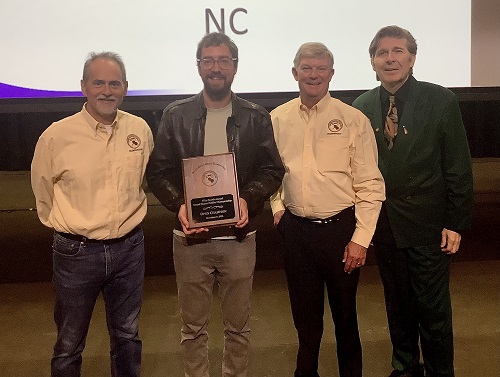
Grand Master Fiddler Open Champion Jesse Maw (second from left) receives his award, from left, GMFC Directors Howard Harris (third from left) and Ed Carnes (left) and Host Randall Franks. (GMFC Photo: Tyler Andal)
The 54th Annual Grand Master Fiddler Championship was a tremendous reflection of the American fiddle experience! Support its ongoing success by donating at www.GrandMasterFiddler.com. Learn more about my fiddling history at www.RandallFranks.com/
Check out Randall’s Visit to the Grand Ole Opry with the Grand Master Fiddlers:



