

Posts

Echoes from King’s Mountain: Ancestors, Sacrifice, and the Songs of Freedom

As we draw nearer to the 250th anniversary of American independence, I find myself reflecting on the ancestors who answered the call to arms, ordinary frontiersmen who became heroes in the fight to free the colonies from British rule.
My fifth-great-grandfather, Charles Kilgore, was one of five Scotch-Irish brothers who heeded the Revolution’s summons. Born in 1744 in County Clare, Ireland, Charles traced his roots to the Kilgours of Fife, Scotland. Family lore connects them to Clan Douglas, fierce warriors who battled for Scottish independence and stood with the Jacobite risings of the 1700s.Around 1763, Charles and his brothers—Hiram, Robert, William, and James—crossed the Atlantic, settling first in North Carolina before pushing to the Virginia frontier. There, Charles married Martha McIlhaney, raised eight children on a 600-acre plantation, and joined the Washington County Militia under Captain James Dysart in Colonel William Campbell’s regiment. His four brothers enlisted alongside him. They were part of the legendary Overmountain Men, rugged settlers from beyond the Appalachian Mountains who embodied the spirit of the frontier.
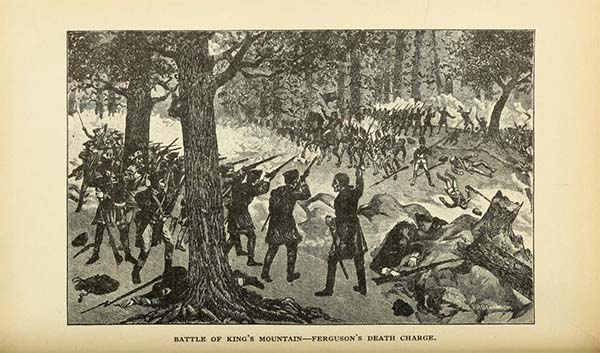
In late September 1780, these men mobilized after British Major Patrick Ferguson threatened to “march over the mountains, hang their leaders, and lay waste the country with fire and sword.”
The brothers joined hundreds of others in a grueling 330-mile march over rugged terrain, enduring rain and hardship for two weeks to confront the Loyalists.
Their defining moment arrived on October 7, 1780, at Kings Mountain—a rocky, wooded spur on the North Carolina-South Carolina border that proved a pivotal turning point in the Southern Campaign of the Revolutionary War.
Roughly 900 Overmountain Men encircled about 1,100 Loyalists perched atop the ridge. Unlike traditional European line battles, the Patriots employed guerrilla tactics suited to the terrain: advancing uphill under cover of trees and rocks, using their accurate long rifles to pick off enemies while dodging bayonet charges.
The Kilgores’ militia charged from the north, pressing through thick smoke and the crack of musket fire. Hiram fell in battle; Robert and Charles were gravely wounded. Yet, they helped secure the summit as Loyalist leader Major Patrick Ferguson was slain, his forces crumbling in just over an hour.
From the southeast, my Sherrill kin—fourth- and fifth-great-grandfathers Adam and Samuel Sr., along with uncles
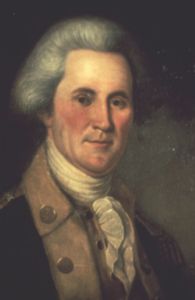
Uncle Col. John Sevier

Samuel Jr. and George—fought under my uncle Colonel John Sevier, their rifle fire converging with the Virginians’ assault.
On the southern flank, my sixth-great-grandfather Captain John Weir’s “South Fork Boys” pushed forward despite early losses, tightening the pincer that broke the Loyalists.The toll was stark: Loyalists suffered 157 killed, 163 wounded, and 698 captured—nearly their entire force—while Patriots lost only 28 killed and 62 wounded, a testament to their superior marksmanship and resolve.
In the aftermath, nine Loyalist officers were hanged for alleged atrocities, underscoring the war’s brutal, brother-against-brother nature.
This victory demoralized British forces in the South, boosting Patriot morale and prompting Lord Cornwallis to abandon his invasion of North Carolina.
Thomas Jefferson later hailed it as “the joyful annunciation of that turn of the tide of success which terminated the Revolutionary War with the seal of our independence,” paving the way for the decisive siege at Yorktown a year later.
Amid the chaos, my Loyalist-turned-Patriot ancestor, fifth-great-grandfather Captain Billy Green, initially defended the hilltop. Captured and sentenced to hang, he escaped and later realigned with the Patriots. This meant I had family on both sides—an experience echoed throughout history, from Scotland’s clan wars to civil conflicts worldwide.
On that fateful day, all five Kilgores stood shoulder to shoulder, shedding blood in a clash that shifted the war’s momentum. Charles, shot through the body, survived only because Martha and their young daughter Mary braved the wilderness in a wagon to retrieve him and bring him home to Virginia. Robert also recovered from his wounds, but tragically lost his life to Mingo Indians on December 31, 1782, during a hunting expedition. His family then moved in with Charles’s for a time.
Charles earned a pension in 1809 and passed away in Greene County, Tennessee, in 1823. His daughter Rebecca married Adam Sherrill in the 1790s, uniting two families of Kings Mountain veterans in bonds forged through shared sacrifice.
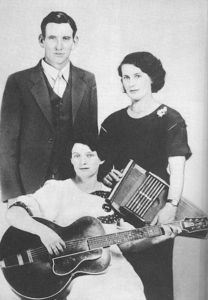
 

The Carter Family
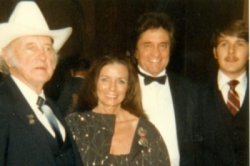
Randall Franks (right) with Johnny and June Carter Cash and Bill Monroe in 1984.

Charles and his kin remind us that the Revolution was won by everyday men and women—farmers, brothers, and families—who rose to extraordinary heights. The five Kilgores symbolize the unbreakable ties that compelled them to leave their homes and fight side by side for freedom. Because they did, generations since have lived without bowing to distant monarchs.
On a personal note, I am privileged to descend from these men. Through the Kilgore roots, I share them as grandfathers with notable figures in Appalachian music: All three original Carter Family members—A.P., Sara, and Maybelle—are my cousins. Sara and Maybelle descend from Charles, like me; A.P. from brother Robert. Thus, connecting me also to the Johnny and June Carter Cash clan. These ancestors’ lives truly gave us all something to sing about. 

 

Charlie Daniels remembers the Ragged Old Flag

I was standing off stage as a long list of stars were called out and introduced by Country Music legend Charlie Daniels awaiting my name to ring out from the mouth of the man who told the story of Johnny beating the old devil in the fiddling showdown.

It was especially an honor for me to stand in front of those attending playing my fiddle as he backed me on guitar. Few musical performers epitomize the American spirit with more passion and fervor than the now Country Music Hall of Fame member.

The singer, who has sung of his unabashed patriotism time in and time out during his career, is showcasing his love of the Red, White, and Blue once again in his latest recording that will be available for sale digitally on July 4th via iTunesAmazonGoogle Play among other digital platforms.

It was my old friend and supporter Johnny Cash who made “Ragged Old Flag” a standard. Written and recorded by “The Man in Black,” the song hit No. 31 on the Billboard Country Singles chart in 1974.

Daniels recorded a stirring version of the song which still garners airplay during the summer months on Classic Country stations nationwide, particularly around the Fourth of July. Recording this song allowed Charlie to combine two of his biggest passions – his country and his love of Johnny Cash. Charlie is joined on this track by Mark “Oz” Geist, Benghazi Warrior/Survivor and co-author of “13 Hours: The Inside Account of What Really Happened in Benghazi.”

“These lyrics are just as timely today as they were when Johnny originally recorded them over four decades ago,” Daniels said. “The song demonstrates the passion and the love that we all should have for this country – and the freedoms that we enjoy with it. Of course, it is always a joy to record a song written by the great Johnny Cash. He was an American original, and someone that I consider myself humbled and honored to call friend. Good songs, such as his, continue to remain in style.”

The Grand Ole Opry star, turned 80 last fall but he is not slowing down in the slightest. He continues to tour across the country, and will release a new book, Never Look At The Empty Seats on October 24. The book will document his legendary career, as well as several of his many trips abroad in support of the United States Military.
With a career spanning nearly 60 years and exceeding 20 million in sales worldwide Charlie Daniels is the quintessential southerner with a healthy dose of wild west cowboy. For decades, he has connected with his millions of fans in the varying genres of music that reflect his steadfast refusal to label his music as anything other than the “Charlie Daniels Band” sound — music that is now sung around the fire at 4-H Club and scout camps, helped elect an American President, and been popularized on a variety of radio formats. Having celebrated multiple GRAMMY® Awards, CMA Awards, ACM Awards, BMI Awards, GMA Dove Awards, CCMA Awards, his list of accolades is broad; the latest being the newest inductee to the Country Music Hall of Fame.

Several of his albums have been RIAA Certified Multi-Platinum® and he has achieved a platinum-selling single in his iconic fiddle-ridden hit, “Devil Went Down to Georgia.” An outspoken American patriot and strong supporter of the U.S. military, his talked-about Volunteer Jam concerts are world-famous musical extravaganzas featuring artists like Lynyrd Skynyrd, Ted Nugent, Trace Adkins, Alabama and others, all on one stage for one purpose – to raise funds for our U.S. military. Daniels 80th Birthday Volunteer Jam in 2016 raised funds for The Journey Home Project, a non-profit veterans’ assistance organization which he co-founded. For more information on Charlie Daniels, please visit www.charliedaniels.com.

Country music’s Merle Kilgore focus of new book

When my country music career was in full swing in the 1990s, I loved spending a little time in the office of a country luminary who built credentials as a performer and behind the scenes in the business – Merle Kilgore. I was honored to know and work with him and included him in my Encouragers book series.

Known widely as the manager for Hank Williams, Jr., his career intertwined with some of country’s greatest names and those branches of his experience are explored in a new book “These Are My People” (WriteLife Publishing) available for purchase now at Amazon, Barnes & Noble and local bookstores across the country.

Merle Kilgore co-wrote “Ring of Fire,” carried Hank Williams Sr.’s guitar, managed Hank Jr. for more than two decades, and was inducted into the Nashville Songwriters Hall of Fame.  Now, his grandson, Mark Rickert, gives readers an insider’s look at Merle’s larger-than-life world.


“We had a very close relationship,” Rickert recalls.  “I listened to his stories for hours on end, summer after summer.  He was a character and his friends were superstars.  His was a story I always believed should be told.”


Mark Rickert grew up in a Country music household, just a few miles from the Opryland USATheme Park and the Grand Ole Opry, and only a block from the home of Colonel Tom Parker, Elvis Presley’s manager.  Mark’s father even worked as a Nashville tour guide. But it was his grandfather, Merle Kilgore, who showed him the backstage side of the business.  Before publishing his first novel, Mark served eight years a photo-journalist for the U.S. Army Reserve, spending a year of that service in Baghdad, Iraq, writing for military publications.  In 2008, he earned a Master’s in English Literature from Middle Tennessee State University.  Today, he works as chief of public affairs for an Army recruiting battalion.

Mark has told it well; imbuing each chapter with details that only Merle or those closest to him would know. Kilgore died in 2005 and his funeral service was held at the Mother Church of Country Music: The Ryman Auditorium.


For Rickert, Johnny and June Carter Cash, Johnny Horton, Faron Young, Elvis, and other legends were the people who ruled the radio airwaves and populated “Daddy Merle’s” tales.  From wrecking hotel rooms with Cash to explorations into the “other side” with Horton and the often-hilarious anecdotes of his life as a disc jockey and as a performer on the Louisiana Hayride and the Grand Ole Opry, Merle lived life to the fullest.  Blazing new career paths into the industry itself, Kilgore was undeniably a critical strand in the fabric of the Country music storyline.


“These Are My People” offers chapter after chapter of insights into the private lives of Merle and his friends, and includes a selection of more than 20 unique black and white photos.  It is an engaging read ably presented in a unique format. Published by WriteLife, “These Are My People” is in bookstores now. It is Rickert’s second book and follows the horror novel, “The Tone Poet.” 


As someone who knew and respected Merle and who had the opportunity to work side by side with him, I can attest, he was larger-than-life and this book provides a unique look into his life. You will enjoy it even if you didn’t know him or his contributions.