

Echoes of Valor: Frederick Emert’s Revolutionary Odyssey
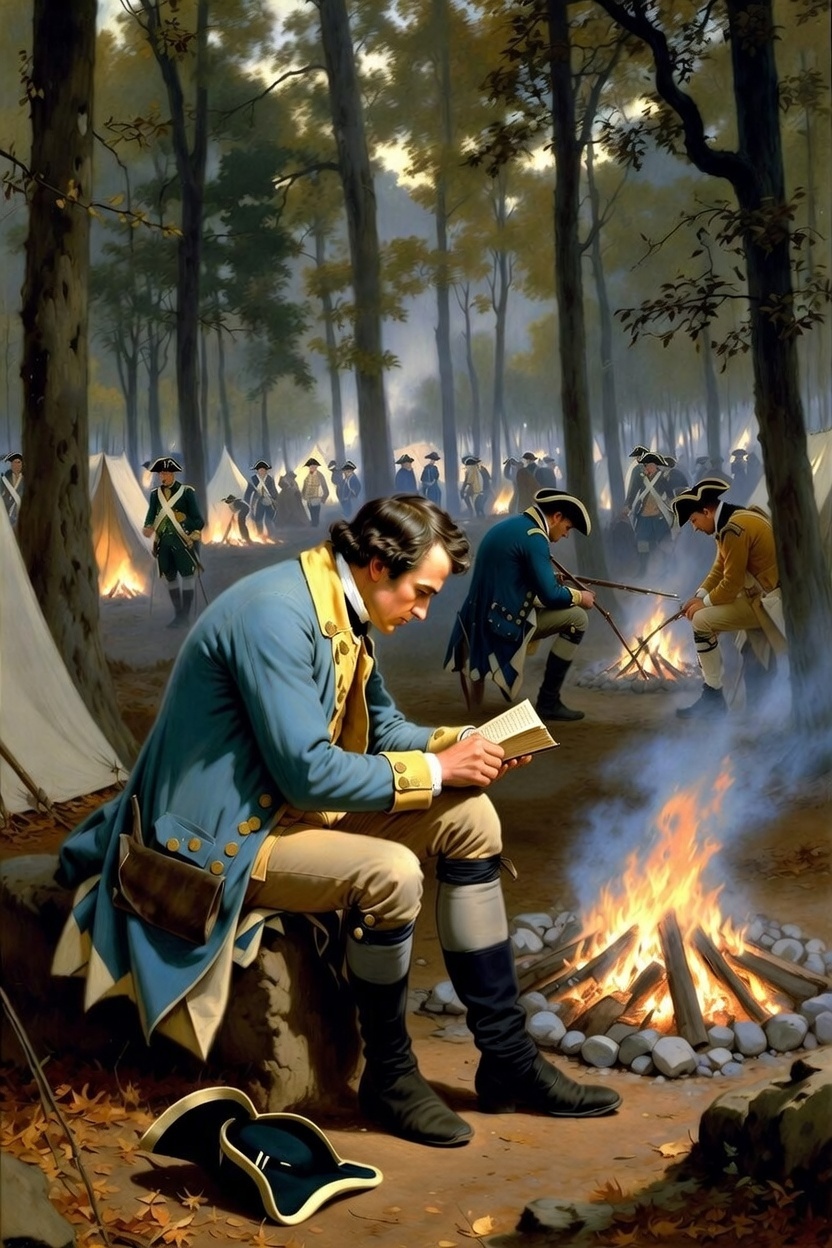
Amid the crisp autumn air of September 1777, Private Johan Frederick Emert huddled near a flickering campfire along the banks of Brandywine Creek in Pennsylvania, his woolen coat—part of the standard Continental Army uniform, dyed a faded blue and frayed from months of marching—draped over his shoulders against the evening chill cleaning his musket.
Around him, the dense woods rustled with the movements of fellow soldiers from his Pennsylvania regiment, their tricorn hats tilted low as they cleaned muskets or shared meager rations of hardtack and salted pork. The distant rumble of artillery echoed from British lines, a grim reminder of the day’s fierce engagement where Emert and his comrades had charged through smoke-filled fields, dodging grapeshot and bayonets in a desperate stand against General Howe’s advancing forces.
 Born on October 11, 1754, in Berks County, Pennsylvania, to German immigrant parents, Emert enlisted as a private in the Continental Army around the war’s early days, likely in 1776, joining the 3rd Pennsylvania Regiment under Captain John Huling and Colonels Arthur St. Clair and Joseph Wood, part of the Pennsylvania Line under Brigadier General Anthony Wayne.
This unit was dispatched in May 1776 to bolster Colonel Benedict Arnold’s retreating forces in the northern theater. Emert’s movements indicate he would have been stationed at Fort Ticonderoga, where soldiers endured harsh conditions—fortifying defenses, drilling daily, and guarding against British incursions amid the rugged wilderness of upstate New York.
Compatriots’ recollections, passed down through family oral histories, paint a picture of Emert’s likely participation in the naval clash at Lake Champlain in October 1776, where American forces delayed a British invasion from Canada. As a private, his day-to-day activities would have involved sentry duty on the lakeshore, maintaining vessels or earthworks, and foraging for supplies in a landscape of dense forests and biting cold, all while facing shortages that left the army “suffering for provisions,” as he later recounted to neighbors.
By 1777, Emert’s regiment had shifted south, aligning under General George Washington. He fought at the Battle of Brandywine on September 11, where the Continentals attempted to block the British advance on Philadelphia. Amid the chaos of musket volleys and cannon fire, Emert would have maneuvered through open fields and wooded ravines, reloading his flintlock musket under pressure while coordinating with messmates like Peter Wallwur and Isaac Stewal—fellow soldiers he mentioned in stories shared years later. The defeat led to a retreat, but Emert pressed on, likely engaging in the subsequent Battle of Germantown on October 4, a foggy assault on British positions where close-quarters combat tested the resolve of Wayne’s men.
After a brief return home—where he married Barbara Anne Neidig—Emert was drafted again but hired a substitute, unwilling to leave his new bride. Soon after, another draft prompted him to enlist voluntarily for the war’s duration, committing to nearly seven years of service in total. His path under Washington and Wayne included stints near Quebec, possibly as part of northern campaigns or garrison duties, where harsh winters meant enduring frozen outposts and limited rations. In 1779, while residing in Rockland Township, Berks County, he further contributed through patriotic service by paying a supply tax to support the Continental cause.
Emert’s service culminated at the Siege of Yorktown in October 1781, a pivotal encirclement where French and American forces trapped Lord Cornwallis’s army. As a private in the trenches, he would have dug fortifications under fire, stood watch during bombardments, and witnessed the British surrender—a moment he vividly described to his children, who recalled seeing his honorable discharge papers before they were lost in a house fire.
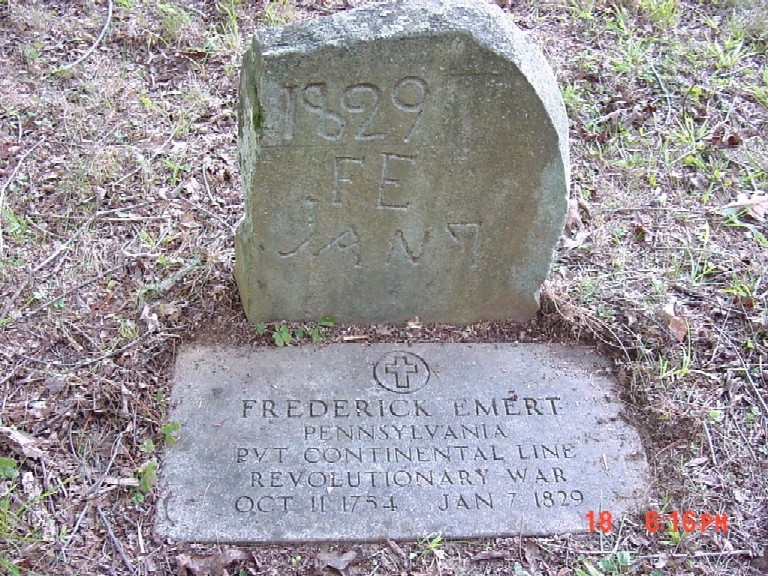
Tombstone of Frederick Emert at Emert Cove Cemetery in Sevier County, Tenn. (Photo: FindAGrave.com /Randy Emert)
Discharged at war’s end, Emert migrated south, eventually settling in what became Emerts Cove, Sevier County, Tennessee, by the early 1790s. There, he farmed the fertile valleys of the Smoky Mountains, raising a family of seven children. The Daughters of the American Revolution recognizes him as Patriot Ancestor #A036640, his service is corroborated by Continental Army rolls, pension affidavits from sons Daniel and Frederick, daughter Barbary Shults, neighbor William Smith (who served with him in the War of 1812), clergyman John Roberts, and Elizabeth Henry (widow of another veteran).
These accounts, filed in 1843–1845 for his widow’s rejected pension claim (numbered R3345V for lack of further proof), emphasize Emert’s tales of army hardships, shared over fireside conversations, underscoring the endurance of ordinary soldiers who secured independence.
Though advanced in years at age 58, Emert answered the call to arms once more during the War of 1812, enlisting for a four-month campaign in the Tennessee militia where he served alongside his neighbor William Smith against British forces. This brief but dedicated service, as attested in affidavits from his Revolutionary War pension file, underscored his lifelong commitment to defending his adopted homeland, even as he managed his farm in Emerts Cove.
Emert passed on January 7, 1829, at age 74, his legacy etched in Tennessee’s landscape and the nation’s freedom. In an era of speculation about unsung heroes, his story—pieced from family lore and military records—reminds us of the quiet valor that built America.
Frederick Emert is the Fifth Great Grandfather of the Columnist Randall Franks.
See Randall’s Revolutionary War documentary The Making of The American’s Creed and short film The American’s Creed.
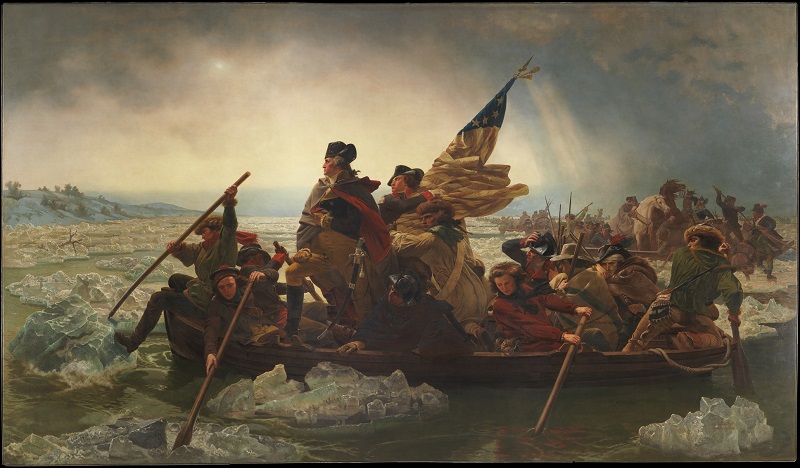
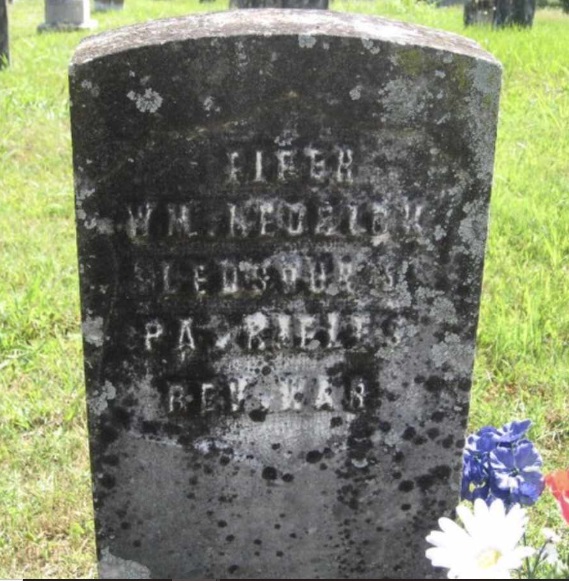 William Hedrick marched on — through the mud of Brandywine, the snows of Valley Forge, the fog of Germantown — until an honorable discharge sent him home. He headed south to the mountains of East Tennessee, raised a large family, helped plant churches and communities in Sullivan, Greene, and Sevier Counties, and lived to the remarkable age of ninety-five. In 1839 he was laid to rest beneath a simple stone at Headrick Chapel Cemetery in Wears Valley, the notes of his fife finally silent.


