Loving Beyond Measure : Being There When It Matters Most

Some of the most difficult times to watch are when someone we know is trying to be there for a loved one who is coming to the end of their journey. As I think back through the years, I remember watching my parents as they reached out to support friends or relatives in such times.

If the loved one was elsewhere, they would close up the business, and off they’d go for an undetermined amount of time to just be present. There to be called upon if needed for an extra pair of hands and legs to: run errands, do day-to-day tasks, cook, or just simply sit, talk, laugh, console, remember, and pray.

I saw my parents do this time and time again. I know they drew no financial benefit from what they were doing. Their only reward was in knowing they were serving Christ with their actions.

Sometimes their presence reached beyond the caregivers to the patient, and I know that brought peace over each of them when they knew they had comforted someone as they prepared to cross over.

As a small boy, I watched this routine many times as they said goodbye to former co-workers, neighbors, and friends from throughout their lives, and of course, relatives of every description who had impacted them. I vaguely remember one period in my childhood when I felt I was spending more time in hospitals and funeral homes than at school, but death comes at God’s appointment, not on our timetables.

I am now at a similar point in my life, as they were when they were saying goodbye to so many. So, I have become readily cognizant that, like my folks, many of those I know are being called—some old, some young—but it seems to happen more with every passing year. As I reflect on what I can I do to support their loved ones, I think back on the model that my parents gave me. I try to simply be present whenever possible to offer support and help them walk down the path I have already walked. I know that hope, comfort, and strength should be offered along the path, and I only pray that I can be an instrument to provide some aspect of these to all concerned along the final journey.

Most of us know someone who is facing this point in life. What are you doing to support them and their circle of caregivers? I encourage you to find some way to make a difference; you may be able to leave a message of love that changes a life forever and passes a legacy of love to your children as they see how you help others in a time of life we all must face.

Read more of Randall’s writings in Seeing Faith : A Devotional .

Dirt Road Wisdom: The Gift of Grandparental Grace

THIS COLUMN MARKS THE OUR 25TH ANNIVERSARY IN SOUTHERN STYLE

“Thank you for all the years of allowing me to share my thoughts with you!” Randall Franks

As I stumbled along the dirt road, I would occasionally reach up and slip my hand into Grandpa Jesse‘s. When an independent streak struck, I would pull it back, managing my steps all on my own—at least for a few feet—before repeating the process once again.
No matter what I did, I could look up into his face and see a smile beaming back at me. What an amazing gift is the special bond that grows between a loving grandparent and a grandchild.
They can give so much love, and many—like mine—had the desire to share a lifetime of experience. I thank God that mine gave me the insights at a young age to listen and learn.
I think one of the greatest lessons shared with me was how to handle yourself when you realize you’ve wronged someone. It could be as simple as a misunderstanding or as serious as a downright disagreement.
From their example, I saw that one should admit a mistake and apologize to move the relationship forward. If you’re the injured party, take the first step: express your concerns and give the other person an easy opportunity to make amends.
If they choose not to, then you’ve done all you can to mend the fences.
Unfortunately, folks aren’t always in the same place at the same time.
Although Christianity teaches us to forgive, that’s an area where I’ve seen loved ones and friends struggle throughout my life.
I struggle with it myself. Oftentimes, I fall back on hardened lessons passed down through generations, rooted in centuries of tribal or clan conflicts and feuds.
I’ve watched loving, caring people—who would give you the shirt off their back—get up on their hind legs and growl when a situation involved an ancestral enemy, an ostracized family member, or a former friend.
While I received these lessons through oral stories, I’ve worked to distance myself from carrying such disputes into my own life. Some even go back beyond written records. They do add color to the stories I share, but for me, the feuds are long past.
As time passes in my life, I find I have to work harder not to add to the list with my own experiences.
It would be easy to simply write someone off—as was often the practice—and have no more to do with them once they’ve done you wrong and won’t apologize or admit a mistake.
But unless continuing that relationship is destructive, I’m striving to avoid falling into the footsteps left by my mountain highland kin through the centuries. That’s not to say there might not be a situation that calls for their approach, but I don’t know if I’m up for a good sword fight, pistols at ten paces, or gathering the clan for feudin’ anytime in the near future.
So, I think the approaches mentioned earlier might be best for all concerned. Of course, the other person does have to be concerned. If they’re not, they probably shouldn’t be that important to your life anyway.

Read more about Randall’s experiences in Appalachia in his books such as A Mountain Pearl, and Seeing Faith. Visit www.RandallFranks.com/Store

From Recess to Real Life: Childhood Friends Shaped My World

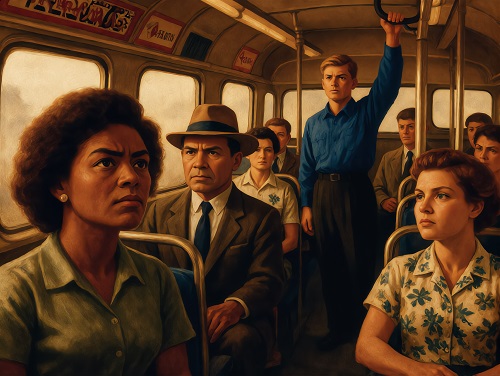
I crowded into the MARTA bus headed toward downtown Atlanta. I grabbed a seat as the bus filled up. A Black woman in a gray dress and heels got on, and I noticed there was no available seat, so I rose and moved toward the back, giving her my seat. As I got situated near the rear door, I wrapped my arm around the bus rail and placed my feet appropriately to keep me steady as the bus stopped and started along the rest of the trip to Central City Park. As I stood there, I started looking at the man sitting near me and realized it was Mr. Olivares. He was heading to his job downtown. I had not seen him in years, and initially he did not recognize me.
I had grown tremendously since I used to run through his living room alongside his children who were near my age—Paul and Vivian.
I met Paul in about third grade after his family emigrated from South America. The family included at least two youths near my age and some older siblings as well. I don’t know what drew me to Paul initially.
Through most of my elementary school experience, all the students were white, despite going to school after integration and during a program referred to as M-to-M transfer, where the county would bus students to schools that were demographically different.
As best I recall, Paul was the first student from a different country or culture that I met—especially someone speaking a different language: Spanish.
We became fast friends and began playing together during recess at school. Soon, I started visiting his home and joining his family for dinner, and he would visit ours as well. I began learning enough Spanish to get by as I visited his home and spent time among his siblings.
I guess it was my parents’ open and caring attitude toward people—whom some Southern whites of that era may have viewed differently because of color, culture, or faith—that allowed me the freedom to reach out and not feel I was doing something out of the ordinary.
In fact, perhaps it was the early boundaries that my own parents had faced as they overcame the “hillbilly” stereotypes while migrating from Appalachia into the city and seeking acceptance in Atlanta society that helped them later form the attitudes that shaped me.
So the fact that Paul was from somewhere else never fazed me as a child; it just made our time together of greater interest to me.
At some point, I lost my friend Paul when his parents were able to move him from public school to private school.
I still remember the conversation when he asked me to see if my parents would consider moving me as well. We did discuss it, but my folks stuck with the public school route, so our diverging paths forced us to focus on new friendships. Sadly, I had no need to speak Spanish anymore until I reached my studies in high school, and by then, it was like starting over completely.
It would be a while before Dresden Elementary would see another student who was not white; the next family would be Chinese from Hong Kong. In my grade was Nin Chung Szeto, and once again, I found another friend. In this case, however, I didn’t learn Chinese, but in two years’ time, I certainly had an impact as I helped teach Nin Chung English. I am sure he was burdened by my Southern accent for years. Like Paul, his path also diverged as his family moved west. We kept in touch by letters for some time, but eventually the practice faded. Still, I knew that Nin Chung—by then, he had chosen the name John—was carving out his own future in America.
When the seat next to Mr. Olivares opened up, I sat down and reintroduced myself, explaining that I was on my way to classes at Georgia State University. He caught me up on Paul and Vivian. I asked him to pass my greetings to them, and Mr. Olivares and I would regularly exchange greetings as we both commuted. It would be years later, in a Winn-Dixie grocery line, when Paul and I would next meet. Now, both out of college and making our own lives, we were miles away from those young boys we had been when our friendship started. Though we said we would get together sometime, we were in different places and did not follow through.
While the paths that life had in store for Paul, John, and me were not ones that would keep us connected, for me those youthful experiences enriched my life and allowed me to continue expanding my opportunities to know more about the people I meet, whether from a world away or just down the street.
Find more stories from Randall’s youth experiences in his Encouragers Book Series www.RandallFranks.com/Store .

Brothers Divided: A Frontier Family’s Revolution Sacrifice

A Depiction of Joshua Moses engagement at capture.

Imagine fleeing on horseback through the thick South Carolina underbrush, only to feel the sting of a British dragoon’s sword slashing your arm as you deflect a blow meant for your head. This was the harrowing fate of Joshua Moses in 1781, a North Carolina militiaman captured while visiting kin near the Wateree River. Wounded four times—a deep head cut, an arm laceration, a shoulder pierce, and a minor gash—he was bound and marched toward the chaos of battle. But Joshua’s story, like his family’s, reflects the deeper tensions of a war that pitted neighbor against neighbor and brother against the call to arms.

Life on the colonial frontier demanded every hand to tend farms and protect families. When whispers of rebellion against England rippled through the land in the 1770s, they ignited fierce divisions. In Anson County, North Carolina—home to the Moses clan—Loyalists (Tories) were a formidable force. Continental General Nathanael Greene estimated in 1781 that up to half of North Carolinians were Tories, dominating about half the state’s counties, including backcountry areas like Anson. Petitions from the era show roughly 227 Anson residents pledging loyalty to the Crown, compared to about 355 who had earlier protested colonial grievances as Regulators—a movement that often fed into Patriot support. This near-even split made open rebellion risky; many families chose neutrality to survive raids and reprisals.

John Moses Sr. and his wife, Jane, had settled in Anson County by the 1760s, raising likely four sons—John Jr., Joshua, Samuel, and Robert—and two daughters to adulthood before the war escalated. John Sr. likely died sometime after 1763, leaving Jane a widow in a turbulent time. As conflict engulfed the South, the pull to fight tugged at the brothers’ hearts, but someone had to keep the home fires burning amid Loyalist threats. Samuel stayed behind, farming and safeguarding the family stead, while Robert also remained neutral, later settling near the Wateree. Joshua and John Jr., however, answered the call.

John Jr., the eldest, had migrated south to South Carolina by the early 1780s, near the Wateree River. This was the heart of the brutal Southern Campaign, where British forces occupied much of the state, and local militias waged guerrilla warfare alongside Continentals under Greene. As a private in the South Carolina militia, John served 110 days in 1781 and 1782—short bursts of duty that might have included sieges like Ninety-Six or Augusta, or clashes with Loyalist partisans. His service, documented in state audited accounts, earned him a modest indent for pay, though no federal pension followed.

Meanwhile, back in Anson, Joshua (1748–1836) volunteered under Captain Williams in Colonel Thomas Wade’s regiment (DAR Ancestor #A082368). His unit patrolled Drowning Creek near the NC-SC border, scouting for Loyalists. In one skirmish on Brown’s Creek, they routed a Tory band without fatalities—a gritty echo of the Carolinas’ internal strife. After seven months, Joshua’s company received parole, sending him home on call.

Fate wasn’t done with him. Venturing to the Wateree—likely to check on John Jr. and Robert—Joshua was ambushed alone by dragoons. Captured and wounded, he was hauled toward Eutaw Springs (September 8, 1781), guarded amid the battle’s roar before transfer to Charleston’s crowded provost prison and then James Island. Nine months of harsh captivity followed. In a daring escape, Joshua and comrades paddled an old pirogue for three starving days, reaching Greene’s forces on the Ashley River. Greene granted rations and leave, with the war winding down after Yorktown’s surrender in October 1781. Credited with 16 months total (including imprisonment), Joshua later drew a $53.33 annual pension from 1831. Post-war, the brothers scattered into the wilderness they helped secure: Joshua to Whitley County, Kentucky, around 1813; Samuel to Monroe County, Tennessee; John Jr. and Robert to Jasper County, Georgia. Separated by miles, they carried shared memories of a divided era, passing tales of sacrifice down generations.

Let us never forget that farmers and frontiersmen bled to forge this nation. Patriots Joshua and John Moses Jr. are the uncles of this columnist, who descends from their brother Samuel of Monroe County, Tennessee who helped keep the home fires burning amidst the Loyalist threats.

The descendants of Samuel are included in Randall’s book A Mountain Pearl : Appalachian Reminscing and Recipes

Snow and the Pot-Bellied Stove : An Appalachian Memory

As I placed the log into the black cast-iron stove, I watched the orange sparks rise from the burning embers within its belly in Grandma’s parlor.

I often stood at its front, hopeful that it would make me feel warmer. It usually did—at least on one side, until I turned and let the other warm.

Of course, I was usually one in a line of young cousins who had just come in from playing in the snow, each wishing to take their turn at the fire.

Snow could be beautiful as a child, as you looked out the frosted pane while it gently drifted up against the cracks in the side of the house.

I remember my first snowman like it was yesterday: rolling those balls into nearly perfect spheres and stacking them until it resembled Burl Ives’ character in “Rudolph the Red-Nosed Reindeer.”No matter how hard I tried, though, I never got mine to sing, dance, or tell any stories—but it was fun trying.

Venturing out in the snow wasn’t an easy task from our home, though, because it always involved being bundled in full winter wear. For my mother, that meant a shiny blue coat that made you resemble the Michelin Man, with layers upon layers beneath.

First came the white, waffled long johns, then your regular clothes—shirt and pants—followed by a pullover sweater that, if seen by any hungry wolf, would send it running for its life. Finally, that puffy blue coat. But that wasn’t everything: You still needed the itchy wool hat and the hand-knitted scarf from our neighbor. The coat’s hood came up over all of it, of course.

So, when you walked outside, you resembled the girl in Willy Wonka who ate the blueberry gum. If you fell down, you’d roll until you hit something to stop you.

This approach to dressing was always a drawback in a snowball battle, because you couldn’t see anything that wasn’t directly in front of you.

Despite the drawbacks, when you did score a snowball victory, it was all worth it. Besides, in that outfit, no matter how hard they threw, you barely felt it—unless they hit you in the face.

The adventure would end when I heard my mother or grandmother calling my name from the porch. I knew then it was time to head in, so I’d stop by the woodpile and pick up a few logs on my way.

Before I could feed them to the stove, though, I’d have to peel off those now-wet clothes.

Once deflated, I’d grab the wood by the door and head into the parlor. Picking up the glove we used for the hot handle, I’d open the door and shove the logs inside, watching the glow of warmth as I warmed my hands in front of it.

Around me were my mom and dad seated on the couch, my grandmother in her rocker, two aunts resting on kitchen chairs near the stove, and a couple of cousins playing board games on the floor. The laughter rose as gently in that room as the snow fell outside, sometimes seeming to cover the howling winds that passed us by.

I always hated to see the evening end, when it was time for the laughter to turn to sleep. We’d trade the stove for a stack of handmade quilts, keeping us warm on an old iron bed as we watched our breath rise while the snow fell outside our windowpane.

Find more stories of Appalachia in Randall’s book “A Mountain Pearl : Appalachian Reminiscing and Recipes”

Doing Things Right : It’s Never Too Soon For Skills

As I entered adulthood, my late father had already passed away, leaving me as the man of the house. This meant that the various tasks he once handled now fell to me. Household repairs were suddenly my responsibility—either to tackle myself or to hire someone reliable at a reasonable cost. Yard work had been part of my routine for several years, with occasional help on special projects.
I had worked side by side with my father as he built an outbuilding, where he taught me the essentials: framing, flooring, roofing, leveling, sawing, and everything in between. I gained similar hands-on experience with my Uncle Clarence when we completely gutted and renovated a bathroom. The demolition phase initially excited me, especially removing the cast iron tub to repair the subfloor. We used a small sledgehammer to break out the tile and mesh around the tub and floor. What started as fun quickly turned into hard work—lots of it. Over several weeks, we transformed a 1950s bathroom into a 1970s one, and I learned about plumbing, tile work, building a sturdy subfloor, and all the details that went with it.

Learning from all

Not all experiences were as instructive. I once hired a friend’s father to paint the house exterior, including the eaves and shutters, and to build a new back gate. Unfortunately, he wasn’t as meticulous as my parents about doing things right. Upon closer inspection, I discovered shortcuts that bordered on sloppy—and one that was downright foolish. When the gate didn’t fit properly or open and close as it should, instead of taking the time to fix it correctly, he chipped off the end of a brick wall. It was only three bricks, but you don’t damage masonry just to make wood fit. Needless to say, that didn’t go over well, but the damage was done, and there was no undoing it.

Well Experienced Make Good Teachers

Another repair arose when the hot water heater failed, requiring a full replacement. I couldn’t afford a professional plumber, but it was soldered in place, so I turned to my old boss at Dairy Queen, Joe Wyche, for whom I still did occasional odd jobs. He not only taught me the process but stayed to help complete it. The lessons he imparted, along with many others over the years, have paid dividends—I’ve replaced several water heaters in my lifetime.
Since those early days of stepping into the role of man of the house, a lifetime has passed filled with such responsibilities. There are only a couple of tasks I haven’t done or wasn’t taught, even if I never had to apply them. For instance, while I’ve repaired sheetrock, I’ve never installed it from scratch. I was close once, on a project my late mother wanted, but she changed her mind before we reached that step.
All these experiences predated the internet era, when we could simply watch instructional videos. It’s a real blessing to have that resource now, and I’ve used it for some auto repairs. The message I hope to convey is that life can be a series of doing things right or a pattern of sloppiness. My late mother used to say, “When you make a repair or build something, do it as if you were going to live in it yourself.” If you truly care about what you have, you’ll do it right the first time.
I feel fortunate to have had men and women in my life who taught me this principle. You may not have had that advantage, but you can certainly choose that outcome.
Make the decision: Do things right.
As the Bible reminds us in Colossians 3:23: “Whatever you do, work heartily, as for the Lord and not for men.”
Read more life incites in Randall’s Seeing Faith : A Devotional 

Echoes of Valor: Frederick Emert’s Revolutionary Odyssey

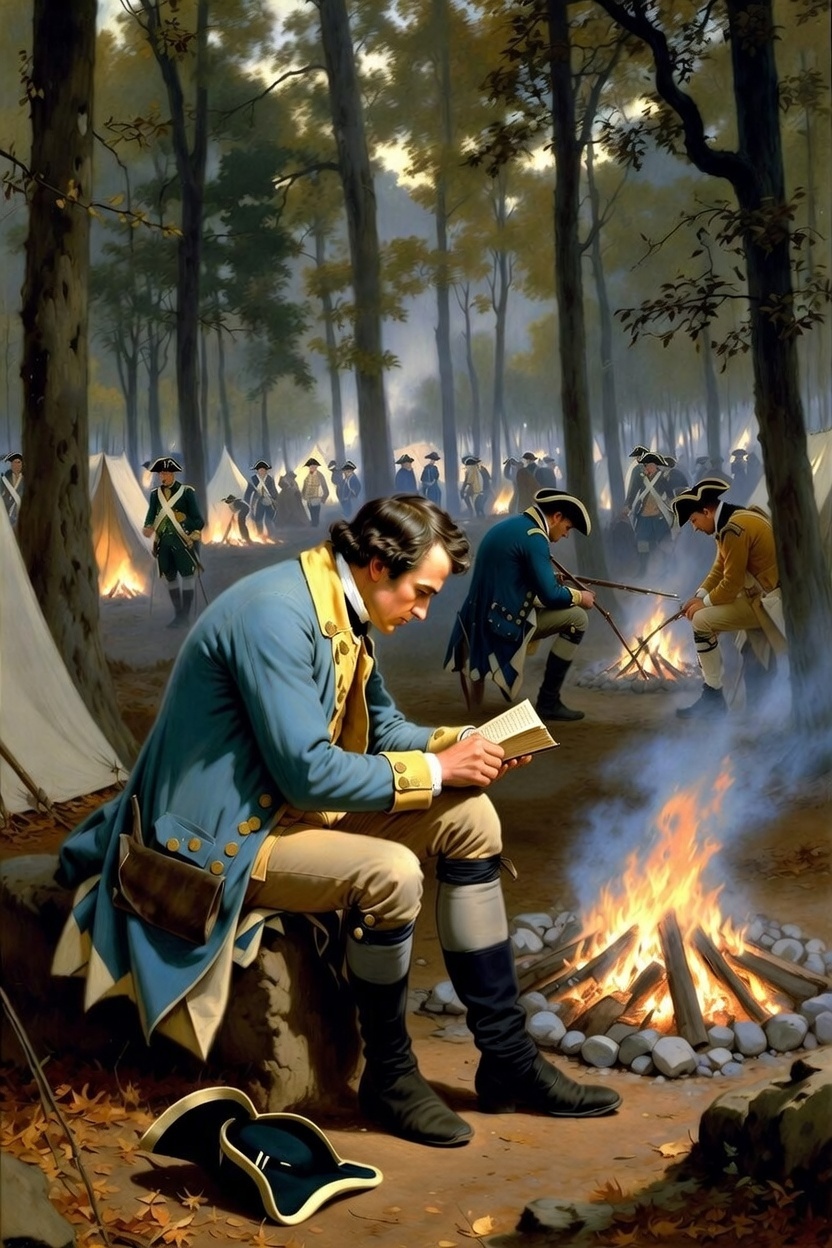
Amid the crisp autumn air of September 1777, Private Johan Frederick Emert huddled near a flickering campfire along the banks of Brandywine Creek in Pennsylvania, his woolen coat—part of the standard Continental Army uniform, dyed a faded blue and frayed from months of marching—draped over his shoulders against the evening chill cleaning his musket.

Around him, the dense woods rustled with the movements of fellow soldiers from his Pennsylvania regiment, their tricorn hats tilted low as they cleaned muskets or shared meager rations of hardtack and salted pork. The distant rumble of artillery echoed from British lines, a grim reminder of the day’s fierce engagement where Emert and his comrades had charged through smoke-filled fields, dodging grapeshot and bayonets in a desperate stand against General Howe’s advancing forces. 
Born on October 11, 1754, in Berks County, Pennsylvania, to German immigrant parents, Emert enlisted as a private in the Continental Army around the war’s early days, likely in 1776, joining the 3rd Pennsylvania Regiment under Captain John Huling and Colonels Arthur St. Clair and Joseph Wood, part of the Pennsylvania Line under Brigadier General Anthony Wayne.

This unit was dispatched in May 1776 to bolster Colonel Benedict Arnold’s retreating forces in the northern theater. Emert’s movements indicate he would have been stationed at Fort Ticonderoga, where soldiers endured harsh conditions—fortifying defenses, drilling daily, and guarding against British incursions amid the rugged wilderness of upstate New York.

Compatriots’ recollections, passed down through family oral histories, paint a picture of Emert’s likely participation in the naval clash at Lake Champlain in October 1776, where American forces delayed a British invasion from Canada. As a private, his day-to-day activities would have involved sentry duty on the lakeshore, maintaining vessels or earthworks, and foraging for supplies in a landscape of dense forests and biting cold, all while facing shortages that left the army “suffering for provisions,” as he later recounted to neighbors.

By 1777, Emert’s regiment had shifted south, aligning under General George Washington. He fought at the Battle of Brandywine on September 11, where the Continentals attempted to block the British advance on Philadelphia. Amid the chaos of musket volleys and cannon fire, Emert would have maneuvered through open fields and wooded ravines, reloading his flintlock musket under pressure while coordinating with messmates like Peter Wallwur and Isaac Stewal—fellow soldiers he mentioned in stories shared years later. The defeat led to a retreat, but Emert pressed on, likely engaging in the subsequent Battle of Germantown on October 4, a foggy assault on British positions where close-quarters combat tested the resolve of Wayne’s men.

After a brief return home—where he married Barbara Anne Neidig—Emert was drafted again but hired a substitute, unwilling to leave his new bride. Soon after, another draft prompted him to enlist voluntarily for the war’s duration, committing to nearly seven years of service in total. His path under Washington and Wayne included stints near Quebec, possibly as part of northern campaigns or garrison duties, where harsh winters meant enduring frozen outposts and limited rations. In 1779, while residing in Rockland Township, Berks County, he further contributed through patriotic service by paying a supply tax to support the Continental cause.

Emert’s service culminated at the Siege of Yorktown in October 1781, a pivotal encirclement where French and American forces trapped Lord Cornwallis’s army. As a private in the trenches, he would have dug fortifications under fire, stood watch during bombardments, and witnessed the British surrender—a moment he vividly described to his children, who recalled seeing his honorable discharge papers before they were lost in a house fire.
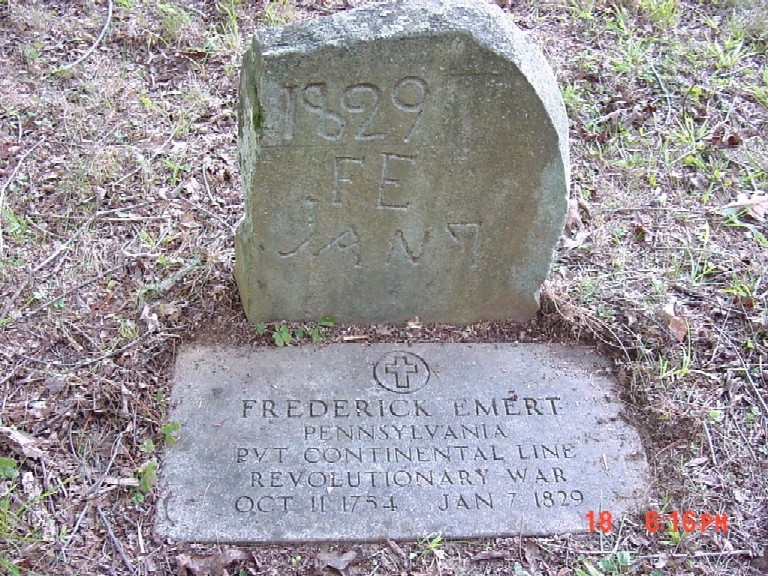
Tombstone of Frederick Emert at Emert Cove Cemetery in Sevier County, Tenn. (Photo: FindAGrave.com /Randy Emert)

Discharged at war’s end, Emert migrated south, eventually settling in what became Emerts Cove, Sevier County, Tennessee, by the early 1790s. There, he farmed the fertile valleys of the Smoky Mountains, raising a family of seven children. The Daughters of the American Revolution recognizes him as Patriot Ancestor #A036640, his service is corroborated by Continental Army rolls, pension affidavits from sons Daniel and Frederick, daughter Barbary Shults, neighbor William Smith (who served with him in the War of 1812), clergyman John Roberts, and Elizabeth Henry (widow of another veteran).

These accounts, filed in 1843–1845 for his widow’s rejected pension claim (numbered R3345V for lack of further proof), emphasize Emert’s tales of army hardships, shared over fireside conversations, underscoring the endurance of ordinary soldiers who secured independence.

Though advanced in years at age 58, Emert answered the call to arms once more during the War of 1812, enlisting for a four-month campaign in the Tennessee militia where he served alongside his neighbor William Smith against British forces. This brief but dedicated service, as attested in affidavits from his Revolutionary War pension file, underscored his lifelong commitment to defending his adopted homeland, even as he managed his farm in Emerts Cove.

Emert passed on January 7, 1829, at age 74, his legacy etched in Tennessee’s landscape and the nation’s freedom. In an era of speculation about unsung heroes, his story—pieced from family lore and military records—reminds us of the quiet valor that built America.

Frederick Emert is the Fifth Great Grandfather of the Columnist Randall Franks.

See Randall’s Revolutionary War documentary The Making of The American’s Creed and short film The American’s Creed.


The Art of Deliberate Decisions : Pacing a Response

Life presents us with countless crossroads—moments that can reshape our futures. Some offer greater wealth or a dream job. Others might be a romantic opportunity or even a simple choice: attend this party or that event?

We don’t always handle these decisions wisely. Sometimes we act impulsively, on the spur of the moment. Other times, we agonize for hours, weighing every angle.

Early in my career, I learned this lesson the hard way. I grew frustrated when an employer ignored a union rule that affected my earnings. Earning my union membership hadn’t been easy, so I rashly spoke up. What I failed to foresee was the fallout: the backlash from higher-ups poisoned relationships with colleagues who bore the brunt of the reaction. In the end, I relented, but the damage to goodwill was done.

As a young man, I often charged ahead without considering consequences. Poor choices revealed themselves quickly; better ones proved their worth over time. But haste rarely served me well—it short-circuited opportunities I already had in hand, simply because I misread situations or people.

Wisdom isn’t innate for everyone; many of us acquire it through experience. For me, it came gradually, as I learned to navigate life’s unpredictable currents.

I observed this in my parents. They deliberated carefully over major choices, sometimes debating intensely yet respectfully about what was best for our family. Watching their methodical approach slowly shaped my own thinking.

Later, when film roles came my way, I adopted a similar deliberateness. I’d study the script, consider the character’s impact on my career and reputation, and ask: Does this align with my values? If a project conflicted with my faith in God or my moral principles, I’d decline politely—”Thank you for the opportunity”—and move on. Only once did this bite me: producers seemed surprised by my refusal, and no further offers came from them.

Yet a closed door can lead to better ones. Life rewards those who choose wisely, often opening unexpected paths.

This thoughtful approach extended beyond acting. People began seeking my advice on career and life matters, eventually leading to my election to public office.

Life is full of lessons from our mistakes. When we apply them, we refine our decision-making—and others notice, trusting us to guide them too.

Have I always made the best choices? No. But life is an ongoing experiment in growth. With faith as our compass, God presents doors; we decide which to walk through. If we’re blessed with discernment, we choose the ones that lead to fulfillment.

Read more of Randall’s thoughts in Seeing Faith : A Devotional

Turning Over a New Leaf : Let Go of the Baggage

We all carry baggage through life—emotional weights from things we’ve done or things done to us. No matter the source, this baggage slows our journey, making us slaves to it. We feel compelled to pick it up and haul it everywhere, in everything we do.

I understand why we cling to it. For many, that burden defines our identity; without it, who are we? Some adopt a “poor, pitiful me” mindset, like Eeyore from Winnie the Pooh—constantly seeking pity from others. Others carry a chip on their shoulder, daring the world to knock it off, always ready for a fight.

Both postures drain immense energy, mentally and emotionally, just to maintain them. There are likely other ways we manifest this baggage, but these two capture the extremes.

Early Experiences

Early in life, I leaned toward the chip-on-the-shoulder style. Deep hurt fueled an “I’ll show you” attitude: I’d work harder, excel faster, strive for perfection, and achieve heights others only dreamed of. In many ways, it served me well—it channeled anger into drive and success. But underneath, it wasn’t healthy. Holding onto grudges against specific people prevented a more balanced life. I might have paused to smell the roses, nurtured relationships instead of sabotaging them to avoid hurt, or allowed vulnerability.

Would I go back and drop that chip entirely? At this stage, probably not—it shaped who I am today. Yet I was profoundly relieved when I finally unpacked the bitterness, anger, and pain from my psyche. Those people had moved on long ago, but I’d kept them neatly packed in my emotional bag. Opening it and pouring everything out was liberating. There was another season when I became more like Eeyore. Life’s trials left me missing out on milestones others enjoyed—a lasting relationship, family, an identity beyond career. It felt like “keeping up with the Joneses,” but circumstances denied me even the chance to try. That self-pity entrenched me in a rut, robbing joy from everyday life.

Finding a path

Eventually, I dumped that baggage too—the pain sustaining it—and moved forward lighter. Do I still carry some? Yes. Is it good for me? No. I work to unpack it piece by piece, aiming for a lighter load so my steps have bounce instead of thud.

As a lifelong Christian, I’ve walked with Jesus, relying on Him. Yet for years, I feared surrendering these burdens fully, even knowing He invites us to cast them on Him. Each time I’ve emptied my bag, it’s been through recognizing God’s grace and Jesus’ daily help in releasing hurts, overcoming anger, and living more abundantly.

I’m not there yet—the big trunks are now an overnight bag. I hope to empty it completely before my journey ends. The load is already so much lighter.

Read more of Randall’s inspiring thoughts in Seeing Faith : A Devotional .