Spared for a Purpose

As a child, I discovered the joy of performing—school plays, choral programs, and later, orchestra. I played a goldfish in a shimmering lamé suit my mother sewed, wore a Bavarian costume for a Christmas play, and mimicked accents from German to Scottish with ease. Singing came naturally, my boyhood voice clear and pure until puberty forced me to relearn my craft, guiding me toward country and bluegrass. Instruments like the violin, mandolin, and guitar challenged me, but gifted musicians mentored me, shaping my talents. One night, performing alongside William Hurt, I saw how his passion for storytelling mirrored my own call to share God’s love through art. These abilities, I believe, were God’s gifts, preparing me for a purpose revealed early in my life—a journey that has led me to perform alongside Oscar other winners like Gary Oldman and Emmy winners like Carroll O’Connor and Bill Cobbs.

Before my story really began, it took a dramatic turn when I was a toddler, a tale I share as my late mother told it. One morning, around four or five years old, she called to wake me, but I didn’t respond. She found me in bed, eyes fixed, “walled back in my head,” not breathing. Panic-stricken, she threw me over her shoulder, phoned my pediatrician, and sped through every red light in our blue Chevy Malibu to his office, 4.5 miles away. When she arrived, I was unchanged. The doctor, grim, said, “You should’ve gone to the hospital; there’s nothing we can do.” My mother insisted, “He’s here—do something.”

The nurse fetched a shot, likely adrenaline, while the doctor, my mother, nurses, and anyone nearby gathered around the exam table where I lay. They prayed fervently. That little boy, absent from his body and in the Lord’s presence, was called back. My chest rose, my heart beat, my pulse returned. How long I was gone—before my mother found me, during the drive, or through the prayers—only God knows. By all accounts, I should’ve stayed with my ancestors, but God had a mission for me, one that unfolds daily.

That day wasn’t the only time God spared me. In my 20s, after a late-night performance, I was driving my pickup truck too fast through mountain roads I knew like the back of my hand. Around 2 a.m., with windows up and music playing, an audible voice in the cab yelled, “Slow down.” No one was around, no houses in those wooded hills. I hit the brakes, and just over the next rise, a herd of deer stood frozen in the road. My headlights spurred them off, but had I not slowed, I’d have crashed, likely with fatal results. Years later, God’s Spirit filled my hospital room when doctors told my mother nothing more could be done. A prayer chain, sparked by her faith and joined by family, friends, and music fans, carried me through. I lived, a testament to His grace.

Every note I sing, every role I play, is a gift of time to serve Him. I recently attended a Spirit-filled revival led by Evangelists Mark and Sugar Klette in a country church with my friend Pastor Carroll Allen. The Lord led me to share His raising me up as a toddler, my voice strongly carried these powerful moments that changed my life forever as the congregation’s amens lifted me. Someone in that congregation needed to know that fervent prayers can still bring God’s healing. Their faith renewed my own dedication for God’s purpose. I don’t always meet this calling—doubt and missteps linger—but each day offers a chance to try.

Do you need a miracle to know God has a purpose for you? Perhaps not, but for me, He made it clear early on I remained in this world for a reason. As Ephesians 2:10 declares, “For we are his workmanship, created in Christ Jesus unto good works, which God hath before ordained that we should walk in them.” My life, my talents, my second chances—they’re all for His glory, a stage to share His love. What’s your stage? Listen for His call today.
Candor—Blessing, Curse, or Both?

We’ve all been there: someone you care about asks for your honest opinion, and suddenly you’re standing at a crossroads. Do you tell the unfiltered truth or soften it to spare their feelings? Maybe it’s a loved one asking, “Does this dress make me look fat?” Or perhaps it’s your boss, brimming with enthusiasm, seeking your thoughts on their latest “game-changing” idea. What do you say when the truth might sting—or worse, land you in hot water?

I learned this lesson early, at the tender age of four, in a moment that still makes me chuckle (and cringe). My mother and her girlfriends had stumbled into a side hustle selling wigs—a practical solution for busy mothers who couldn’t always make it to the beauty parlor. With budgets tight and schedules packed, a wig was a godsend: pluck it off a Styrofoam head, slip it on, and voilà—you were ready to face the world, looking as glamorous as Dolly Parton, who helped make wigs a cultural phenomenon. My mom owned three, each with a slightly different style and length, allowing her to switch up her look with ease. As a young boy, I never thought to question how she looked. My answer was always the same: “You look pretty, Mommy.”

But one hectic week, that innocence got me into trouble. My mother was juggling her usual duties at home while volunteering extra hours at my kindergarten, housed in the basement of our local Presbyterian church. She was coordinating a parents’ gathering, a chance to connect with other moms and dads over punch and cookies. That evening, she donned her best wig—a voluminous, chestnut-brown number—and a vibrant polyester dress she’d picked up from Rich’s department store. We piled into our blue Chevy Malibu and rolled down the road to the church, where the event was already in full swing.

As we mingled, Mrs. Moore, my kindergarten teacher, spotted my mom and gushed, “Mrs. Franks, I don’t know how you do it. Your hair looks fantastic!” I beamed with pride, eager to share in the praise for my mom’s effortless style. Without a second thought, I piped up, loud enough for the whole room to hear, “Mom’s wearing a wig!”

The room fell silent. I didn’t know I’d just spilled a trade secret. To me, it was just a fact, as innocent as saying the sky was blue. But the looks on the adults’ faces told a different story. My mother’s smile tightened, and I could feel the heat of her embarrassment. I’d landed myself squarely in the doghouse, and no amount of four-year-old charm could dig me out.

There was, however, an unexpected silver lining. My blurted truth sparked curiosity among the other parents, and soon, my mom and her friends sold a few more wigs as a result. But that didn’t erase the lesson etched into my young mind: candor—raw, unfiltered honesty—can be a double-edged sword. It’s a trait we’re taught to value, yet without a touch of tact, it can wound as easily as it enlightens.

Candor is like a wild horse: powerful and admirable, but it needs a bridle to keep it from trampling feelings. We live in a world that often demands honesty but recoils when it’s too blunt. Think about the workplace, where a colleague’s “brilliant” idea might be a logistical nightmare. Do you risk derailing their enthusiasm—or your career—by pointing out the flaws? Or consider the delicate dance of personal relationships, where a poorly timed truth can turn a simple question into a minefield. “Honey, does this dress make me look fat?” isn’t just a question about fashion; it’s a test of diplomacy, trust, and love.

Navigating these moments requires finesse, a balance of truth and kindness. It’s about being honest without being brutal, offering feedback that respects the person even as it addresses the issue. For example, instead of saying, “That idea won’t work,” you might say, “I love your creativity—let’s brainstorm how to make it even stronger by addressing X.” Or, to the dress question, a gentle, “You look great, but I think the other one highlights your style even more.”

My wig-blurting moment taught me that honesty, while noble, needs a filter. As adults, we’re not so different from that four-year-old version of me—eager to speak our truth but still learning when to hold back. The next time you’re faced with a question that demands candor, take a breath. Weigh the moment. Find the words that inform without injuring, that build up rather than tear down. With a little polish, you can stay true to yourself—and stay out of the doghouse.

Finding Peace in Nature’s Embrace

The mountains rise against a boundless blue sky, their green peaks painting a timeless portrait across my vision. I walk along a stream, its waters gurgling over smooth rocks, a soft melody that soothes my restless mind. In these moments, nature whispers a truth we often ignore: slow down, breathe, connect. Life, with its endless to-do lists and buzzing notifications, pushes us to rush, to chase, to conquer. Yet, here by the stream, where water flows without haste, I find tranquility—a reminder that peace is not in the race but in the pause.

How often do we let busyness blind us to the world around us? We hustle through days, tethered to screens, forgetting we’re part of a larger ecosystem. The stream doesn’t need us to flow, but we need it to remember who we are. Psychologists tell us that time in nature reduces stress, lowers blood pressure, and sharpens focus. A 2019 study from Aarhus University found that children raised near green spaces have a 55% lower risk of mental health disorders. Nature isn’t just scenery; it’s medicine for the soul. Yet, in our haste, we risk losing this gift. We litter, pollute, and neglect the very systems that sustain us. The success of our environment mirrors our own—if the streams dry up, so does a part of us.
Last spring, I planted my garden, a ritual that roots me to the earth as surely as the seeds I sow. I turned the soil, dropped in bean and tomato seeds, and waited. Some sprouted, their green tips bursting through the dirt like promises kept. Others withered, victims of nature’s whims. Yet, even in failure, I felt alive, working hand in hand with the creation my ancestors knew. Gardening isn’t just about food; it’s about partnership. The earth gives, but it asks for care in return—water, weeding, patience. My grandfather, a farmer, used to say, “You don’t own the land; you borrow it from your grandchildren.” His words linger as I pick up a stray plastic bottle from the grass, a small act of respect for the world I’ll pass on.
What do you do when you see trash on the ground? Do you pause to pick it up, or do you drive by, tossing wrappers out the window? These choices matter. The EPA estimates that Americans generate 4.9 pounds of waste per person daily, much of it preventable. Every bottle we pick up, every trail we clean, stitches us closer to the world we inhabit. We don’t need grand gestures—start small. Walk barefoot in the grass, feel the earth’s pulse. Plant a seed, even if it’s in a pot on your balcony. Join a community cleanup or swap one car trip for a bike ride. These acts ripple, like water over rocks, shaping a future where nature and humanity thrive together.
The mountains still stand, unwavering, as I trace the stream’s path. Their quiet strength reminds me that we’re not separate from nature but woven into its fabric. In a world that demands speed, nature offers slowness, a chance to touch life with every fiber of our being. Let’s listen. Let’s walk lightly, pick up the trash, plant the seeds, and honor the earth that holds us. Our ancestors did, and those who come later will thank us.

Finding the Spark: The Power of Enthusiasm

Each morning, we face a choice: silence the alarm, pull the covers up, and sink back into the darkness—or rise and embrace the possibilities of a new day. It’s tempting to stay in that cozy cocoon, especially when life feels heavy with routine or doubt. But enthusiasm, that inner fire that propels us forward, begins with one simple act: getting up. As my talented cousin Mark Twain wisely said, “The secret of getting ahead is getting started.” That first step out of bed opens the door to purpose, connection, and joy.

For me, that step often starts with a quiet prayer: “Thank you, Lord, for another day! What am I to do for you today?” Even on mornings when my spirit feels weighed down—by deadlines, uncertainty, or the monotony of daily tasks—that moment of gratitude grounds me. It’s a reminder that each day holds purpose, waiting to be uncovered. Once I shake off the cobwebs, sit at my desk, and let the world in, something sparks. A to-do list beckons, or the phone rings with a producer inviting me to a new film project, like The Cricket’s Dance, where I joined a vibrant cast to bring someone’s vision to life. More often these days, it’s an email from a collaborator proposing a show or a recording session. Those connections, especially the energy of a voice on the line, ignite my enthusiasm like a match to kindling.

As a creative soul, nothing fuels me like making something new. Picture this: I’m in my studio, surrounded by the hum of instruments, piecing together a melody. Notes clash, then harmonize, until a song emerges that might touch someone’s heart. That process—blending the artistry of multiple talents into one cohesive piece—sets my soul ablaze. Or take writing a script, like my recent project The American’s Creed. It starts as a flicker of an idea, then grows through late nights, revisions, and collaboration with actors and crew until it’s a living story on screen. These moments remind me why I get up: to create something that moves others.

But enthusiasm isn’t just for artists. It’s the parent who rises early to pack lunches and cheer at a soccer game, fueled by love for their kids. It’s the teacher who stays up late crafting lessons, driven by the hope of sparking curiosity. It’s the volunteer serving meals at a shelter, motivated by compassion. We all face mornings when motivation feels distant—when exhaustion, self-doubt, or the grind of routine dims our spark. I’ll admit, even I can’t muster enthusiasm for scrubbing the kitchen floor. (Let’s be honest—some tasks are just chores.) So how do we keep the fire burning?

First, take small steps. Break a daunting task—like a new project or a tough day—into manageable pieces. One note at a time builds a song; one scene at a time crafts a film. Second, seek community. My best work comes from collaborating with others whose passion amplifies mine. Find your people—friends, colleagues, or a faith group—who lift you up. Third, pause to reflect. There was a morning last month when I felt stuck, uninspired. I stepped away, prayed, and walked outside to my garden picked up my trowel and dug in the dirt. Between the garden rows, I stopped and let the breeze and a moment of stillness remind me why I create. That pause rekindled my purpose.

History offers examples of this spark. Consider Thomas Edison, whose enthusiasm for invention led to over a thousand patents. He once said, “I never did a day’s work in my life. It was all fun.” His relentless curiosity turned ideas into light bulbs that changed the world. We don’t all need to invent electricity, but we can channel that same drive into our own callings, whether it’s raising a family, building a business, or serving a neighbor.

Enthusiasm, at its core, is about finding what stirs your soul and taking that first step toward it. It’s not always easy, but it’s always worth it. So, what’s your spark? Seek it, nurture it, and let it carry you forward. As the Bible reminds us in Philippians 4:13 (KJV), “I can do all things through Christ which strengtheneth me.” With faith and enthusiasm, each new day becomes a canvas for purpose, connection, and joy.

Echoes of the Past: Why Certain Eras Feel Like Home

Have you ever felt drawn to an era you never lived through, as if your ancestors’ stories were woven into your very being? As a child, I’d close my eyes and picture myself on a lush green mountain trail, a pioneer forging a path through America’s wild frontier. The past felt closer than the present, as if I belonged to another time.

My childhood was steeped in the American Revolution and frontier days. I’d imagine slipping through forest shadows as an ancestor, spying on British troops or dodging danger along rugged paths. I could almost feel the weight of a musket in my hands, hear the creak of a wooden floor in a grand stone manor, where I’d don tailored clothes and wield a sword with finesse. These weren’t just games—they felt like memories, as if my forebears’ journeys lingered in my blood.

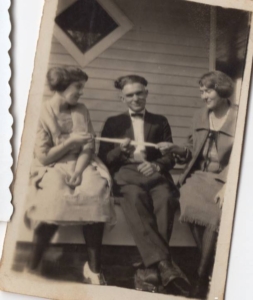
Some of Randall’s early 1900s kin at a front porch toffee pull.

As I grew, the WWI era and 1920s captured my heart, shaped by my grandparents’ stories. They spoke of muddy battlefields, hospital wards overflowing during the Spanish flu, and the quiet sorrow of fresh graves. Yet there were glimmers of joy—tales of square dances under starlit skies and toffee pulls that warmed the 1920s’ brighter days. Those stories carried such weight that I felt I’d walked those dirt roads myself.

The Great Depression and WWII, my parents’ youth, felt less vivid. We kids reenacted battles from old war films, mimicking soldiers with exaggerated accents. But those times never sank deep—they were stories I played at, not ones I lived.

Then came the 1950s. The era of sleek muscle cars and colorful Formica tables felt like home. Flipping through my parents’ photo albums—snapshots of soda fountains and drive-in theaters—I felt a pang of belonging, as if I’d cruised in a red-and-white ‘57 Chevrolet or swayed at a sock hop. Their tales of post-war hope made the decade feel like a second home.

Why do these eras pull at me? It’s more than nostalgia. My grandparents’ voices, heavy with loss, and my parents’ stories of 1950s optimism wove the past into my present. Or perhaps it’s deeper—memories encoded in my DNA, faint echoes of my ancestors’ lives surfacing in dreams of frontier trails and neon-lit diners.

In today’s world of instant updates, I find comfort in the past’s slower rhythms. The frontier’s adventure, the 1920s’ resilience, the 1950s’ optimism—they remind me every era has its struggles and joys. Which eras call to you? Dig through old photos or listen to your elders’ stories—you might find a time that feels like home. Perhaps we’re all a little out of sync with time, carrying echoes of the past in our hearts.

Share America Foundation Awards 2025 Pearl and Floyd Franks Scholarship to Lilly Anne Svrlingaa

The Share America Foundation, Inc. named 15-year-old Lilly Anne Svrlinga of Pickens, SC, as the 2025 Pearl and Floyd Franks Scholarship designee at the 33rd Boxcar Pinion Memorial Bluegrass Festival in Chickamauga, Ga. The scholarship honors students excelling in Appalachian musical arts. Pearl and Floyd Franks were the late parents and former entertainment managers of actor/entertainer Randall Franks, known as “Officer Randy Goode” from TV’s In the Heat of the Night.

Randall Franks (right) presents Lilly Anne Svrlinga with the 2025 Pearl and Floyd Franks Scholarship certificate at the Boxcar Pinion Memorial Bluegrass Festival . (Share America Photo)

Lilly Anne Presentation Video: https://youtu.be/Srsj5_ytNeY 

Lilly Anne Svrlinga, a 15-year-old musician from Pickens, SC, was named a 2025 Pearl and Floyd Franks Scholarship designee. The scholarship, which supports her future college education, recognizes her excellence in Appalachian musical arts.

“Lilly Anne is a talented performer whose talents encompass singing, flat picking on the guitar and leading her own shows,” Franks said. “She is already touching hearts with her talents.”

Svrlinga won the Youth Guitarist title at the Galax Fiddlers’ Convention and guitar and banjo contests at the South Carolina Fiddlers’ Convention. She has performed at prestigious venues including MerleFest, the Earl Scruggs Festival, and the Tony Rice Memorial Festival. She opened for Josh Turner, shared the stage with Josh Williams and Southern Legacy, and jammed backstage with Vince Gill at the Grand Ole Opry.

I want to thank Randall Franks for providing this scholarship to me,” Svrlinga said. “It really means a lot and will help me so much on my musical journey. I am so blessed to have the ability to play and sing such wonderful music and I use music as another way to glorify God.

I’m the kind of person that if I want something. I’m going to go for it,” she said. “I’ve been that way since the day I was born. It takes want to! I want to thank everyone for supporting me all these years. I wouldn’t be here without ya’ll. God bless and keep on riding this bluegrass train with me.”

Svrlinga, a ninth-grade homeschooler, began playing guitar at age five and currently performs with The Lilly Anne Band and Creekwater Collective. She is the daughter of Gregory and Anne Svrlinga of Pickens, SC.

Follow Lilly Anne Svrlinga on Facebook, Instagram, and other social media platforms for updates on her musical journey.

The Share America Foundation Board includes Randall Franks, Chairman Gary Knowles, Vice Chairman John Brinsfield, Secretary James Pelt, and Vice President Jerry Robinson, Sr. The Pearl and Floyd Franks Scholarship is supported by donations from individuals and companies, grants from the Kiwanis Club of Fort Oglethorpe and the Wes and Shirley Smith Charitable Endowment, special events, and projects like the Share America Foundation’s #1 Global Americana CD, Americana Youth of Southern Appalachia, released in partnership with AirPlay Direct. The CD is available for download with a donation at Amazon, iTunes, or https://ShareAmericaFoundation.org.

For more information about the Share America Foundation and its scholarship programs, visit https://ShareAmericaFoundation.org.

Lilly Anne Svrlinga performs at the Boxcar Pinion Memorial Bluegrass Festival in Chickamauga, Ga. (Share America Photo)
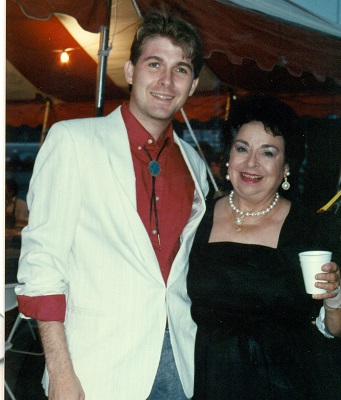
The Last Ride: A Father’s Voice, a Son’s Memory

I dreamed recently of riding with my dad. He was behind the wheel of his 1969 light green Chevrolet pickup truck, the engine humming softly as his voice filled the cab. We weren’t discussing anything profound—just the small, easy talk of a father and son on a familiar road. The cracked vinyl of the seat, the faint scent of motor oil, the rhythm of his words—it was a comfort, a tether to a time long gone. That dream carried me back 38 years to our final ride together. I was driving then, my hands gripping the wheel of my new 1986 blue Chevy S-10 pickup while he spoke of his hopes for my future, his love for me, and the adventures we’d shared chasing my music dreams. I didn’t realize those words would be his last words meant for me. He passed away in the wee hours of the next morning, and only then did his voice sink into my soul, echoing through the years.

That ride was a gift, though I couldn’t see it at the time. As a young man, I was too focused on the road ahead—both literally and in life—to fully hear him. His words were like seeds, planted in my mind, taking root only after he was gone. I can’t recall every detail of what he said; grief and time have blurred the edges. But the feeling remains—one of the most fulfilling moments he left behind. It was a moment of connection, rare in its simplicity, when he wasn’t just my father but a man sharing his heart.

My dad and I didn’t always talk so openly. Throughout my youth, our conversations were often father to son: him as teacher, disciplinarian, or storyteller, me as the eager but sometimes stubborn student. We butted heads like rams, especially in my teenage years, when I was itching to spread my wings and prove myself. He’d lecture me on responsibility; I’d roll my eyes, eager to carve my own path. He died too soon, before we could fully bridge the gap from father-son to man-to-man. I was still a boy in many ways, and we hadn’t yet found the rhythm of talking as equals. I wish now for just one more ride, one more chance to ask him about his dreams, his fears, his life beyond being “Dad.”

In my experience, men don’t often connect through words alone. We build things—birdhouses, car engines, dreams. We fish, we hunt, we work side by side. That’s what my father taught me. I remember weekends spent in the carport or workshop, the clank of wrenches and the low hum of country music on the radio as we rebuilt an old carburetor. Those moments were our talks, our way of being together. He also taught me patience, a lesson I’m still learning. I can still see him, calm and steady, untangling a knotted fishing line while I fumed at the delay. “Slow down, son,” he’d say. “The fish aren’t going anywhere.” Those were the lessons that shaped me, not in grand speeches but in quiet, shared doing.

Why share this memory now? Because time is fleeting, and I see it clearly. To fathers reading this: Don’t wait for the perfect moment to connect with your children. They grow up fast, and none of us knows how many days we’re given. Be intentional. Share a ride, a project, a story. Teach them patience, even when they push back. Discipline with love, not just authority. Encourage their dreams, even if they seem far-fetched—mine was to be a musician, and Dad never stopped cheering me on, even when the gigs were small and the pay was smaller.

Listen to your children, too. Ask about their hopes, their fears, what makes them light up. Those conversations will linger, just as my father’s voice does in me. Be the memory they carry into adulthood, the voice that guides them when they’re lost. You don’t need to be perfect—just present. Your words, your deeds, your love will shape them, not just for today but for decades to come.

I’ll never take another ride with my dad, but his lessons ride with me. Every time I’m patient, every time I choose to listen instead of lecture, I hear his voice. And in my dreams, we’re back in that old Chevy, the road stretching out, his words filling the air. Be that voice for your children. Be their memory, their guide, long after you’re gone.

A breakfast that lingers

As Mother’s Day morning drew near, I dreamed I stood over the stove in my childhood kitchen, frying pan in hand, setting it on the glowing red burner. Bacon sizzled, filling the air with its familiar aroma, while eggs waited in a bowl for a cheese omelet. Slices of Spam—a lunch or dinner staple from my youth—sat ready, perhaps a quirky twist of memory blending meals across time. I rarely eat breakfast, usually skipping it, but in my dream, I was stacking tasks like a seasoned cook: frying bacon, prepping Spam, whisking eggs. My mother sat in her favorite chair by the kitchen table, watching me work, our conversation as warm as the stove. I didn’t see biscuits, but I imagined them baking just inside the brown oven door below.

That vivid dream stirred memories of Saturday mornings long ago, when the smell of bacon frying would coax me from sleep. Our small kitchen buzzed with activity as my parents worked side by side. Dad, the omelet master, grated cheese and cracked eggs, while Mom patted out fresh biscuits, her hands dusted with flour. Bacon and sausage crackled in the skillet, and the oven warmed with the promise of golden biscuits. That cramped space never bothered them—they seemed to cherish it, perhaps recalling leaner times with even less.

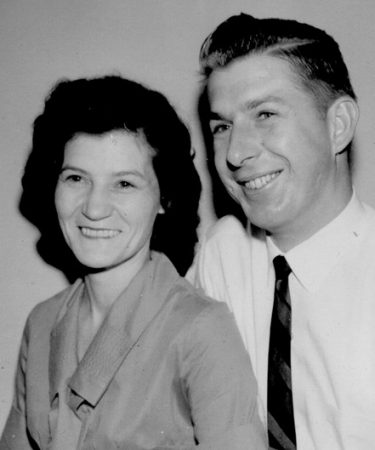
Pearl and Floyd Franks

When the feast was ready, the table groaned under plates of cheese omelets, crispy bacon, sausage, and steaming biscuits nestled in a bread basket. My brother and I, still in pajamas and robes, stumbled in, bleary-eyed but eager. We’d bow our heads to thank the Lord, then serving plates would fly as the food disappeared. Homemade apple butter, a sweet Southern staple, was slathered generously on those biscuits. As we ate, we talked—about the day ahead, weekend plans, or some milestone from the week. Those breakfasts were more than meals; they were where love and laughter solidified our family’s bond.

Why, in my dream, was I the one cooking, Spam sneaking into the breakfast lineup? Perhaps I was stepping into my parents’ roles, honoring the care they poured into every dish. My mother’s been gone 19 years, but in that dream, we shared a moment across the veil, her presence as real as the sizzle in the pan. When I woke, I got up, fried some bacon, and made a sandwich—a simple act I hadn’t done in years, but one that felt like a quiet tribute.

As this next Saturday rolls around, gather your family for a meal or a memory, whether it’s bacon and biscuits or even Spam. Those moments, steeped in love, might linger in your heart long beyond the years.

Shared Stages and a Life’s Calling

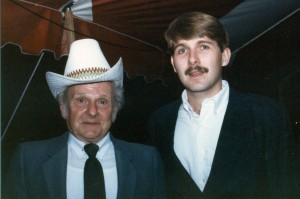
Ralph Stanley and Randall Franks in 1988.

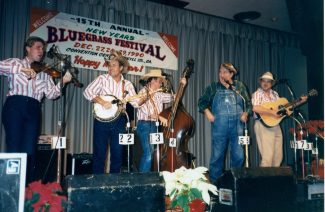
In the summer of 1985, I stood under the bright lights of Nashville’s Fairgrounds Speedway, my mandolin ringing out as I harmonized with bluegrass legends Ralph Stanley, Wilma Lee Cooper, and Bill Monroe on “I Saw the Light.” The roar of 12,000 fans filled the air, and in that moment, I felt a fire ignite in my soul. That year, through shared stages with mentors and massive crowds, I discovered my calling—not just to play music, but to uplift and connect with audiences for a lifetime.

Randall Franks and Wilma Lee Cooper

The week began at the Country Music Association’s Fan Fair, a vibrant celebration drawing 25,000 country music lovers to the Nashville Fairgrounds Speedway. On that Monday night, my band, the Peachtree Pickers, took the stage for the Grand Ole Opry’s Early Bird Bluegrass Show, marking our second Opry appearance. We shared the spotlight with giants like Bill Monroe and the Blue Grass Boys, Ralph Stanley and the Clinch Mountain Boys, and Wilma Lee Cooper. Though the exact songs we played have faded from memory, the thrill of our set—our teenage energy blending with bluegrass tradition—remains vivid.

The highlight came when I joined Stanley, Cooper, and Monroe to sing “I Saw the Light.” As we sang, my mandolin chops keeping time, I felt both awe and belonging. These legends, whose records I’d worn out as a kid, were now my peers for a fleeting moment. My hands trembled matching Monroe’s rhythm, but their warm smiles steadied me, teaching me that true artistry lies in serving the music and the audience. After the show, while my young bandmates headed home, I stayed to sign autographs and visit with fans throughout Fan Fair week, soaking in the connection that would fuel my career.

Weeks later, I traded my mandolin for a fiddle and faced an even bigger stage at the National Folk Festival in Ohio’s Cuyahoga Valley National Park. As the fiddler for Doodle and the Golden River Grass, I represented Georgia’s fiddle band tradition, walking in the footsteps of Gid Tanner and Clayton McMichen.

Randall with the Doodle and the Golden River Grass in 1990.

Shuttles whisked us backstage, where a funk band’s deafening set made tuning my fiddle a challenge. With 60,000 people waiting and a live radio broadcast looming, I battled nerves to tune my fiddle’s notes. When the emcee introduced us, I launched into “Fire on the Mountain,” giving it everything I had. Doodle Thrower, a master showman, worked the crowd like a conductor, guiding them from elation to sadness with a twist of his harmonica. His jokes sparked ripples of laughter that washed over the crowd like waves. I’d never felt the impact of an audience’s applause like that before or since—it flowed through my fiddle, confirming this was where I belonged.

Nashville taught me the power of mentorship; Ohio showed me the magic of moving a crowd. The lessons I absorbed those days reshaped my life’s path and led me to where I am today. Moments can make us—don’t miss yours. To hear more about my time with Ralph Stanley, watch the mini-documentary Bluegrass Legends: Ralph Stanley & Randall Franks An Interview 

Why Do Our Dreams Return Us to Familiar Places?

Why do our dreams so often transport us to familiar settings—our childhood homes, old schoolyards, or long-forgotten rooms? For me, these recurring landscapes are no coincidence. I believe our minds seek comfort in the known, anchoring us in spaces where we once felt safe to help us rest, reflect, or even receive deeper insights. My dreams, in particular, consistently return me to my childhood home, a place of warmth and security that continues to shape my sleep and my soul.

In these dreams, I’m back in that modest house, creaky wooden floorboards underfoot, the faint scent of my mother’s L’Origan perfume lingering in the air. The faded diamond-patterned wallpaper in the hall is just as I remember, though the scenes often defy time. I might be my current age, chatting with my parents about challenges they never witnessed, or joined by an old friend I’ve lost touch with, as I was just last night. Nothing extraordinary happens—just a visit, a conversation—but I awaken wondering what it meant. Was that dream a quiet reassurance that my friend, wherever they are, is okay? These familiar surroundings feel like a canvas where my mind paints comfort and connection, even when reality offers none.

This sense of comfort leads me to reflect on why my mind chooses this setting. I’ve read that our brains often choose familiar settings in dreams to process emotions in a safe, recognizable context—a theory that feels true to my experience. My childhood home isn’t just a backdrop; it’s a sanctuary where I feel grounded, whether I’m reliving memories or imagining new moments. It’s not my favorite vacation spot or a fantastical realm—it’s the place where I felt loved, allowing me to rest deeply or confront life’s uncertainties with clarity.

In my youth, dreams of home felt like more than nostalgia. As I pursued a career in entertainment, I believed God used these familiar rooms to offer guidance, showing me paths I might have avoided—opportunities my fears could have blocked or people I wouldn’t have met. These dreams were guideposts, blending divine insight with the study and practice of my waking life. Another dream left me awestruck: I saw a portly, gray-haired black woman, unknown to me, tenderly caring for a young boy. She addressed me by name, offering gentle advice with a warm smile, as if I were one of her charges. A man’s voice called her Grace. When I shared this with my mother, she was stunned. Grace, who died before I was born, had generously given her time caring for my older brother when my mother was a struggling single working mom, long before my time. I’d never heard her name, yet there she was, a guardian angel in my dream. My mother’s eyes lit up, and she said, “You have a wonderful guardian angel watching over you.” Though I didn’t always follow such guidance perfectly, these dreams shaped my path, placing me where I could grow and serve.

But dreams of familiar places aren’t always serene. Nightmares from my youth—tossing and turning in my twin maple bed—still linger in my psyche, like one so vivid I woke bouncing in fear, running to my parents for comfort in the wee hours. These moments, though rare, show that even in distress, our minds cling to familiar settings to confront hidden fears or traumas. For me, such nightmares are exceptions, and my long-ago home remains a refuge where sleep brings solace.

So why do our dreams return us to familiar places? I believe they are the heart’s safe harbor, where we rest, reflect, and sometimes glimpse deeper truths. Whether it’s my childhood home, your old classroom, or another’s quiet street, these settings remind us that even in sleep, we seek comfort to face life’s uncertainties. For me, these dreams are a gift—a blend of memory, faith, and hope that guides me, one familiar place at a time.