Milestones and Markers

How we determine if we are successful in life and careers is often marked by milestones and markers that indicate where we are and how well we’ve done our jobs. We strive for them throughout our lives. I often pull out a suitcase that contains bits and pieces from my late father’s life. We filled it after he passed away at 54, unable to part with the certificates of achievement, the small pins marking his years of service, and the awards he received. Medals and insignia from his time in the Army are also there. I remember one time when my father came home floating on air after receiving recognition for saving his employer an immense amount of money.

Beyond the love I still carry for my dad, these mementos from his life mean little in the grand scheme of things. I’ve probably opened that case five times since he died 38 years ago, taking the pieces out, reading, remembering, and repacking.

In contrast to my father, who spent his life working for companies and the government, my life has been spent either behind or in front of a film or television camera, or driving from town to town, stage to stage, as I spoke or performed my music and comedy. My milestones and markers are much different from my father’s. They are achievements generally granted by organizations that focus on the crafts in which I perform my gifts. Awards come in all shapes and sizes and at all levels these days, generally selected through nominations and voting processes by industry professionals or sometimes by fans. Chart songs come through radio stations and whichever authority compiles the data.

As entertainers and actors, we do our work, and at times, we’re blessed when it rises into the view of our peers, fans, and organizations—enough so that our names are set alongside those considered the very best in the business. Those nominations sometimes even grant us the unusual distinction of becoming award winners.

I’m blessed that there have been seasons when I’ve seen the blessings of nominations and awards. God has allowed 2025 to be another one of those seasons, with a mixture of 16 nominations or honors in various areas of my creative endeavors from a variety of organizations.

Other milestones are markers of passing time—anniversaries. The last 12 months have been a series of markers for me, many starting with the number four. The longest is 45 years since I hosted my first ticketed concert with my youth bluegrass band—The Peachtree Pickers. This, in many ways, was the beginning of my professional career, aside from my earliest TV appearance at age six. Time also allows many folks to look upon your list of achievements that come with time and decide you need to be honored with career-capping distinctions, such as induction into halls of fame. My career has managed to accumulate five of those thus far, but I have yet to put a cap on my career. In fact, I’m doing everything I can to ramp up my opportunities to allow me to create and perform for the next two decades.

I don’t know who might sift through my awards and nominations 38 years after God calls me home, but it’s my intention to give them plenty to look through. I certainly hope I leave behind several trunks’ worth.

What achievements are you leaving behind? Whether in corporate offices, on stages, or elsewhere, we all chase these markers—but what truly endures? While the things described above are important to me, I’ll refer to something one of my performance mentors taught me about what we leave behind. My bluegrass mentor Doodle Thrower used to say, as he left the stage after the final show of a festival: “When they dig my grave, it’ll have to be several feet deeper than normal to house all the wonderful memories of good friends and the great moments shared with those in the audience.” I’m hopeful that for me the same will be true, but instead the extra depth will be needed for those who have stood in front of my stages or watched me on a screen.
Actor and Fiddler Randall Franks, ‘In the Heat of the Night’ co-star, Inducted into Georgia Country Music Hall of Fame


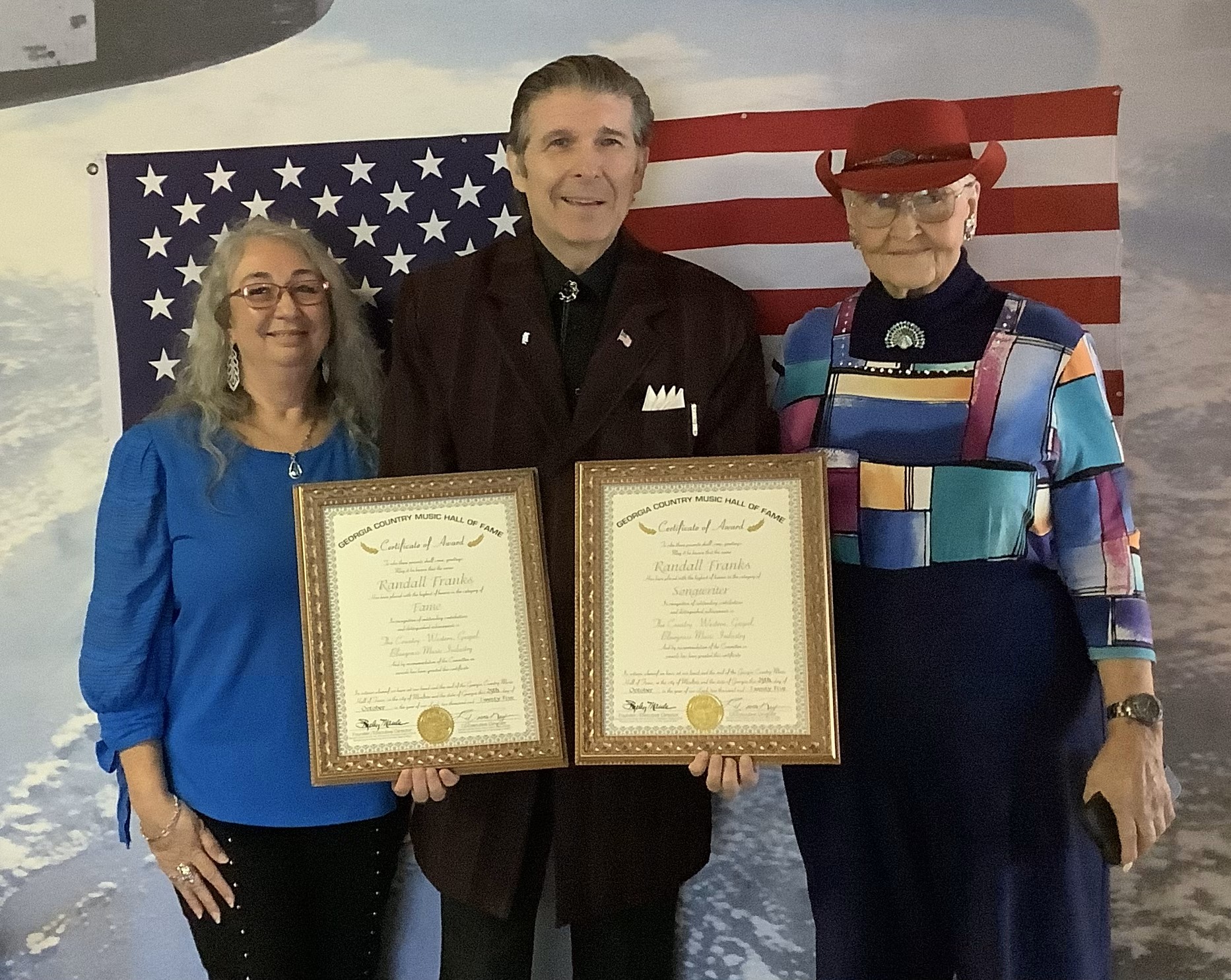
Entertainer Randall Franks (center) receives his induction plaque into the Georgia Country Music Hall of Fame from co-executive directors LaDonna Ray (left) and Shirley Maule at the Seaplane Opry House in Moultrie, Ga. (Photo: Randall Franks Media)

Randall Franks plays “Orange Blossom Special” at the Seaplane Opry House in Moultrie.

Moultrie, Ga. – October 28, 2025 – The Georgia Country Music Hall of Fame inducted entertainer, actor, and fiddler Randall Franks—known as “Officer Randy Goode” from TV’s “In the Heat of the Night”—during its recent ceremonies at the Seaplane Opry House. Co-executive directors LaDonna Ray and Shirley Maule presented Franks with the honor, celebrating his legacy in country, bluegrass, and gospel music.

It was a pleasure to induct Randall Franks into our Music Hall of Fame,” said LaDonna Ray, co-executive director. “His music, songwriting, and amazing contributions are a stellar addition to our honorees.”

Franks thrilled the audience with a high-energy fiddle rendition of “Orange Blossom Special” and joined fellow bluegrass inductee, vocalist/guitarist Dan Daniel, on stage.

Hall of Fame honorees Randall Franks and Dan Daniel pose with their awards.

This recognition comes thanks to God, the artists who’ve given me a hand up, my fellow musicians who supported me, behind-the-scenes professionals, my parents, and especially the fans who’ve bought tickets, merchandise, and tuned in,” Franks said. “Your support means everything!”

Fellow Georgian, “The Dukes of Hazzard” and “Enos” star Sonny Shroyer congratulated his longtime friend shortly after the presentation by phone, Franks said. Shroyer was part of Franks’ country variety show, The Hollywood Hillbilly Jamboree, now marking its 80th anniversary and recorded the song “Children In Need” with him.

The Hall also awarded Franks for his patriotic, country, bluegrass, and gospel songwriting. Some of his titles are patriotic tunes such as “The American’s Creed” and “Cascade;” country songs such as “I Know ‘Cause I’ve Been There,” “What About All These American Flags” and “You Can’t Stop Time;” to bluegrass gems such as “You Can’t Stop Time,” “The Old Black Fiddle,” “Filling the River with Tears,” and “Midnight Train;” plus gospel favorites including “God’s Children,” “Now I Know,” “Someone Greater Than I,” “Must Be A Reason,” “You Better Get Ready,” and “He’s Never Gonna Fool Me Again.” Among his co-writers are talents like Alan Autry, Cotton Carrier, Wesley Crider, John Farley, Noah Gordon, Dottie Moore, Carroll O’Connor, Ramblin’ Tommy Scott, and Mark Wheeler.

Founded by Shirley Maule, the Georgia Country Music Hall of Fame honors Georgia artists whose careers have touched lives in Georgia, Northern Florida, and beyond.

For more information, visit www.RandallFranks.com

Track: The Dog Who Listened

I stepped out the back door and plopped down on the top step. Our back stoop had just three concrete steps leading down to the sidewalk, which ran along the rear of the house to the gate.

There, my faithful, hairy companion Track arrived and rested his head in my lap. He was a cross between a beagle and a peekapoo and looked like the movie dog Benji, but with darker hair.

As a child, I was allergic to animals, so I wasn’t always the loving master Track deserved. My father made up for my shortcomings, I think. Still, there were many times when my childhood world seemed to be crashing down around me, and Track would lay his head in my lap for a heart-to-heart.

I often paint with the brush of idealism when I write—because we all prefer the polished version of the past. But there were times when the gleam didn’t reflect well on us.

Life isn’t easy, and the daily grind can wear us down. Parents sometimes share intense “fellowship” with each other. Sometime kids push the envelope saying or doing things they should not. In my experience, though, that rarely ended well for the child. A meeting of the minds often came with the crisp whir of my father’s belt slipping through its loops—a sound every kid recognized as the line being crossed. We’d bolt for cover: the bedroom, the den, or—on occasion—behind my mother’s kitchen chair. Sometimes she’d come to our defense, but mostly the two tall grown-ups were united on discipline. For me, the licking wasn’t pleasant, but the pain was transitory. The lesson lingers decades later.

When the stress peaked—whether from my parents’ arguments, my own misbehavior, or a friend’s betrayal—Track was always there. His brown eyes gazed up into mine, listening to my complaints as tears ran down my cheeks.

He listened. He consoled. In some way, I know he understood my hurt. Compassion knows no bounds between humans and our furry friends. For me, Track was a constant. Our playtime was limited, but he entertained himself with fierce intensity in his enclosed backyard domain. He’d bark insistently at any passersby who dared approach the fence, claiming his territory. The garbage men endured it every Tuesday as they grabbed our two metal cans, hauled them to the truck, dumped them, and returned them. Service was personal back then. Track would bark at our cans, follow them to the truck, then race to the neighbor’s in-ground can to bark some more. I assume he relished the weekly ritual.

For all his bravado, Track wouldn’t hurt a fly or snap at a person. I recall one adventure when we harnessed him and the neighborhood dogs to wagons with wheels and raced them down the street. Oscar, a huge dog, always won—and if he broke free, we’d chase him endlessly. Track excelled at pursuit, shooting down the block like a bullet from a gun. I’d usually find him at Oscar’s fence, the two running back and forth, one on each side. He did the same with Herman, the elderly next-door dog who preferred not to run.

Except for a few months while I earned my animal husbandry merit badge, Track led a solitary life, broken only by brief visits from neighbor dogs. During that time, we brought home Lassie from Raymond, the janitor at my elementary school. She and Track had seven puppies, which we placed with families—including some back with Raymond, who hunted with them. Lassie eventually went to another home, too.

Track was my confessor, my friend, and my steadfast companion through childhood.

When he passed, I built him a small coffin and laid him to rest between a peach tree and a crab apple tree—his favorite spot. It was a sad day for my dad and me as we said goodbye. I haven’t had a pet since, and I don’t plan to.

Appalachian Fiddler Randall Franks joins The Moonlit Road.com for a new podcast celebrating it’s 28th Anniversary

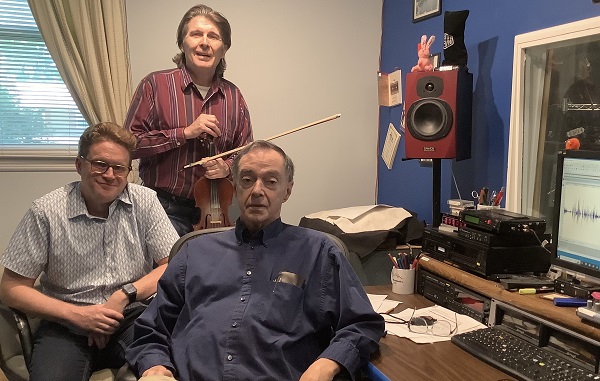
Randall Franks (second from left) reviews his musical enhancements in the studio with director Craig Dominey (left) and audio engineer Henry Howard. (Randall Franks Media)

Appalachian entertainer/actor Randall Franks, JMA Musician of the Year – Fiddle, adds his original musical accompaniment to a new episode of the heralded folklore podcast The Moonlit Road.

“Storytelling and fiddling has long gone hand in hand,” Franks said. “My great grandfather A.J. “Harve” Franks combined the two, entertaining all who came his way. In this adventure, I support another great storyteller.”

The Moonlit Road.com, the definitive online home for strange tales and ghost stories from the American South, today announced the exciting relaunch of The Moonlit Road Podcast. Celebrating its 28th anniversary, the influential digital folklore project is returning with an all-new series featuring performing storytellers and musicians, some of whom have not recorded with the team in over 25 years.

The relaunch signals a renewed commitment by the original production team to share the rich, eerie tapestry of the Southern storytelling tradition. The site and podcast, which has been hailed as the “masters of campfire lore” by Garden and Gun Magazine, will feature ghost stories, strange folktales, and regional myths, blending professional audio production with authentic Southern talent.

Inaugural Episode Features World-Renowned Musician

The first episode of the new series, “The Cow That Ate The Preacher,” sets a high bar for the season. This chilling and darkly funny Arkansas ghost story tells the tale of a traveling preacher, who has lost more than his way, and seeks revenge on an inhospitable farm couple.

  • The story is masterfully told by local storytelling legend David Hirt.

  • It features original musical accompaniment by world-renowned bluegrass musician and actor Randall Franks (Find him at https://randallfranks.com/).

“Many of my people come from the land of kilts, fiddles and bagpipes,” Franks said. “This retelling of a folktale from the old country just in time when many are focusing upon things that go bump in the night, allowed me to reconnect a bit with my Celtic heritage.”

The storytellers featured in the new series are well-known to the Atlanta, Ga. community, regularly performing at beloved live events such as the Tour of Southern Ghosts in Stone Mountain and Capturing the Spirit of Oakland in Oakland Cemetery. Check out the podcast at https://www.themoonlitroad.com/the-cow-that-ate-the-preacher/ .

A Return to the Dark Backroads

“We are thrilled to celebrate nearly three decades of sharing the South’s most spine-tingling stories by bringing the original team back together,” said Craig Dominey, Founder and Producer of The Moonlit Road.com. “This relaunch is a homecoming, allowing us to post new, high-quality audio stories that capture the unique atmosphere of the Southern storytelling tradition. For long-time fans and new listeners alike, it’s a chance to light a lantern and join us back down The Moonlit Road.”

New episodes of The Moonlit Road Podcast will be posted monthly and are available on all major podcast platforms, including Apple Podcasts, Spotify, and via the website at TheMoonlitRoad.com.

About The Moonlit Road.com

Founded in 1997, The Moonlit Road.com is the web’s leading source for Southern ghost stories, folktales, and strange-but-true tales, narrated by the region’s best storytellers. For over 25 years, the organization has been dedicated to preserving and promoting the oral tradition and distinct folklore of the American South.

CONTACT: Craig Dominey, Founder/Producer – The Moonlit Road.com feedback@themoonlitroad.com

Make the Most of Today

Life is a stage, and as we play our parts, we face the sudden and lingering exits of those we hold dear. The first loss we experience is often a relative, sometimes a friend.

As a young child, I was deeply affected by the death of my Great-Uncle Jadie Harris, though I don’t recall the details—only the weight of grief I was told I carried.

Last week, an unexpected lunch with childhood friends Pam and Bob Padgett brought back memories of another loss: Pam’s sister, Nancy Burgess, who succumbed to kidney failure. Our mothers were close, and we spent countless hours playing board games while they laughed and talked. Nancy’s death, the first of a playmate, shook me as a youth. Until then, death had been reserved for older relatives—great-great-aunts and uncles whom I adored, blessed as our family was with longevity.

In seventh grade, I recall a season when funerals seemed constant. When someone passed, our world paused. My parents consoled grieving families, helped with arrangements, or simply sat with them in silence. We children did our part, distracting younger cousins with games to shield them from sorrow.

As years passed, I noticed losses arriving in waves, marking generational shifts: first my great-grandparents, then grandparents, then aunts and uncles. Over the past decade, I’ve watched my own generation—and even some from the next—begin to depart. Just this week, two unexpected losses struck: a hometown friend whose dedication transformed our community, and a film industry colleague with whom I worked for over a decade to create opportunities for others.

Soon, I’ll attend one friend’s funeral to offer condolences and share memories with those who loved him. I’ll also call another friend who recently lost both his brother and wife, hoping light conversation might lift his spirits.

When we leave life’s stage, our role ends. Loved ones may mourn, but the world moves on. God doesn’t promise us tomorrow—only today, a gift to use well. Are you living fully in this moment? Are you lifting those around you?

Even a life as long as my friend Violet Hensley’s—109 years as an Ozark entertainer—passes in a blink from cradle to grave. So use today. Love with kindness, bless others, and live with purpose. Then, when your final curtain falls, the applause will echo.

How do we leave behind something worth remembering?

Oftentimes in life, we concentrate our efforts on paying the next bill, dealing with a loved one’s problems, or chasing the next goal.

I recently saw a meme of a man in three stages of life pursuing money flying through the air: In the first, he has none; in the second, an armful; and in the final, an enormous amount clutched in his arms. But that third panel shows a cliff with a sign: ‘The End.’ He’s reached his goal—and the end of life.

While this is simple commentary, for many it’s true. In the meme, no children or spouse stand with him, so I assume he ran alone.

As someone who’s done the same, this can be a stark awakening: We’ve wasted our lives chasing elusive dreams, clutching at meager successes—power, money, or things we see as prizes.

But is there a way to run that race—even alone—and leave something that outlasts us, giving meaning to our efforts?

I think of people in ministry: D.L. Moody influenced Billy Sunday, who inspired Billy Graham—all rooted in the Word of God. Their work endures through the millions they touched, and the millions more reached in turn. We may not trace the seed of faith we encounter back to Moody or even the twelve disciples, but it still has impact. Those who carried it forward left something worth remembering.

For history lovers, we wander through museums, castles, and old homes named after long-ago philanthropists who built in stone to endure. We glimpse their lives through artifacts, staring into paintings or photos to capture their essence. Sometimes, a story inspires: how someone who died with millions started as an orphan or street waif and rose through hard work. These tales encourage us to improve our own lives. They might have left their money to family or causes that changed others’ worlds, creating a memory beyond their time.

Are they aware? Some believe they watch from heaven. I think once we cross over, old things pass away; while we await loved ones, God shifts our focus beyond the earthly realm.

None of us is promised tomorrow, but we have today. Use it to make a positive impact—through service, mentoring, or giving away accumulated wealth. To see the change, create it now. Touch hearts with your time, knowledge, and gifts; change worlds one person at a time.

This is the only way to leave something worth remembering. One person a day adds up over a lifetime. Go out and change the world!

Bluegrass Brilliance: Pickin’, Grinnin’, and New Horizons

One of the standout banjo players at Chattanooga’s 2025 IBMA World of Bluegrass was Gena Britt, a founding member of the powerhouse band Sister Sadie. With a stellar solo reputation spanning over 30 years, this acclaimed picker—nominated again for IBMA Banjo Player of the Year—has teamed up with Mountain Home Music Company for her first solo album in nearly six years. Streets, Rivers, Dreams & Heartaches delivers her signature virtuosic banjo work and soulful vocals, but it also showcases an artist evolving, blending traditional bluegrass with fresh creative edges.

“I am so grateful to Mountain Home for believing in me and allowing me to create this music that I’m so very proud of,” Britt shares enthusiastically. “The musicians and singers I assembled for this project sound so good together! We first played in an all-star configuration at the Station Inn, and it was so much fun that I wanted to continue that in the studio. These guys and gals truly poured their hearts and souls into these songs, and I cannot wait for the world to hear them!”

The album features award-winning fiddler Jason Carter and his former Travelin’ McCourys/Del McCoury Band mate Alan Bartram (acoustic bass, harmony vocals), alongside singer-guitarist John Meador (Vince Gill Band) and rising mandolin star Jonathan Dillon. Additional contributions come from East Nash Grass’s Jeff Partin (resonator guitar), Dillon’s Red Camel Collective bandmate and award-winning singer Heather Berry Mabe, Balsam Range’s Caleb Smith, The Isaacs’ Ben Isaacs, and old-time banjoist Tina Steffey.

This collection paints a vivid portrait of an artist rooted in authentic bluegrass she’s mastered and shaped for decades, yet bold enough to push boundaries. Streets, Rivers, Dreams & Heartaches proves Gena Britt is hitting her musical prime—pre-save it now ahead of its November 7 release. Get it here: https://clg.lnk.to/gb-SRDH

Speaking of IBMA triumphs, my friends in The Kody Norris Show are riding high after winning the 2025 Video of the Year for “The Auctioneer.” Hot on its heels, they’ve released their latest music video for the single “Silver Eagle” from their new album Highfalutin Hillbilly. Bursting with personality and charm, the clip follows Kody and his sweetheart Mary Rachel on the road—until she eyes greener pastures (all in good fun, of course). It even boasts a surprise guest appearance by Grand Ole Opry member and country legend T. Graham Brown. For more bluegrass flair and tour info, head to thekodynorrisshow.com.

Chattanooga’s Bluegrass Bonanza: IBMA’s 2025 Triumph

Chattanooga, Tennessee, transformed into Bluegrass Central, the ultimate destination for pickers, stars, and fans. The city buzzed with the ring of banjos and a sawing of fiddles as the International Bluegrass Music Association (IBMA) brought its World of Bluegrass to its new home at the Chattanooga Convention Center for a five-day celebration. Unless they were performing elsewhere, musicians of all ages flocked to seminars, jam sessions, shows, and lessons covering every facet of bluegrass.

Billy Strings visits with attendees in the exhibit hall.

Every day, attendees and locals spotted icons like Steve Martin, Billy Strings, Del McCoury, Doyle Lawson, and newly inducted Hall of Famers Hot Rize and the Bluegrass Cardinals grabbing a bite at local eateries or strolling between events. The energy was electric—riding up an escalator, I overheard a young fiddler excitedly recount jamming with a legend the night before, a moment that captured the festival’s magic.

The IBMA World of Bluegrass was a resounding success in its 2025 debut at the Chattanooga Convention Center. The Soldiers and Sailors Memorial Auditorium hosted the annual Bluegrass Awards, emceed by Steve Martin and Alison Brown, featuring unforgettable performances. Standout winners included Fiddle Player of the Year Maddie Denton with East Nash Grass, and Jason Carter and Michael Cleveland, who swept Song of the Year and Collaborative Recording of the Year for Outrun the Rain, plus Album of the Year. Authentic Unlimited won Vocal Group of the Year, The Traveling McCourys took Instrumental Group of the Year, and Jaelee Roberts earned Gospel Song of the Year for He’s Gone. Kristin Scott Benson, Gena Britt, and Alison Brown claimed Instrumental Recording of the Year for Ralph’s Banjo Special.

Jam sessions were the heart of the event, with the convention center’s hallways alive with music. Every twenty feet, young players—from toddlers clutching tiny fiddles to teens wielding banjos—jammed alongside seasoned pros, their melodies echoing through the halls. After 9:30 p.m., when the convention center closed, diehards like members of the Tennessee Bluegrass Band migrated to the nearby Marriott, jamming into the early hours.

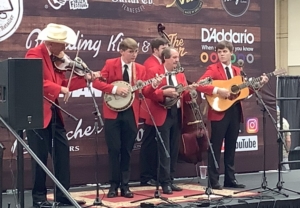
The Tennessee Bluegrass Band

Across the city, venues showcased talents like Wyatt Ellis, Becky Buller, Little Roy and Lizzy Long, and The Kody Norris Show, which won Video of the Year for The Auctioneer. Fans mingled with heroes, snapping photos and shaking hands.

Exhibit halls hosted global band showcases and youth performers debuting skills honed in dedicated workshops. Seminars highlighted bluegrass history, including a tribute to Hazel Dickens and a panel with legends Paul Williams, Doyle Lawson, and Male Vocalist of the Year Greg Blake. Dom Flemons led a session on African American Hall of Fame inductee Arnold Shultz’s influence on pioneers like Bill Monroe.

Billy Strings, Entertainer of the Year, wondered through the exhibit hall, picking up guitars and whipping out a tune including on Jimmy Martin’s guitar—available for anyone to strum, thanks to Martin’s son—and joining Junior Sisk and New Artist of the Year Red Camel Collective for a tune before his keynote address.

On Friday and Saturday, thousands filled Miller Plaza, where four stages, including one for youth talent, showcased acts like The Infamous Stringdusters, Carter and Cleveland, and Sister Sadie. Local Chattanooga stars, including Mountain Cove Bluegrass, the Landon Fitzpatrick Band, Carl Towns and Upward Road, and Emerald Butler dazzled international audiences with their homegrown flair.

Mike Bub and Randall Franks

I was honored to direct the Special Industry and Distinguished Achievement Awards alongside producer Chris Keenan and an amazing production staff, spotlighting talents like Missy Raines and Ron Thomason. Five-time Bass Player of the Year Mike Bub served as our host for the show. One unforgettable moment was watching a young guitarist, barely taller than his instrument, beam with pride as he played alongside a bluegrass legend, a reminder of the genre’s vibrant future.

Celebrating its 40th anniversary, the IBMA has made Chattanooga its home for the next three years. If you love bluegrass—or want to discover your new favorite band—mark your calendar for October 20–24, 2026, and October 19–23, 2027. Visit IBMA.org to plan your trip and join the celebration!

Lessons from a Lost Pocketknife

When I was a small boy, like many up-and-coming business folks, my parents sought a getaway near the city—a haven from the hustle and bustle, but not too far for quick trips filled with camping, fishing, and swimming.

For my older brother and me, this sounded wonderful. He’d already experienced more rustic life on the family farm in the mountains before we relocated, but that spot was too distant for weekend escapes. My folks eyed two burgeoning options outside Atlanta: Lake Lanier in Hall County and Lake Capri in Rockdale County. They bought a lot at Lake Capri because it was closer to home. At the time, the lakes were neck-and-neck as getaways, but in hindsight, Lanier would have been the better choice.

Still, we became Lake Capri owners, and our treks began. We’d load the fishing gear, lawn chairs, and Coleman stove into the camper on our pickup truck. The cooler brimmed with potato salad, cold cuts, bread, ketchup, mustard, and Mom’s chocolate-frosted cake—plus breakfast items for overnights. Off we’d go.

During grass-mowing season, we’d add a push mower and gas can. That was an unforeseen chore my brother and I hadn’t anticipated: more acreage meant more legwork for us. It was worth it, though. After a couple of hours mowing, we’d switch to swimming trunks for a dip or grab rods for bank fishing.

There was always a peacefulness about sitting on the lake shore as puffy white clouds drifted across the blue sky. All you could hear were crickets chirping in the bait box, awaiting their dunking in hopes of dinner. Of course, we had plenty of red wigglers ready for a bath, too. While my older brothers became skilled fishermen, I never inherited the gene. I tried, but sometimes I felt like the jinx from The Andy Griffith Show who spoiled every catch.

I remember one trip when I’d gotten my first pocketknife as a gift. I was so proud—it was a tool, a rite of passage marking my progress from boyhood to manhood, like getting a BB gun and later a .22 rifle. I carried it everywhere, even to school back then. My swimming trunks had pockets, so in went the knife without a thought.

We fished first that day. I’d cast my line and set down my small rod, distracted by something. Suddenly, a fish big enough to yank it into the water struck. I chased after it, blending fishing and swimming in one frantic splash. Waist-deep (which wasn’t far for my size), I grabbed the rod and tried to set the hook, but the fish had skedaddled with my bait.

The sad part: in my enthusiasm, my pocketknife slipped out and sank to the lake bed. Heartbroken, I went back in and searched frantically, but to no avail.

My parents consoled me, but it stung. In my mind, I’d stepped backward on the path to manhood by losing that possession. I was still the same boy, of course, and they soon replaced the knife—perhaps I guarded it better because of the lesson. That mishap, and those family times, left a sharp memory I’ve cut my teeth on all these years later. Are you making lasting memories with your family? Maybe today is a good time to start.

Treasures of Forgotten Lives

The musty scent of old books, vinyl records, and mothballed clothes greets you at an estate sale, where the remnants of someone’s life spill across makeshift tables, counters, and shelves. Clothes, tools, knickknacks, furniture, jewelry, even leftover cleaning products and unused hardware—each item whispers a story. I’ve spent many pleasant afternoons rummaging through these sales, piecing together the lives of strangers through the things they left behind.

In the garage or basement, you often find the “men’s domain”—a workshop brimming with neatly stowed tools, screws, nails, and bolts. I’ve snagged bargains on hardware I might use someday, like a box of screws for a future project or a half-used can of paint. These items, carefully organized, hint at hobbies, repairs, or dreams of building something new. The living room, by contrast, is often the woman’s realm, adorned with porcelain figurines, Christmas villages, crystal, and delicate artwork. The kitchen overflows with dishes, pots, pans, and utensils—testaments to meals shared, holidays celebrated, and daily routines now stilled. I love visiting on the final day, when prices plummet and overlooked treasures, like a quirky teapot or a vintage record, become fire-sale finds.

Yet the saddest discoveries are the photo albums, brimming with smiles from birthdays, weddings, graduations, and vacations. These moments, once cherished enough to frame or tuck into sleeves, now sit abandoned, their owners likely without children or grandchildren to claim them. I’ve flipped through these albums, marveling at the joy captured in faded Polaroids or black-and-white prints—families gathered around Christmas trees, couples dancing at receptions, kids blowing out birthday candles. Once, I found an album with a familiar face, perhaps a distant acquaintance or neighbor from years past. I couldn’t leave it behind; it felt like rescuing a piece of their story. Now it rests in my home, where those faces are known, if only to me.

Sadder still are boxes of framed photos or old slides, relics of a time when families gathered to watch slide shows, sharing stories of vacations or funny mishaps. These visual memories, so carefully preserved, meant everything to someone. When I see them discarded, I can’t help but feel their song will no longer be sung, their names and faces lost to future generations. For years, I found comfort seeing similar photos on the walls of Cracker Barrel restaurants across the country. Strangers’ faces, frozen in time, gazed out at diners, their images preserved even if their names were forgotten. Now, with corporate remodels stripping away these tributes, another layer of sadness settles in, as if the past is being erased once more.

In today’s digital age, our memories face a new threat. Photos and videos, stored on old computers, hard drives, or forgotten cloud accounts, may vanish faster than dusty albums. Unlike physical photos, which can be stumbled upon at a sale, digital files are often inaccessible without the right device or password. I’ve wondered about my own collection—decades of snapshots, concert tickets, and mementos from a life immersed in music. I’ve earmarked some for music-related archives or museums, but even then, they’ll likely sit in a box or filing cabinet, deep in storage, rarely seen.

Estate sales teach us that our treasures are fleeting. The albums and keepsakes we cherish may end up unrecognized by our children or grandchildren, who may not know the faces or stories behind them. Only a handful of memories make it to their piles, the rest discarded or sold to strangers. As I browse these sales, I’m reminded to plan ahead.