New Year’s Fixin’s – A Lesson in Being Neighborly
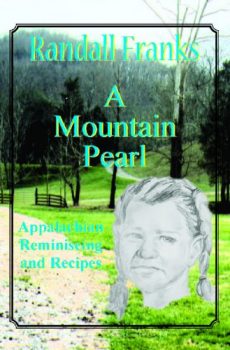
It was a blustery cold morning as Kitty and Pearl began their walk over to Maudie Pearson’s house. They carried tins full of green collards, black-eyed peas and ham hocks and some cornbread.
“This seems like an odd meal to take Miss Maudie,” Pearl said.
“It’s News Year’s Day fixin’s,” Kitty said.
“If she eats these she will have all the luck and money she needs in the next year,” Kitty said.
As they walked across the field to the tenant shack where eighty year-old Maudie lived, their steps barely marked the frozen ground which months before would have allowed them to sink a foot deep with each step.
Kitty’s walk was long and gated since she carried the extra weight of another family member inside her.
“Momma, when will the new baby come,” Pearl asked.
“When its ready,” she said. “I feel it should come any day now.”
Maudie welcomed them at the door and asked them to sit a spell.
“You folks sure surprised me coming on such a cold day,” Maudie said.
“I knew you wouldn’t feel up to cookin’ much, so we wanted to bring you blessings for the New Year,” Kitty said.
“And it looks like you will have a new blessing soon,” Maudie said as she placed her hand on Kitty’s belly.
The threesome sat near the warm fire and shared some hot cider as Maudie showed off a quilt top she was working diligently to finish.
Kitty said they best be getting back.
“The men folk will be home from hunting soon, and they might think we run off,” she said.
Kitty and Pearl took small steps on the way back. Kitty’s pace became slower and slower as she fell on her knees to the ground.
The pain doubled her over.
“Momma,” Pearl called to her, “What’s wrong?”
“It’s time,” Kitty exclaimed.
“What do I do?” Pearl asked.
“Help me and let’s get back to Maudie’s,” she said.
Pearl helped her up, and the duo made their way back to the tenant house.
Maudie said, “Land sakes I knew it would not be long.”
She helped her into the bed and told Pearl to fetch some water from the well and put it in the fire to boil.
Pearl did, and then she placed a damp cloth on Kitty’s head to ease the sweat rolling from her brow. Every few moments intense pain brought Kitty’s shrill scream of agony.
“What can we do?” Pearl said.
“We are doing all we can; the rest is up to God and the little one,” Maudie said.
After a while the screaming stopped, the pain subsided, and in Maudie’s arms was a brand new baby boy.
“Well it looks like the blessings of the New Year have arrived,” Maudie said.
Maudie reached over, picked up the new quilt she was making and wrapped the boy inside, laying him beside Kitty.
“He’ll get it a little early,” she said. “I was hoping to finish it before he came. I’ll do the rest a little later. He needs it more now.”
As the little baby looked up at Maudie and smiled, a shared grin was passed to Kitty and Pearl.
Kitty looked at Pearl and said, “Sharing blessings goes a long ways, little one. Just look what a few greens, peas and cornbread gave to us today.

From the book “A Mountain Pearl: Appalachian Reminiscing and Recipes” and available at www.RandallFranks.com/Store

WISHING ALL A BLESSED AND HAPPY NEW YEAR!
The Fifer Who Crossed the Delaware: The Night That Saved a Revolution


Every Christmas, hundreds of re-enactors gather on the Pennsylvania bank of the Delaware and push replica Durham boats into the black, ice-choked river. They are re-living the night of December 25–26, 1776 — the night George Washington’s ragged army made its desperate gamble to surprise the Hessians at Trenton and, in one audacious stroke, keep the American Revolution alive.

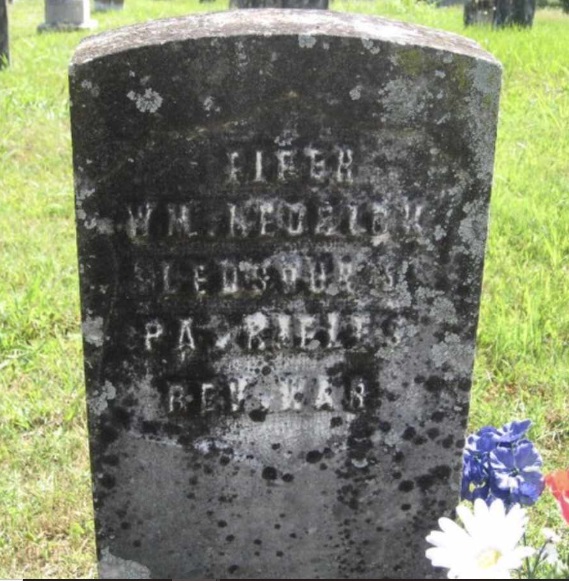
Among the 2,400 frozen men who stumbled ashore in the pre-dawn darkness was a 32-year-old fifer from Lancaster County named William Hedrick. He was no general, no celebrated captain, not even an ordinary musket-toting private. His weapon was eight inches of ebony wood. His job was to pipe the tunes that kept exhausted, frostbitten feet moving in step. By late December 1776 the cause looked lost. The Continental Army had been driven out of New York, chased across New Jersey, and pushed behind the Delaware. Enlistments were expiring. Desertions were epidemic. Congress had fled Philadelphia. Riding with the retreating columns, Thomas Paine scribbled the words that still ring: “These are the times that try men’s souls.

”Washington knew he needed a victory — any victory — before the army simply dissolved on January 1. So he chose the boldest plan imaginable: recross the river in a nor’easter, march nine miles through the night, and strike the Hessian garrison at Trenton at dawn.

William Hedrick’s company of Pennsylvania riflemen, led by Captain James Ross and attached to Major Abraham Ledsour’s battalion, was in the vanguard of that forlorn hope. Pension records and militia rolls place him in the column that formed at McKonkey’s Ferry around four o’clock on Christmas afternoon.

These were not ordinary soldiers. In the elite Pennsylvania rifle companies of 1775–1778, the fifer was first a rifleman who happened to play the fife. When the shooting started, Hedrick laid the instrument aside, shouldered his long rifle, and fought like everyone else.

By the time he reached the Delaware that Christmas night, he was already a hardened veteran. He had marched nearly a thousand miles on foot, fought in the disastrous Battle of Long Island, skirmished almost daily during the four-month retreat across New York and New Jersey, and watched the army shrink from 20,000 to barely 3,000 effectives. He had gone hungry, shoeless, and sleepless for weeks.

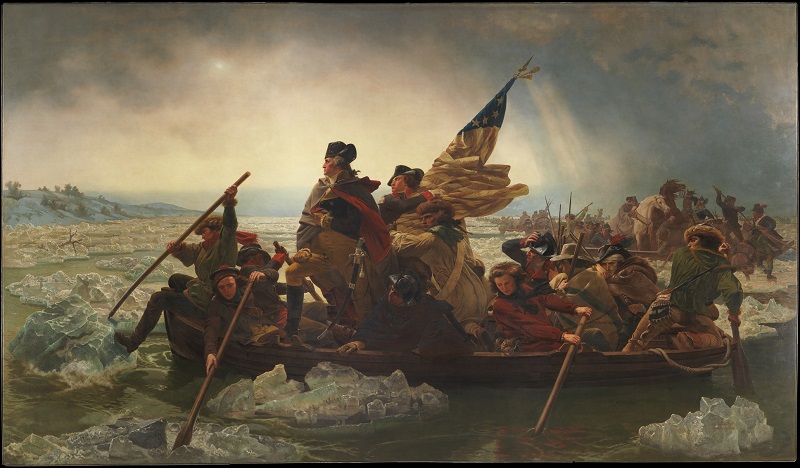
Imagine the scene. Ice floes thick enough to gut the boats crashed against the hulls. Men broke a path with oars and poles, advancing only yards at a time. Two horses drowned; two cannon nearly slid overboard. The password was “Victory or Death.” On that night it felt less like inspiration than weather forecast. The crossing took hours longer than planned. Instead of attacking at 5 a.m., the first troops reached Trenton after 8 a.m. — long after sunrise. Surprise seemed lost. Yet the same storm that delayed the Americans kept the Hessian pickets huddled indoors. When the Continentals finally poured down Pennington Road and King Street, many mercenaries were literally still pulling on their boots.

Washington had split his force. Sullivan’s division, including Hedrick’s riflemen, sealed the Assunpink Creek bridge while Greene struck from the north. In forty-five minutes it was over. Colonel Johann Rall lay mortally wounded; nearly 900 Hessians surrendered. The Americans lost only two men — both to the cold, not enemy fire.

On the icy road from the river to the town, Hedrick and the other musicians had played “Roslin Castle,” a haunting Scottish lament turned quickstep, and the insolent new favorite “Yankee Doodle.” The shrill notes cut through the gale and kept men from falling out to die in the snow.

Trenton was not the war’s biggest battle, but it was the most necessary. Ten days later came Princeton, and suddenly recruits were streaming back to the colors, and the Revolution had a pulse again.

William Hedrick marched on — through the mud of Brandywine, the snows of Valley Forge, the fog of Germantown — until an honorable discharge sent him home. He headed south to the mountains of East Tennessee, raised a large family, helped plant churches and communities in Sullivan, Greene, and Sevier Counties, and lived to the remarkable age of ninety-five. In 1839 he was laid to rest beneath a simple stone at Headrick Chapel Cemetery in Wears Valley, the notes of his fife finally silent.
The paper trail is solid: National Archives pension S.40495, Lancaster County militia rolls of 1777–1778, and sworn statements from comrades who remembered the fifer who played them across the Delaware and stood beside them through the horrors of Valley Forge.

So this Christmas, when you see Leutze’s famous painting on a card or coffee mug, look past the standing Washington. There, among the straining oarsmen and the swirling ice, among the men — no fancy uniform, no epaulets, no glory. A man with just eight inches of wood at his side and the stubborn heartbeat of a nation being born within him.

His name was William Hedrick. He was my paternal six-times-great-grandfather. Because he and thousands like him kept marching that night, we are still here to tell the tale.

“Victory or Death.”
They chose victory.

If you are a man in the Northwest Georgia area and have an interest in honoring the legacies of your patriot ancestors, visit General Nathanael Greene Chapter – Sons of the American Revolution https://www.facebook.com/profile.php?id=61572762870391 to learn more about an organization you can join.

Giving What Really Matters

As a five-year-old, I pressed my nose against the Western Auto window and fell in love. There it sat—the shiniest red Radio Flyer wagon I’d ever seen. Its chrome hubcaps practically winked at me, whispering, “Take me home.” At least that’s what my little-kid brain heard.

Christmas was simpler then. My friends and I came from similar working-class homes. If things were going well, we each got one “big” gift and a couple of practical ones—tube socks, a flannel shirt, maybe a dress shirt for church.

As years passed, the dream in the window changed: a Red Ryder BB gun, a Matchbox racetrack, model airplanes and ships, then a bicycle. Eventually the dreams outgrew my parents’ budget. I saved lawn-mowing money for a candy-red English racer while they supplied smaller gifts that matched whatever I’d bought myself.

Once I was old enough to earn real money and stopped making the lopsided clay ashtrays, I settled into my own gift-giving routine. For Dad: handkerchiefs and Old Spice aftershave. For Mom: L’origan perfume, (she never changed brands), a box of chocolate-covered cherries, and one unique item I’d hunted for all year.

Yet our tree was never buried in presents—two or three gifts each, that was it. What we lacked in quantity, we made up for in generosity toward others. Mom baked for neighbors. We filled food boxes for families in need. Dad spent evenings in the garage restoring donated toys for children who might otherwise wake up to nothing.

That’s what my parents taught me Christmas is really about: using whatever God has given you to lift someone else up.

For me, those gifts turned out to be music and acting. Every December I sang at church or performed at nursing homes, watching eyes light up brighter than any string of tree lights.

Christmas doesn’t require big price tags. Sometimes the best giving is simply sharing whatever talent, time, or kindness you have to offer.

This season, I hope you discover the deeper joy that comes from giving quality instead of quantity—and from meeting needs rather than feeding wants.

May the bliss of Christmas find you in the giving.

Share America Foundation chooses banjo stylist/vocalist Derek Stone as a scholarship designee

The Share America Foundation, Inc. recently announced its third 2025 Pearl and Floyd Franks Scholarship winner in LaFayette, Ga.

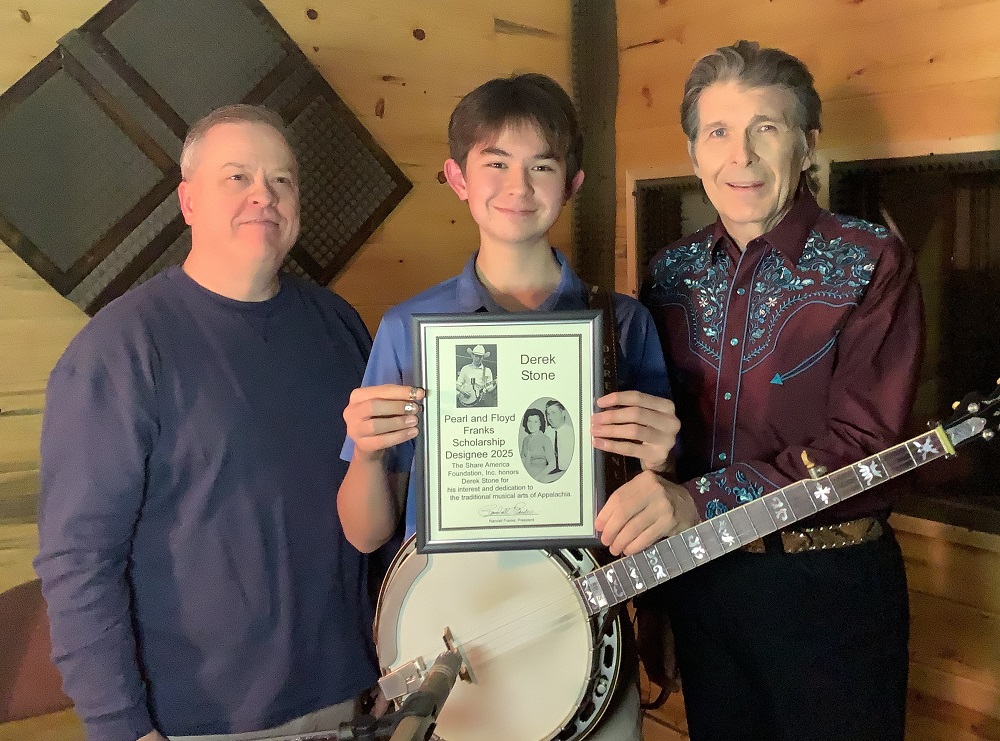
Share America President Randall Franks (right) and organization benefactor Tim Witt (left) present Derek Stone with his Pearl and Floyd Franks Scholarship designee certificate recently. (Photo: Share America Foundation)

The scholarship honors students excelling in the Appalachian musical arts. Pearl and Floyd Franks were the late parents and former entertainment managers of actor/entertainer Randall Franks, “Officer Randy Goode” from TV’s “In the Heat of the Night.”

Musician Derek Stone, 15, of Chattanooga, Tenn., was selected as a scholarship designee.“

Stone is a talented musician and singer whose talents shine through whether in a jam session or on stage for a show,” Franks said. “He is definitely going to reach many people with his abilities.”

He has won titles at the Smithville Fiddler’s Jamboree in Smithville, Tenn., including First Place Beginning Banjo, Third Place Adult Banjo (twice), and Third Place in the Bluegrass Band Competition. He also won First Place in the Kids’ Band Competition at the Mountain City Fiddler’s Convention in Mountain City, Tenn.

Stone will receive a scholarship from the organization when he starts college.

“I am deeply honored to receive this award and recognition. I never expected to receive this award after only playing for three years,” Stone said. “I would like to thank my parents, my friends who have guided me, my teachers, and all the people who have taught me what seemed to be somewhat small things at the time but turned out to be a huge boost and influence on my playing style. I’d especially like to thank The Kody Norris Show for inviting me up on stage to play in two of their shows when I was just starting out!”

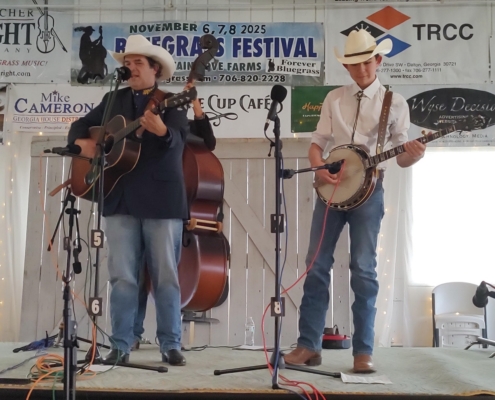
Derek Stone performs on stage at the Forever Bluegrass Festival with Carl Towns and Upward Road. (Photo: David Stone)

Among the places Stone has performed are Forever Bluegrass Festival, The Woodshop in St. Elmo, Tenn., Nine Mile Bluegrass Festival, Armuchee Bluegrass Festival, The Mountain Opry in Walden, Tenn., the IBMA World of Bluegrass – Chattanooga Stage, Crowe Fest, WoodSongs Old-Time Radio Hour Kids and Adult shows, Mountain City Fiddler’s Convention, Smithville Fiddlers’ Jamboree, and many more.

Stone is a multi-instrumentalist who focuses on banjo, is in tenth grade at McCallie School in Chattanooga, Tenn. He began playing at the age of 12 and currently performs with Carl Towns and Upward Road.

Stone said he is considering studying mechanical engineering or music business when he reaches college.

I hope to study woodworking, teach banjo lessons, learn to be a luthier, and pursue being a full-time musician either on the road or in the studio,” he said. “However, one day I would really love to get a group of great, young musicians together and start a band and see where it goes.”

Stone is the son of David Stone and Mindy Luong of Chattanooga, Tenn.

Share America Foundation board members include Franks; Chairman Gary Knowles; Vice Chairman John Brinsfield; Secretary James Pelt; and Vice President Jerry Robinson Sr.

The Pearl and Floyd Franks Scholarship is funded by donations from individuals and companies, grants from the Kiwanis Club of Fort Oglethorpe and the Wes and Shirley Smith Charitable Endowment, special events, and special projects such as the upcoming CD “A Zippedy Doodle Day : American Folk Songs” and Share America Foundation’s #1 Global Americana CD — “Americana Youth of Southern Appalachia” — released in partnership to radio by AirPlay Direct. It is still available for donation through download outlets such as Amazon and iTunes or at https://ShareAmericaFoundation.org.


Singer/Musician Randall Franks Honored with Lifetime Achievement Award from Georgia Gospel Country & Bluegrass Association

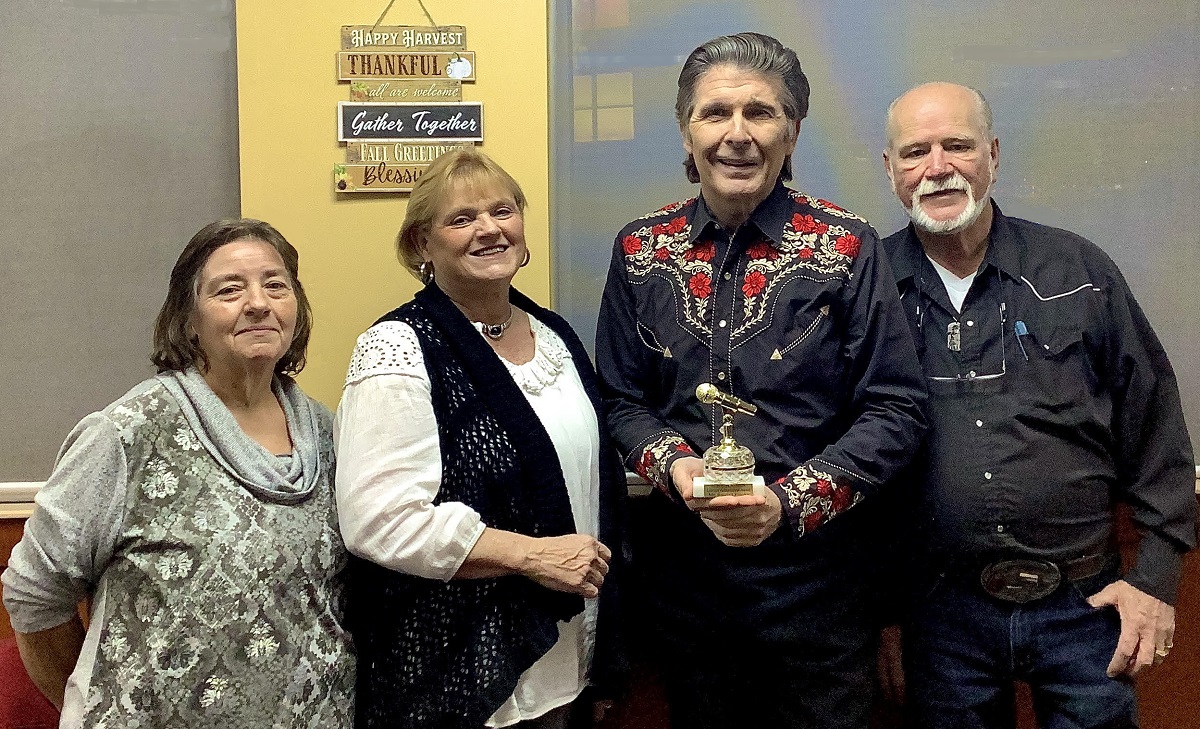
Entertainer Randall Franks (second from right) receives the 2025 Georgia Gospel Country & Bluegrass Association Lifetime Achievement Award from (left) GGCBA Vice President Karen Franks, Co-President Brenda Sinard, and Co-President Wayne Sinard during a ceremony in Fort Oglethorpe, Georgia. (Photo: Randall Franks Media)

The Georgia Gospel Country & Bluegrass Association (GGCBA) has named entertainer Randall Franks its 2025 Lifetime Achievement Award recipient.

Best known to television audiences as “Officer Randy Goode” on the long-running series “In the Heat of the Night,” Franks received the honor from GGCBA Co-Presidents Brenda and Wayne Sinard and Vice President Karen Franks during a recent ceremony in Fort Oglethorpe.

This award means a great deal to Randall because it recognizes his work across country, bluegrass, and gospel – the three genres our association celebrates,” said GGCBA Co-President Brenda Sinard.

Franks is the sixth recipient of the Lifetime Achievement Award in the organization’s 30-year history adding to artists such as country singer Mary Kay James, entertainer James Rogers, and Southern gospel singer Earl Roberts, formerly of the Dixie Melody Boys.

I am deeply humbled by this recognition,” Franks said. “No achievement happens alone. I owe everything to my parents, the musicians who mentored and played alongside me, the folks who bought tickets and recordings, and above all, to the good Lord who opened every door.”

Franks’ four-decade career spans all three genres represented by the GGCBA:

  • Country: 2025 #28 Country Comedy Single (“What It Was, Was Football”), 2024 Josie Music Awards Musician of the Year – Fiddle, 35 years leading the 80-year-old Hollywood Hillbilly Jamboree, 1994 Male Vocalist of the Year, and collaborations with Grand Ole Opry stars The Whites, Kitty Wells, Pee Wee King, Little Jimmy Dickens, and others.
  • Bluegrass: Former member of Bill Monroe’s Blue Grass Boys, touring entertainer with Jim & Jesse, leader of the Peachtree Pickers (Grand Ole Opry guest performers), and multiple Top 30 bluegrass albums.
  • Gospel: First solo bluegrass gospel album to top a major Christian chart (1990), 2023 #1 Cashbox Magazine single “God’s Children,” and performances with Jeff & Sheri Easter, The Marksmen, The Lewis Family, Dottie Rambo, The Nelons, and many more Dove Award winners and Gospel Music Hall of Fame members.

More information about Randall Franks is available at www.RandallFranks.com and on Facebook, X, Instagram, and YouTube (@RandallFranks).

About the Georgia Gospel Country & Bluegrass Association
A 30-year-old northwest Georgia non-profit, the GGCBA encourages artists of all ages through concerts, competitions, and educational opportunities. Through it’s history, it was a chapter of the North America Country Music Association, Int’l. Find the GGCBA on Facebook.

About Randall Franks:
Randall Franks is an award-winning musician, actor, and director known for his contributions to Americana, folk, gospel, and bluegrass music. Franks inspires audiences with heartfelt performances and a commitment to preserving musical traditions. His television show, Appalachian Sounds, showcases the rich heritage of Appalachian music, featuring his band and other talented artists and is found at Randall Franks TV on YouTube and Rumble. He is currently producing the upcoming collaborative album “A Zippedy Doodle Day : American Folk Songs” including stars of country, bluegrass, folk, Americana and gospel music supporting Appalachian Music Scholarships.

From Niagara Falls to Forever: Remembering A Brother’s Love

As a toddler at Niagara Falls, I was determined to catch one of the huge fish I saw jumping in the churning water below the walkway. I stuck my leg through the railing, then maneuvered my head to follow. In my little mind there was no danger — only the thrill of grabbing that fish. I never considered that success might send me tumbling over the falls right along with it.

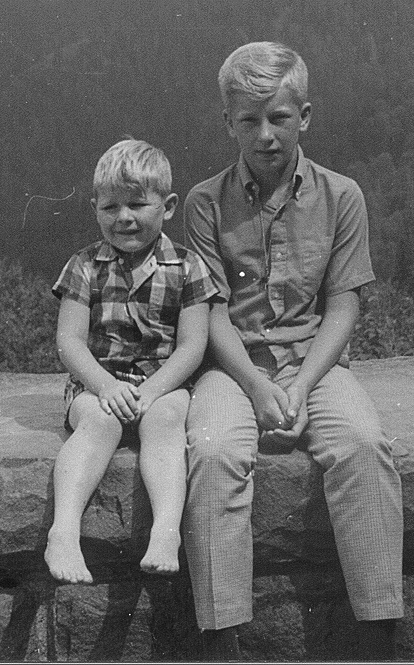
Randall and Alan Franks (Photo: Floyd Franks)

Thankfully, my older brother Alan wasn’t distracted that day. Several years my senior, he yanked me back to safety and ended my fishing career before it began. He saved my life, even if, at the time, I only saw him as the one who wouldn’t let me do what I was sure I could do.

I’m the youngest of three boys. Alan, the middle one, was my half-brother — Dad’s son from his first marriage. He lived mostly with his mom, Melba, and his stepdad, in Blairsville coming to stay with us on some weekends, alternate holidays, and summer vacations in Atlanta. When we were little, those visits were pure fun; we always found games and mischief to share. I’m sure for him it often felt like babysitting his pesky little brother.
Alan loved his mom Melba with all his heart, but he was blessed to have a second mom in my mother too. She didn’t hesitate to hold his feet to the fire, push him to reach his potential, and set him straight when she thought he was veering off course. The same she did for me. He used to laugh that Mom was a “ball of fire,” and none of us wanted to be in her path when she got on a roll.
He also had two dads. Like me, his relationship with our father could be strained at times; part of that age-old struggle when a boy starts becoming a man and tries to step out from under his father’s shadow.
By the time he charged into his mid-to-late teens, I was just starting elementary school. His heavy-metal albums and glorious afro cracked me up. For a while in his late teens he came to live with us, and I loved having him around — even if we had almost nothing in common and he was far more interested in girls than in playing with me. I remember he once talked about training to become an EMT. Life moved on. He fell in love, married Carolyn, started a family in another town, and our time together shrank to holidays, funerals, and the occasional pass-through visit.
Rotary-dial phone calls kept Mom and Dad updated on his adventures: first a job at the First National Bank of Chatsworth, then running a little place called The Chili Dog (restaurants were a subject our family knew plenty about), and always the latest news about my nieces. Eventually he joined with his brother Donny in his dream to start Atlanta Carpet Company, where he worked the rest of his life. When we lost Dad far too young, one more tether between us loosened.
Still, he was my brother — a gift from God and from our parents. After Dad was gone, whenever I hit rough patches I turned to my brothers for advice, especially about the ladies in my life. Alan had been married twice — first to Carolyn, later to Jane — so he and my brother Jerry always had more experience than I did. I treasured their wisdom, even when I was too stubborn to follow it right away.
As adults we related better — talking about life, the world, our family, and hopes for the future. His kids gave him grandchildren, and more recently great-grandchildren. 
Sometimes we get urges for a reason. Earlier this year, while performing in eastern Georgia, I felt a strong pull to reroute my drive home through Gainesville, stop in, and maybe share supper with Alan. The sensible side of me looked at the three-hour drive and the monstrous traffic I was driving in and decided on a phone call.

A few hours ago, from this writing, that same phone rang. A doctor was on the line — she’d found my number in his

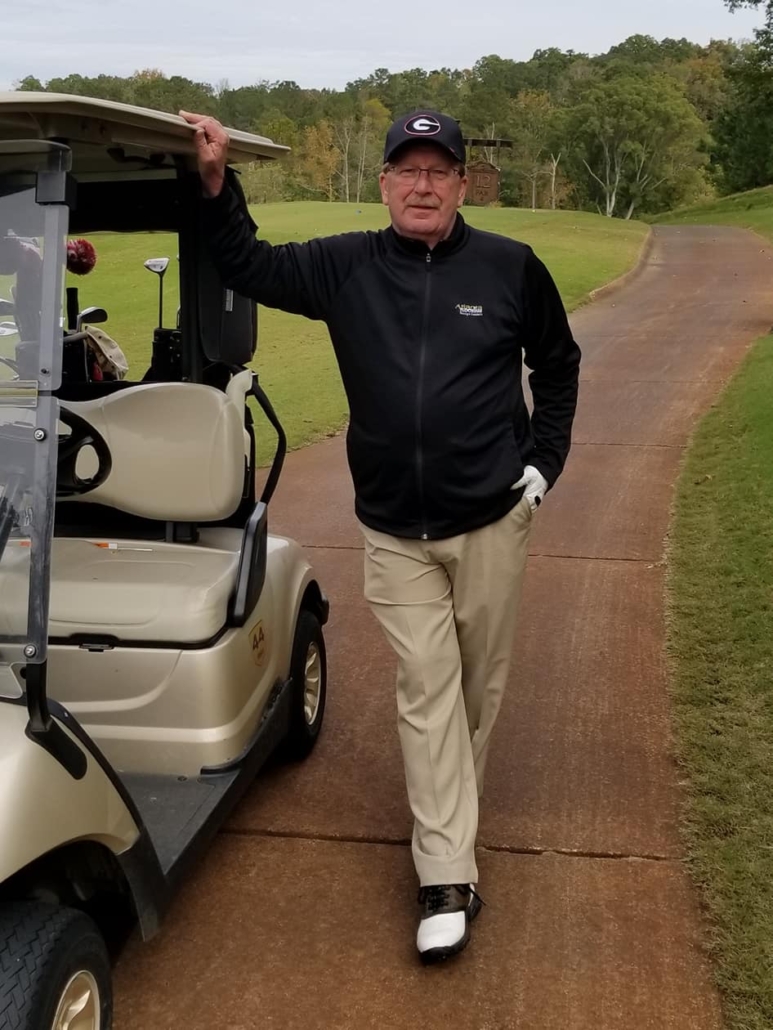
Alan Franks

contacts. She told me Alan had suffered a massive cardiac arrest and they were still working on him.

Tonight that earlier decision haunts me. Yes, we talked and messaged a few times after that missed visit, but I lost my last chance to sit across a table from him in this life. I will always regret not listening to that urge.
I am comforted, though, by how proud he was of my recent music honors.
Not long ago he wrote: “Congratulations to my Lil brother who got all the talents which left me with none! LOL. The man can definitely saw a fiddle. I have always loved to hear you play. I will never forget the cross-country road trip we took with Dad and Pearl — Atlanta to Arkansas to Ohio to Niagara Falls to Canada and back home through Cherokee, N.C. You was a little guy then and drove me completely nuts in the back seat of the old blue Chevy making up songs and singing them. LOL. You have always been talented Lil bro. The award was much deserved.”
Moments like that mean little without family to share them with. Countless times I’ve been grateful Alan was there to cheer me on over the years. And there were just as many times — heart broken by a woman or by a career stumble — when I’d drive a couple of hours just to sit while he tinkered, or spill my guts on his couch about things I could only tell my brothers.
I was privileged to do the same for him — celebrate when he caught a big bass in a tournament, brag about his success in commercial carpeting, or listen to the latest story about one of his kids or grandkids.
I’ll miss my brother terribly. Tonight, with tears hitting the keyboard, I keep thinking about those boyhood rides in the back of Mom’s 1964 Chevy Malibu or Dad’s light-green 1969 Chevy truck, wherever Mom and Dad were hauling us. The destination didn’t matter. What mattered was that we were together.
I know we will be again.
Alan was an active supporter in our charity benefiting youth with the Pearl and Floyd Franks Scholarship through the Share America Foundation, Inc. If you are inclined to give a gift in his memory visit online: http://ShareAmericaFoundation.org
or by mail: P.O. Box 42, Tunnel Hill, GA 30755.

Find the Thing That Makes You Stupidly Happy (and Do It Anyway)

I was twelve the first time I rode the Rotor at Six Flags — that human centrifuge that pins you to the wall, then drops the floor. My friends and I rode it eighteen times in a row, stumbling off each time laughing like lunatics, begging for one more spin. Six years later the same ride left me green and praying for death. Bodies change. Bliss doesn’t have to.

We all know that electric feeling: the first kiss that stops time, the song you figure out on guitar that makes the room disappear, the blank page that suddenly isn’t blank anymore. It’s the moment you forget to breathe because something inside you is breathing for you.

Too many of us file those moments under “childhood” or “someday” and get on with the grown-up business of paying bills. Shelter, clothing, food — non-negotiable. But as someone wiser than me once pointed out, man cannot live by bread alone. I’ve tried. It’s a dry, crumbly existence.

I could have taken the safe route: steady paycheck, 401(k), a life that looked responsible on paper. Every time I edged toward it, the road seemed to shift under my feet. Jobs dried up. Opportunities in acting, music, and writing appeared like bread crumbs leading somewhere else. I finally quit pretending I hadn’t noticed the trail.

Has it been easy? Not even close. There were years I measured success by whether I could afford both rent and guitar strings. But every time I finish a book, record a song, or step off stage, I’m twelve again — dizzy, alive, certain I was born for this exact second.

Creating is the only high I’ve found that doesn’t fade with age or punish you the next morning. Better yet, when someone hears a song I wrote during my own dark night and tells me it carried them through theirs — that’s a relay race across generations. Beethoven’s still running laps around us 200 years later. Shakespeare won’t quit. Even the cave painters at Lascaux are still whispering, “I was here, and it was beautiful.”

I won’t pretend my work will outlive me by centuries. Most art doesn’t. But even if every note I’ve played and every word I’ve written ends up deleted, recycled, or lost, I will have spent my days doing the thing that makes me stupidly, embarrassingly happy.

That’s not a bad epitaph.

So here’s my question to you: What makes you forget to eat, forget to check your phone, forget the clock even exists? What would you stay up until 3 a.m. doing if money were no object and failure were impossible?

Whatever it is — pottery, poetry, welding, welding poetry out of scrap metal — do it today. Do it badly. Do it with gusto.

The world has enough sensible people.

It will never have enough people who are fully, recklessly alive.

Go get dizzy.