Echoes from King’s Mountain: Ancestors, Sacrifice, and the Songs of Freedom

As we draw nearer to the 250th anniversary of American independence, I find myself reflecting on the ancestors who answered the call to arms, ordinary frontiersmen who became heroes in the fight to free the colonies from British rule.
My fifth-great-grandfather, Charles Kilgore, was one of five Scotch-Irish brothers who heeded the Revolution’s summons. Born in 1744 in County Clare, Ireland, Charles traced his roots to the Kilgours of Fife, Scotland. Family lore connects them to Clan Douglas, fierce warriors who battled for Scottish independence and stood with the Jacobite risings of the 1700s.Around 1763, Charles and his brothers—Hiram, Robert, William, and James—crossed the Atlantic, settling first in North Carolina before pushing to the Virginia frontier. There, Charles married Martha McIlhaney, raised eight children on a 600-acre plantation, and joined the Washington County Militia under Captain James Dysart in Colonel William Campbell’s regiment. His four brothers enlisted alongside him. They were part of the legendary Overmountain Men, rugged settlers from beyond the Appalachian Mountains who embodied the spirit of the frontier.
In late September 1780, these men mobilized after British Major Patrick Ferguson threatened to “march over the mountains, hang their leaders, and lay waste the country with fire and sword.”
The brothers joined hundreds of others in a grueling 330-mile march over rugged terrain, enduring rain and hardship for two weeks to confront the Loyalists.
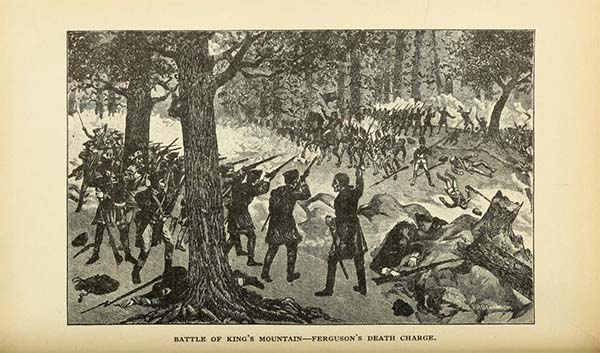
Their defining moment arrived on October 7, 1780, at Kings Mountain—a rocky, wooded spur on the North Carolina-South Carolina border that proved a pivotal turning point in the Southern Campaign of the Revolutionary War.
Roughly 900 Overmountain Men encircled about 1,100 Loyalists perched atop the ridge. Unlike traditional European line battles, the Patriots employed guerrilla tactics suited to the terrain: advancing uphill under cover of trees and rocks, using their accurate long rifles to pick off enemies while dodging bayonet charges.
The Kilgores’ militia charged from the north, pressing through thick smoke and the crack of musket fire. Hiram fell in battle; Robert and Charles were gravely wounded. Yet, they helped secure the summit as Loyalist leader Major Patrick Ferguson was slain, his forces crumbling in just over an hour.
From the southeast, my Sherrill kin—fourth- and fifth-great-grandfathers Adam and Samuel Sr., along with uncles
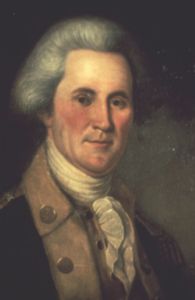
Uncle Col. John Sevier

Samuel Jr. and George—fought under my uncle Colonel John Sevier, their rifle fire converging with the Virginians’ assault.
On the southern flank, my sixth-great-grandfather Captain John Weir’s “South Fork Boys” pushed forward despite early losses, tightening the pincer that broke the Loyalists.The toll was stark: Loyalists suffered 157 killed, 163 wounded, and 698 captured—nearly their entire force—while Patriots lost only 28 killed and 62 wounded, a testament to their superior marksmanship and resolve.
In the aftermath, nine Loyalist officers were hanged for alleged atrocities, underscoring the war’s brutal, brother-against-brother nature.
This victory demoralized British forces in the South, boosting Patriot morale and prompting Lord Cornwallis to abandon his invasion of North Carolina.
Thomas Jefferson later hailed it as “the joyful annunciation of that turn of the tide of success which terminated the Revolutionary War with the seal of our independence,” paving the way for the decisive siege at Yorktown a year later.
Amid the chaos, my Loyalist-turned-Patriot ancestor, fifth-great-grandfather Captain Billy Green, initially defended the hilltop. Captured and sentenced to hang, he escaped and later realigned with the Patriots. This meant I had family on both sides—an experience echoed throughout history, from Scotland’s clan wars to civil conflicts worldwide.
On that fateful day, all five Kilgores stood shoulder to shoulder, shedding blood in a clash that shifted the war’s momentum. Charles, shot through the body, survived only because Martha and their young daughter Mary braved the wilderness in a wagon to retrieve him and bring him home to Virginia. Robert also recovered from his wounds, but tragically lost his life to Mingo Indians on December 31, 1782, during a hunting expedition. His family then moved in with Charles’s for a time.
Charles earned a pension in 1809 and passed away in Greene County, Tennessee, in 1823. His daughter Rebecca married Adam Sherrill in the 1790s, uniting two families of Kings Mountain veterans in bonds forged through shared sacrifice.
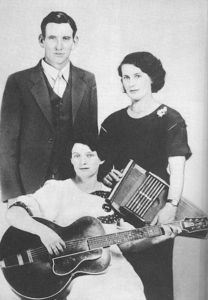
 

The Carter Family
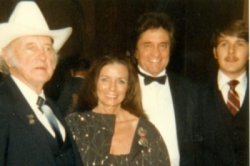
Randall Franks (right) with Johnny and June Carter Cash and Bill Monroe in 1984.

Charles and his kin remind us that the Revolution was won by everyday men and women—farmers, brothers, and families—who rose to extraordinary heights. The five Kilgores symbolize the unbreakable ties that compelled them to leave their homes and fight side by side for freedom. Because they did, generations since have lived without bowing to distant monarchs.
On a personal note, I am privileged to descend from these men. Through the Kilgore roots, I share them as grandfathers with notable figures in Appalachian music: All three original Carter Family members—A.P., Sara, and Maybelle—are my cousins. Sara and Maybelle descend from Charles, like me; A.P. from brother Robert. Thus, connecting me also to the Johnny and June Carter Cash clan. These ancestors’ lives truly gave us all something to sing about. 
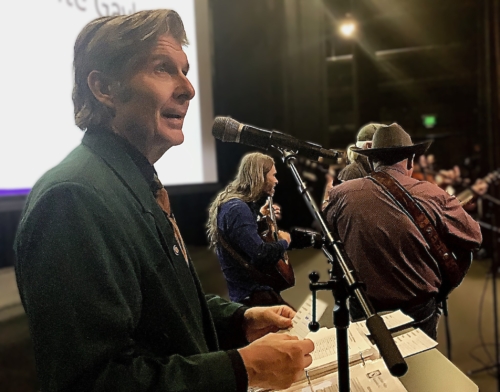
 

The Fiddle’s Enduring Tune in American History

The fiddle has an amazing history in the American experience. It first crossed the Atlantic with European settlers, where violins played the music of both upper classes and common folk, uplifting and entertaining through hard times.

Whether in a seated concert with a string quartet or kicking up heels at a cotillion or barn dance, the fiddle became the centerpiece of American music for much of our nation’s first 200 years. It crossed the Appalachians with early frontiersmen and traveled waterways with trappers and explorers.

During early conflicts like the Revolutionary War, the War of 1812, the Mexican-American War, and the Civil War, it wasn’t unusual to hear a fiddle sawing away beside a campfire as soldiers recuperated from battle. Fiddlers often provided rare moments of uplift amid gruesome experiences. Tunes like “Soldier’s Joy” weren’t just melodies—they reflected how the fiddle’s sound boosted morale.

The instrument journeyed west in Conestoga wagons and on horseback, providing the soundtrack to settlement after settlement. It remained at the heart of dances well into the 20th century. As music ventured into recording and radio, fiddlers led the way, with the first country stars often being fiddle players or string bands.

Randall Franks hosts the Grand Master Fiddler Championship at the Turner Theater. (GMFC Photo)

As a fiddler myself, I’m proud of the music passed down from my great-grandfather and those before him. I learned from Appalachia’s early stars and carry a bit of them with me. Over the years, the fiddle has adapted to regional styles, reflecting the lives and tastes of its players.

I’m honored to be in my 18th year as celebrity host of the Grand Master Fiddle Championship, carrying on the tradition of Grand Ole Opry legends like Porter Wagoner and Roy Acuff.

Dozens of fiddlers of all ages gathered just outside Music City in Franklin, at the Mockingbird and Turner Theaters at the Factory, to test their mettle. Classic fiddling sprang from their instruments, delighting spectators. Competitors traveled from across the U.S. and Canada to vie for the coveted Grand Master Fiddler title, originally created by the Grand Ole Opry in 1972. Past winners like Tristan Paskvan, Tristan Clarridge, and Bobby Taylor (2025 Dr. Perry Harris Award recipient) made a special appearance during the Opry’s 100th anniversary celebration, enthralling the audience.

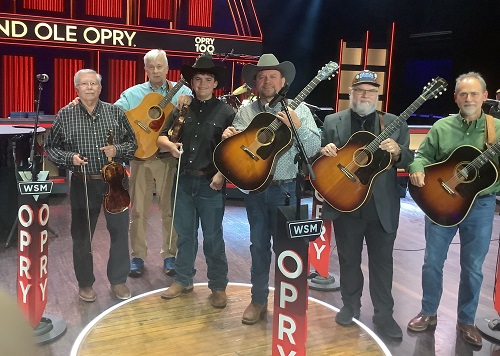
The Grand Master Fiddler Championship on stage at The Grand Ole Opry. (GMFC Photo: Randall Franks)

On Saturday, young fiddlers—from about age 4 to 15—showed off their hot licks. Many overcame nervousness to deliver amazing performances and rack up high scores. Tristan Paskvan of Southlake, Texas, claimed the Youth Grand Master Fiddler title.

Sunday shifted focus to adults, with 14 competitors vying for open spots by playing breakdowns to secure a place in the Top Twenty. Around six joined champions from around the country. The top fiddlers then performed their best breakdown, waltz, and tune of choice to narrow the field to the Top 10. Those finalists went bow-to-bow again for the top rankings. Jesse Maw of Asheville, North Carolina, emerged as the Grand Master Fiddler, edging out multiple-time winner Tristan Clarridge as runner-up.

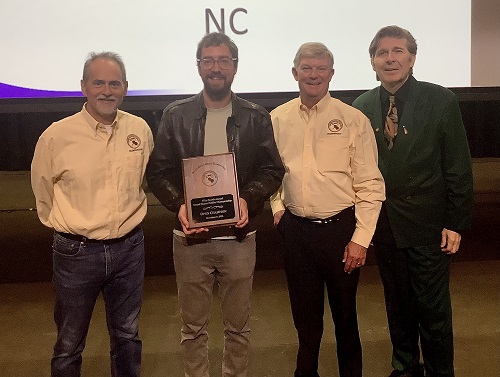
Grand Master Fiddler Open Champion Jesse Maw (second from left) receives his award, from left, GMFC Directors Howard Harris (third from left) and Ed Carnes (left) and Host Randall Franks. (GMFC Photo: Tyler Andal)

The 54th Annual Grand Master Fiddler Championship was a tremendous reflection of the American fiddle experience! Support its ongoing success by donating at www.GrandMasterFiddler.comLearn more about my fiddling history at www.RandallFranks.com/Fiddling/ .

Check out Randall’s Visit to the Grand Ole Opry with the Grand Master Fiddlers:


Randall Franks, Wesley Crider & Hollywood Hillbilly Jamboree Shine at the Josie Music Awards

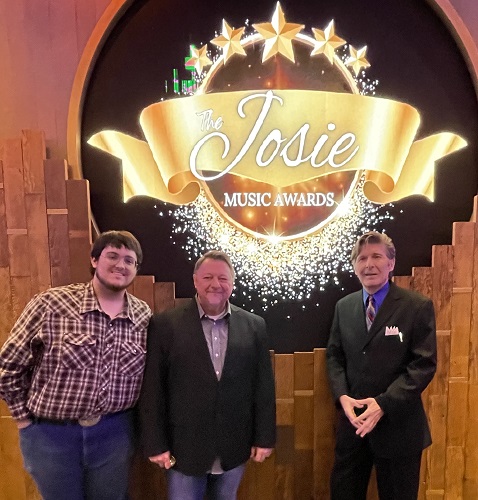
Above: Nominees Randall Franks (right) and Dale Houston (center) with Winner Lee Newton  

Randall Franks (right), Dawson Wright (left) and Wesley Crider pause in the lobby of the Grand Ole Opry House at the Josie Music Awards.

NASHVILLE, Tenn. – The 11th Annual Josie Music Awards took place on November 2, 2025, at the iconic Grand Ole Opry House in Nashville, celebrating independent artists from around the world. Among the standout nominees were Ringgold, Georgia-based vocalist and fiddler Randall Franks, guitarist Wesley Crider, and members of Franks’ Hollywood Hillbilly Jamboree—Dawson Wright, Caleb Lewis, and Ryan Stinson—who represented their community with pride on this prestigious night.

The group earned multiple nominations across various categories, showcasing their talent in Americana, folk, and instrumental music:

  • Randall Franks: Male Vocalist of the Year – Americana/Folk; Musician of the Year – Fiddle; Best Actor in a Music Video – The American’s Creed; Social Impact Video of the Year – The American’s Creed (with Wesley Crider).
  • Dawson Wright: Musician of the Year – Banjo.
  • Ryan Stinson: Musician of the Year – Piano.
  • Caleb Lewis: Musician of the Year – Guitar.

Franks, Crider, and Wright attended the event, walking the red carpet, participating in media interviews, and connecting with fellow nominees and winners.

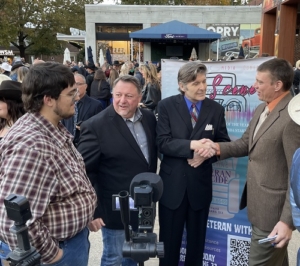
Dawson Wright, Wesley Crider and Randall Franks interview on the Red Carpet with Bubba Startz at the Josie Music Awards.

Franks, best known for his role as “Officer Randy Goode” on TV’s In the Heat of the Night, directed and starred in the film The American’s Creed, portraying his ancestor, Revolutionary Patriot Robert Shields. He is the reigning 2024 Josie Music Awards Musician of the Year – Fiddle. 

“Congratulations to all the winners and nominees,” Franks said. “We had a wonderful time cheering on fellow members of the JMA family as they received their awards.

Many of my long-time friends took home a JMA,” he said. “While we did not bring home an award this year, according to the JMA, ‘there were 86,000 submissions this year so making it into the nominations was a huge feat!’ I congratulate Wesley, Dawson, Ryan and Caleb for that achievement and I am honored for the four JMAs for which I was nominated. Thanks to God for the blessings and the Josie Music Awards for including us!”

Crider, an internationally renowned finger-picking guitarist inspired by Chet Atkins and Merle Travis, co-wrote and performed the music for The American’s Creed with Franks, from which the nominated video was drawn. In addition to his performance career, he works weekly as a music therapist for patients with dementia and Alzheimer’s.

It was an exciting time in Nashville at the Josies,” Crider said. “It is such a great opportunity for independent artists. I was blessed to be included.”

Spotlight on the Hollywood Hillbilly Jamboree Nominees

The other Musician of the Year nominees hailed from Franks’ Hollywood Hillbilly Jamboree, which is celebrating its 80th anniversary.

All three—Wright, Stinson, and Lewis—are Pearl and Floyd Franks Share America Scholars, highlighting the program’s role in nurturing young talent.

  • Dawson Wright, 19, a banjo nominee among seven global contenders, also plays guitar and sings. A Ringgold High School graduate with about seven years of experience, he frequently performs in the region.

I am thankful I had the opportunity to be part of the awards. I couldn’t believe that I was nominated,” he said. “Going to the awards was amazing. I never gave an interview before so sharing about my love of music was an amazing experience.”

  • Ryan Stinson

    Ryan Stinson, a piano nominee among 10 contenders, is an entertainer and vocalist who performs concerts across the South, including in Pigeon Forge and Nashville theaters. Find him at Ryan Anthony Stinson Music on Facebook.

Caleb Lewis

It means a lot for me to be nominated for this award,” Stinson said. “ I want to share a word of appreciation for my family – parents, grandparents and sister for all their help and encouragement.”

  • Caleb Lewis, a guitar nominee among 12 in his category, specializes in finger-style guitar and studied under Wesley Crider. He attended Providence Christian Academy in Ringgold and graduated from Chattanooga State.

This is such an honor,” he said. “I want to thank God for giving me this amazing talent. I want to thank my family for always believing in me. Every lesson, every jam session, every rehearsal, every small gig built up to moments like these – this nomination is also my teacher’s – Wesley Crider.”

All three expressed gratitude to Franks for his encouragement and for providing a global platform for their music.

For more information about their music, visit www.RandallFranks.com or www.WesleyCrider.com. To learn more about the nominated video, visit www.RandallFranks.com/The-Americans-Creed/.

About the Share America Foundation, Inc.

The Share America Foundation, Inc. encourages youth in Appalachian Music and Arts through mentoring, special programs and providing the Pearl and Floyd Franks Scholarships. For more information, visit http://ShareAmericaFoundation.org.  

About the Josie Music Awards

The Josie Music Awards honor independent artists across genres, with the mission to honor, recognize and reward excellence, outstanding talents, and remain focused on creativity across the independent music industry. For details, visit www.JosieMusicAwards.com.

Milestones and Markers

How we determine if we are successful in life and careers is often marked by milestones and markers that indicate where we are and how well we’ve done our jobs. We strive for them throughout our lives. I often pull out a suitcase that contains bits and pieces from my late father’s life. We filled it after he passed away at 54, unable to part with the certificates of achievement, the small pins marking his years of service, and the awards he received. Medals and insignia from his time in the Army are also there. I remember one time when my father came home floating on air after receiving recognition for saving his employer an immense amount of money.

Beyond the love I still carry for my dad, these mementos from his life mean little in the grand scheme of things. I’ve probably opened that case five times since he died 38 years ago, taking the pieces out, reading, remembering, and repacking.

In contrast to my father, who spent his life working for companies and the government, my life has been spent either behind or in front of a film or television camera, or driving from town to town, stage to stage, as I spoke or performed my music and comedy. My milestones and markers are much different from my father’s. They are achievements generally granted by organizations that focus on the crafts in which I perform my gifts. Awards come in all shapes and sizes and at all levels these days, generally selected through nominations and voting processes by industry professionals or sometimes by fans. Chart songs come through radio stations and whichever authority compiles the data.

As entertainers and actors, we do our work, and at times, we’re blessed when it rises into the view of our peers, fans, and organizations—enough so that our names are set alongside those considered the very best in the business. Those nominations sometimes even grant us the unusual distinction of becoming award winners.

I’m blessed that there have been seasons when I’ve seen the blessings of nominations and awards. God has allowed 2025 to be another one of those seasons, with a mixture of 16 nominations or honors in various areas of my creative endeavors from a variety of organizations.

Other milestones are markers of passing time—anniversaries. The last 12 months have been a series of markers for me, many starting with the number four. The longest is 45 years since I hosted my first ticketed concert with my youth bluegrass band—The Peachtree Pickers. This, in many ways, was the beginning of my professional career, aside from my earliest TV appearance at age six. Time also allows many folks to look upon your list of achievements that come with time and decide you need to be honored with career-capping distinctions, such as induction into halls of fame. My career has managed to accumulate five of those thus far, but I have yet to put a cap on my career. In fact, I’m doing everything I can to ramp up my opportunities to allow me to create and perform for the next two decades.

I don’t know who might sift through my awards and nominations 38 years after God calls me home, but it’s my intention to give them plenty to look through. I certainly hope I leave behind several trunks’ worth.

What achievements are you leaving behind? Whether in corporate offices, on stages, or elsewhere, we all chase these markers—but what truly endures? While the things described above are important to me, I’ll refer to something one of my performance mentors taught me about what we leave behind. My bluegrass mentor Doodle Thrower used to say, as he left the stage after the final show of a festival: “When they dig my grave, it’ll have to be several feet deeper than normal to house all the wonderful memories of good friends and the great moments shared with those in the audience.” I’m hopeful that for me the same will be true, but instead the extra depth will be needed for those who have stood in front of my stages or watched me on a screen.

Actor and Fiddler Randall Franks, ‘In the Heat of the Night’ co-star, Inducted into Georgia Country Music Hall of Fame


Entertainer Randall Franks (center) receives his induction plaque into the Georgia Country Music Hall of Fame from co-executive directors LaDonna Ray (left) and Shirley Maule at the Seaplane Opry House in Moultrie, Ga. (Photo: Randall Franks Media)

Randall Franks plays “Orange Blossom Special” at the Seaplane Opry House in Moultrie.

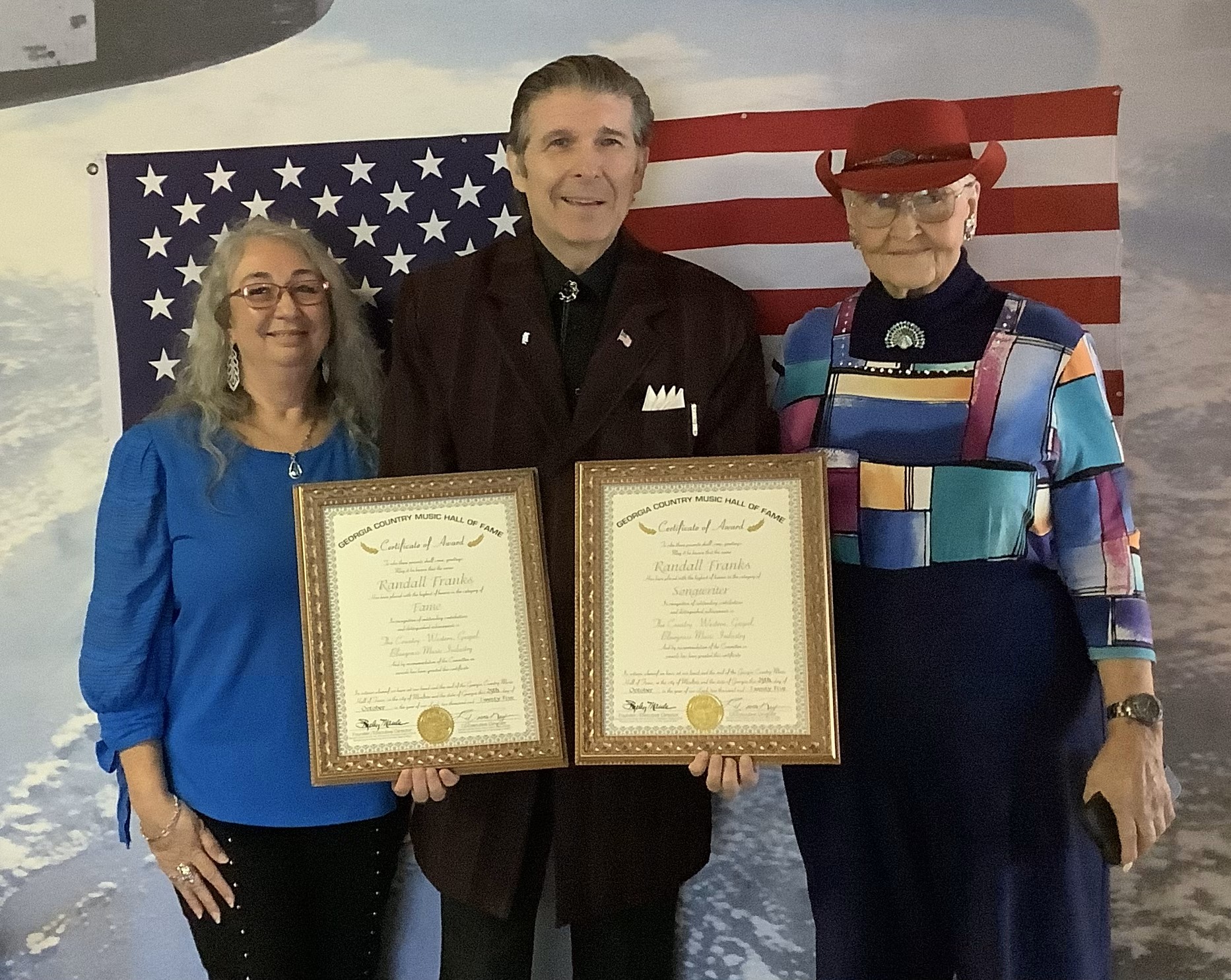
Moultrie, Ga. – October 28, 2025 – The Georgia Country Music Hall of Fame inducted entertainer, actor, and fiddler Randall Franks—known as “Officer Randy Goode” from TV’s “In the Heat of the Night”—during its recent ceremonies at the Seaplane Opry House. Co-executive directors LaDonna Ray and Shirley Maule presented Franks with the honor, celebrating his legacy in country, bluegrass, and gospel music.

It was a pleasure to induct Randall Franks into our Music Hall of Fame,” said LaDonna Ray, co-executive director. “His music, songwriting, and amazing contributions are a stellar addition to our honorees.”

Franks thrilled the audience with a high-energy fiddle rendition of “Orange Blossom Special” and joined fellow bluegrass inductee, vocalist/guitarist Dan Daniel, on stage.

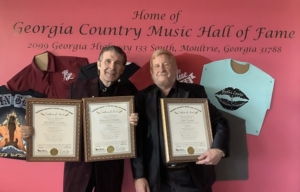
Hall of Fame honorees Randall Franks and Dan Daniel pose with their awards.

This recognition comes thanks to God, the artists who’ve given me a hand up, my fellow musicians who supported me, behind-the-scenes professionals, my parents, and especially the fans who’ve bought tickets, merchandise, and tuned in,” Franks said. “Your support means everything!”

Fellow Georgian, “The Dukes of Hazzard” and “Enos” star Sonny Shroyer congratulated his longtime friend shortly after the presentation by phone, Franks said. Shroyer was part of Franks’ country variety show, The Hollywood Hillbilly Jamboree, now marking its 80th anniversary and recorded the song “Children In Need” with him.

The Hall also awarded Franks for his patriotic, country, bluegrass, and gospel songwriting. Some of his titles are patriotic tunes such as “The American’s Creed” and “Cascade;” country songs such as “I Know ‘Cause I’ve Been There,” “What About All These American Flags” and “You Can’t Stop Time;” to bluegrass gems such as “You Can’t Stop Time,” “The Old Black Fiddle,” “Filling the River with Tears,” and “Midnight Train;” plus gospel favorites including “God’s Children,” “Now I Know,” “Someone Greater Than I,” “Must Be A Reason,” “You Better Get Ready,” and “He’s Never Gonna Fool Me Again.” Among his co-writers are talents like Alan Autry, Cotton Carrier, Wesley Crider, John Farley, Noah Gordon, Dottie Moore, Carroll O’Connor, Ramblin’ Tommy Scott, and Mark Wheeler.

Founded by Shirley Maule, the Georgia Country Music Hall of Fame honors Georgia artists whose careers have touched lives in Georgia, Northern Florida, and beyond.

For more information, visit www.RandallFranks.com