

A Family’s Sacrifice in the Fight for Independence

As we ease our way toward the 250th anniversary of the founding of the United States in 2026, it’s worth pausing to reflect on the profound sacrifices that birthed our nation. On July 4, 1776, 56 delegates gathered in Philadelphia to adopt the Declaration of Independence, a bold assertion of liberty that ignited a revolution.

Like many Americans, my family tree is deeply entwined with that struggle. Twenty of my ancestors stepped forward as Patriots to fight for independence, while a few aligned with the Loyalists, and others may have served among the British regulars. Their stories unfold across the colonies, in famed battles like Brandywine and King’s Mountain, as well as obscure skirmishes known mostly to historians.

Recently, my research uncovered two more Patriot ancestors—a fifth great-grandfather and a fourth great-granduncle—adding fresh layers to this personal history. One such story centers on my fifth great-grandfather, John Samples, of Richmond County, Georgia. In 1777, he joined the Georgia Militia under captains aligned with Colonel Elijah Clarke, a renowned Patriot leader celebrated for his guerrilla tactics. His service culminated in the Battle of Alligator Creek Bridge on June 30, 1778, during the third and final Patriot attempt to invade British East Florida.

Authorized by Georgia’s assembly, the campaign aimed to seize St. Augustine and halt Loyalist raids, but it was doomed by command disputes between Continental General Robert Howe and Governor John Houstoun. By late May 1778, about 1,300 men—Georgia militia and South Carolina Continentals—had advanced into Florida. On June 29, Howe occupied Fort Tonyn near modern Hilliard, Florida.

The next day, a detachment pursued retreating Loyalist Rangers led by Colonel Thomas Brown south to Alligator Creek, a swampy tributary west of present-day Callahan, Florida, near U.S. Route 301. Likely led by Colonel James Screven’s cavalry and supported by Clarke’s militia of 100–300 men from Richmond and Wilkes Counties, the Patriots assaulted a British redoubt at the bridge. The terrain was unforgiving: dense swamps, a wide ditch, and felled trees that bogged down the cavalry.

Opposing them were British regulars, Loyalist militia (including Brown’s East Florida Rangers), and Native American allies, possibly Creek or Seminole warriors, totaling 200–400 men with a numerical edge. The British unleashed a flanking ambush, sowing chaos amid the lack of distinct uniforms.

The Patriots endured heavy losses: about eight or nine killed, nine wounded, and several captured, according to accounts from the American Battlefield Trust. Clarke himself was severely wounded, and Screven was injured. British casualties were lighter, around four or five killed.

The Patriots retreated, and the expedition unraveled by July 14 due to disease, desertions, and supply failures. John Samples was among those captured in the fray.

He was imprisoned at St. Augustine’s Castillo de San Marcos, where brutal conditions—starvation, disease, and abuse—claimed many lives. Tragically, he died there, the only ancestor I know of who gave his life in the war.

Tory raids later destroyed his Richmond County home, forcing his family to flee.

In the wake of his father’s death, my fourth great-granduncle, Jesse Sampley, enlisted in 1779 at age 15 or 16.

Serving under officers like Ensign William Luker and Captain James Ryan, he fought Tories and British forces until 1783, often in South Carolina and Georgia campaigns.

Jesse’s 1833 pension application and claims for war reimbursements provide the richest details about John’s service and the family’s hardships.

As we approach a decade of semiquincentennial commemorations—from the Declaration in 2026 to the Treaty of Paris in 2033—let us remember these unsung heroes. Their valor forged our freedom. Each year, honor their memory: visit a battlefield, read a history book, or share a family story. In doing so, we keep the spirit of 1776 alive.

Check out Randall’s film The American’s Creed.
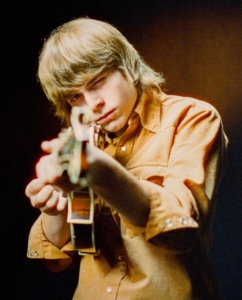
New music is like opening a present

Opening new music is like unwrapping a present—you never know what delights await, but in bluegrass, it’s often a blend of tradition and fresh energy. Two recent projects exemplify this: Junior Sisk’s lively It’s All Fun and Games and Shawn Camp’s upcoming tribute The Ghost of Sis Draper. Both honor the genre’s roots while delivering something new for today’s listeners. Out now since July 18, It’s All Fun and Games is the latest from award-winning bluegrass artist Junior Sisk, available on all major digital platforms via Turnberry Records.
It showcases his signature traditional voice with powerful vocals, tight instrumentation, and a mix of humor, heartbreak, and heritage. The 11 tracks feature talents like Heather Berry Mabe, Tony Mabe, Johnathan Dillon, and Curt Love, building on the success of pre-release singles “Sweeter Than Tupelo Honey” and “Where Love Goes to Die.” This album is poised to be one of Sisk’s most acclaimed yet.
“Creating a new recording is always a challenge, and naturally, it starts with the songs,” says Sisk. “I’ve been blessed through the years to have some very talented songwriters to call on. As always, I try to stick to my traditional bluegrass roots while making a song sound new and current for today’s listeners. I’ve recently been interested in finding old country tunes and reviving them in my own voice.
“I’m excited to have been able to co-write several original tunes with songwriting greats such as my dad, David Stewart, and Jerry Salley,” he adds. “I have some extremely talented musicians by my side who always take the songs to the next level with their creative work. The goal is to create a project that makes us happy as artists—and hopefully, the fans enjoy what we’ve created as well. Happy listening, folks.”
Grab a CD at juniorsisk.com.
Meanwhile, another bluegrass torchbearer, GRAMMY-winning producer and songwriter Shawn Camp—of The Earls of Leicester fame—is set to release The Ghost of Sis Draper on September 12 via Truly Handmade Records.

This concept album features 10 songs co-written with the late Guy Clark and one solo Clark composition. “This is as much Guy Clark’s album as it is mine,” Camp says.
The project stems from Camp’s childhood legend: At age seven, he met traveling fiddle player Sis Draper at a pickin’ party in Arkansas’ Perry County hills. Years later, while songwriting with Clark in Nashville, Camp shared the story, sparking “Sis Draper” and subsequent tunes like “Magnolia Wind.”
For years, they’d revisit the “Sis” theme when stuck on other ideas.The Ghost of Sis Draper weaves songs tied by characters, narratives, and old-time fiddle tunes. Arkansas fiddle great Tim Crouch revives Draper’s spirit, backed by Mike Bub on bass, Chris Henry on mandolin, Jimmy Stewart on dobro, Cory Walker on banjo, and Camp on guitar and vocals. Recorded in one day at Nashville’s Clement House (formerly The Cowboy Arms Hotel and Recording Spa), it immerses listeners in a sharply drawn world.”
We intentionally wrote songs that fit together,” Camp explains. It’s the definitive close to the Sis Draper saga and a tribute to his friend Clark. “That’s part of my passion for putting it out—to try and keep him alive!” Check it out at shawncamp.com.

Whether it’s Sisk’s fun-loving revival or Camp’s ghostly homage, these albums prove bluegrass remains a gift that keeps giving. Unwrap them soon.

Fading notes of the American songbook

Music has always been a source of respite, offering an escape from daily life, even if just for 3.5 minutes. It weaves a soundtrack into our lives from the moment we grasp its power to touch us. The rhythm, lyrics, and melodies resonate deep within, from the toddler clapping along as a parent teaches a nursery rhyme to the teenager discovering their own musical identity.

As we grow, we develop our tastes, often shaped by friends or refined through personal exploration. In my youth, television, radio, and the occasional film guided my generation toward the sounds that defined us. Pop, Country, Rock and Roll, Jazz, Rhythm and Blues — each of these carried a gospel thread, echoing from church choir of the gospel songs shared from hymnals. Regional styles like bluegrass, folk, and zydeco added richness, while classical and opera spoke to others. These genres fostered connection, sparking dances, concerts, music festivals, and jam sessions, both casual and formal.

For decades, certain tunes became part of the American songbook—melodies and lyrics nearly everyone could hum or sing. These shared anthems united us. But in a short time, new genres emerged, and the way music was delivered fractured. Internet platforms, with their endless choices, segmented audiences by generation, culture, and region. The once-unified musical fabric began to unravel, and the American songbook stopped growing with songs everyone knew. What caused this shift? We may never know, but the days when half the country shared the same musical moments are fading.
As a musical artist, I strive to create music that bridges these divides, just as my friends do. One such artist, Wyatt Ellis, a young talent like I once was, recently released a vibrant single and video, Country Boy Rock and Roll, alongside Trey Hensley. This nod to Don Reno and Red Smiley’s classic blends tradition with fresh energy—a must-listen for anyone craving music that unites: [ https://www.youtube.com/watch?v=Ytp7JEjTLUY .].

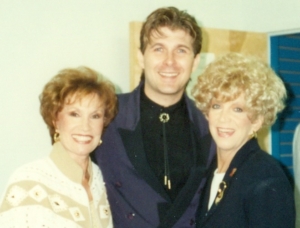
Grand Ole Opry star Jan Howard (left) and Jeannie Seely with guest star Randall Franks backstage in Nashville while performing in 1995.

We recently lost a legend who embodied the shared songbook era: Grand Ole Opry star Jeannie Seely, who passed at 85. Since 1966, the Grammy winner performed on the Opry stage more than any other artist. When I first performed there, her kindness lifted me, a gesture she repeated through the years. Jeannie inspired generations of singers, and the outpouring of love online and in the media reflects her impact. As legends like her leave us, we lose pieces of the American soundtrack that shaped our world.

Yet, music endures. What song from your childhood still stirs your soul? Let’s honor our musical heritage by discovering new voices and sharing the melodies that connect us, keeping the American songbook alive for generations to come.

Life’s Fragility and the Path Through Grief

Life can change in an instant—a friend’s sudden passing or a loved one’s terminal diagnosis forces us to confront our fragility. Whether it comes from natural causes, an accident, or intent, death is part of life’s path.

Over time, I have lost parents, relatives, close friends, and acquaintances. Depending on their closeness, the impact on our lives varies.

Recently, I learned my cousin faces a dire cancer diagnosis with no clear medical path forward. In such moments, many of us turn to faith, praying for healing or strength, trusting in God’s plan, whatever the outcome. I have spent time in prayer for him and his family.

As believers, we seek miracles but also recognize healing can come through God’s tools—medicine, healthy habits, or spiritual practices. Caring for our bodies with proper nutrition and exercise strengthens us to face life’s challenges. A longtime actor friend of mine recently received a terminal diagnosis. He approached it by enhancing his already healthy lifestyle, making every effort to overcome it as mentioned above. I recently learned his efforts succeeded; the disease is no longer terminal.

Likewise, feeding our spirits with uplifting words, whether through scripture or inspiring stories, sustains our hope. Yet, even with prayer and effort, we sometimes lose those we love. I’ve been on both sides—praying for others and being prayed for during my own health scares. Each time, God granted me more time, perhaps because my work here isn’t done. But when loved ones leave us, their absence carves a new path we must walk alone.

Grief is personal, unfolding at its own pace. Days or months may pass, but one morning, the pain softens into cherished memories. I still remember the day I emerged from grief after my mother’s death. I found a new lease on life, inspired by her love for me.

We honor those we’ve lost by living fully, carrying their spirit in our hearts. Through faith and resilience, we find a new sunrise—a life that reflects the love they’d want us to share. We hold hope that God walks beside us through life’s darkest valleys. Some writers suggest He carries us through them, and I find great solace in that thought.

Notes: My cousin Shane Bruce mentioned above did pass with his family around him. My acting friend – Jeff Rose – is now sharing about his new lease on life in interviews and online. Find him and be inspired.
