

Candor—Blessing, Curse, or Both?

We’ve all been there: someone you care about asks for your honest opinion, and suddenly you’re standing at a crossroads. Do you tell the unfiltered truth or soften it to spare their feelings? Maybe it’s a loved one asking, “Does this dress make me look fat?” Or perhaps it’s your boss, brimming with enthusiasm, seeking your thoughts on their latest “game-changing” idea. What do you say when the truth might sting—or worse, land you in hot water?

I learned this lesson early, at the tender age of four, in a moment that still makes me chuckle (and cringe). My mother and her girlfriends had stumbled into a side hustle selling wigs—a practical solution for busy mothers who couldn’t always make it to the beauty parlor. With budgets tight and schedules packed, a wig was a godsend: pluck it off a Styrofoam head, slip it on, and voilà—you were ready to face the world, looking as glamorous as Dolly Parton, who helped make wigs a cultural phenomenon. My mom owned three, each with a slightly different style and length, allowing her to switch up her look with ease. As a young boy, I never thought to question how she looked. My answer was always the same: “You look pretty, Mommy.”

But one hectic week, that innocence got me into trouble. My mother was juggling her usual duties at home while volunteering extra hours at my kindergarten, housed in the basement of our local Presbyterian church. She was coordinating a parents’ gathering, a chance to connect with other moms and dads over punch and cookies. That evening, she donned her best wig—a voluminous, chestnut-brown number—and a vibrant polyester dress she’d picked up from Rich’s department store. We piled into our blue Chevy Malibu and rolled down the road to the church, where the event was already in full swing.

As we mingled, Mrs. Moore, my kindergarten teacher, spotted my mom and gushed, “Mrs. Franks, I don’t know how you do it. Your hair looks fantastic!” I beamed with pride, eager to share in the praise for my mom’s effortless style. Without a second thought, I piped up, loud enough for the whole room to hear, “Mom’s wearing a wig!”

The room fell silent. I didn’t know I’d just spilled a trade secret. To me, it was just a fact, as innocent as saying the sky was blue. But the looks on the adults’ faces told a different story. My mother’s smile tightened, and I could feel the heat of her embarrassment. I’d landed myself squarely in the doghouse, and no amount of four-year-old charm could dig me out.

There was, however, an unexpected silver lining. My blurted truth sparked curiosity among the other parents, and soon, my mom and her friends sold a few more wigs as a result. But that didn’t erase the lesson etched into my young mind: candor—raw, unfiltered honesty—can be a double-edged sword. It’s a trait we’re taught to value, yet without a touch of tact, it can wound as easily as it enlightens.

Candor is like a wild horse: powerful and admirable, but it needs a bridle to keep it from trampling feelings. We live in a world that often demands honesty but recoils when it’s too blunt. Think about the workplace, where a colleague’s “brilliant” idea might be a logistical nightmare. Do you risk derailing their enthusiasm—or your career—by pointing out the flaws? Or consider the delicate dance of personal relationships, where a poorly timed truth can turn a simple question into a minefield. “Honey, does this dress make me look fat?” isn’t just a question about fashion; it’s a test of diplomacy, trust, and love.

Navigating these moments requires finesse, a balance of truth and kindness. It’s about being honest without being brutal, offering feedback that respects the person even as it addresses the issue. For example, instead of saying, “That idea won’t work,” you might say, “I love your creativity—let’s brainstorm how to make it even stronger by addressing X.” Or, to the dress question, a gentle, “You look great, but I think the other one highlights your style even more.”

My wig-blurting moment taught me that honesty, while noble, needs a filter. As adults, we’re not so different from that four-year-old version of me—eager to speak our truth but still learning when to hold back. The next time you’re faced with a question that demands candor, take a breath. Weigh the moment. Find the words that inform without injuring, that build up rather than tear down. With a little polish, you can stay true to yourself—and stay out of the doghouse.

Finding Peace in Nature’s Embrace

The mountains rise against a boundless blue sky, their green peaks painting a timeless portrait across my vision. I walk along a stream, its waters gurgling over smooth rocks, a soft melody that soothes my restless mind. In these moments, nature whispers a truth we often ignore: slow down, breathe, connect. Life, with its endless to-do lists and buzzing notifications, pushes us to rush, to chase, to conquer. Yet, here by the stream, where water flows without haste, I find tranquility—a reminder that peace is not in the race but in the pause.

How often do we let busyness blind us to the world around us? We hustle through days, tethered to screens, forgetting we’re part of a larger ecosystem. The stream doesn’t need us to flow, but we need it to remember who we are. Psychologists tell us that time in nature reduces stress, lowers blood pressure, and sharpens focus. A 2019 study from Aarhus University found that children raised near green spaces have a 55% lower risk of mental health disorders. Nature isn’t just scenery; it’s medicine for the soul. Yet, in our haste, we risk losing this gift. We litter, pollute, and neglect the very systems that sustain us. The success of our environment mirrors our own—if the streams dry up, so does a part of us.
Last spring, I planted my garden, a ritual that roots me to the earth as surely as the seeds I sow. I turned the soil, dropped in bean and tomato seeds, and waited. Some sprouted, their green tips bursting through the dirt like promises kept. Others withered, victims of nature’s whims. Yet, even in failure, I felt alive, working hand in hand with the creation my ancestors knew. Gardening isn’t just about food; it’s about partnership. The earth gives, but it asks for care in return—water, weeding, patience. My grandfather, a farmer, used to say, “You don’t own the land; you borrow it from your grandchildren.” His words linger as I pick up a stray plastic bottle from the grass, a small act of respect for the world I’ll pass on.
What do you do when you see trash on the ground? Do you pause to pick it up, or do you drive by, tossing wrappers out the window? These choices matter. The EPA estimates that Americans generate 4.9 pounds of waste per person daily, much of it preventable. Every bottle we pick up, every trail we clean, stitches us closer to the world we inhabit. We don’t need grand gestures—start small. Walk barefoot in the grass, feel the earth’s pulse. Plant a seed, even if it’s in a pot on your balcony. Join a community cleanup or swap one car trip for a bike ride. These acts ripple, like water over rocks, shaping a future where nature and humanity thrive together.
The mountains still stand, unwavering, as I trace the stream’s path. Their quiet strength reminds me that we’re not separate from nature but woven into its fabric. In a world that demands speed, nature offers slowness, a chance to touch life with every fiber of our being. Let’s listen. Let’s walk lightly, pick up the trash, plant the seeds, and honor the earth that holds us. Our ancestors did, and those who come later will thank us.

Finding the Spark: The Power of Enthusiasm

Each morning, we face a choice: silence the alarm, pull the covers up, and sink back into the darkness—or rise and embrace the possibilities of a new day. It’s tempting to stay in that cozy cocoon, especially when life feels heavy with routine or doubt. But enthusiasm, that inner fire that propels us forward, begins with one simple act: getting up. As my talented cousin Mark Twain wisely said, “The secret of getting ahead is getting started.” That first step out of bed opens the door to purpose, connection, and joy.

For me, that step often starts with a quiet prayer: “Thank you, Lord, for another day! What am I to do for you today?” Even on mornings when my spirit feels weighed down—by deadlines, uncertainty, or the monotony of daily tasks—that moment of gratitude grounds me. It’s a reminder that each day holds purpose, waiting to be uncovered. Once I shake off the cobwebs, sit at my desk, and let the world in, something sparks. A to-do list beckons, or the phone rings with a producer inviting me to a new film project, like The Cricket’s Dance, where I joined a vibrant cast to bring someone’s vision to life. More often these days, it’s an email from a collaborator proposing a show or a recording session. Those connections, especially the energy of a voice on the line, ignite my enthusiasm like a match to kindling.

As a creative soul, nothing fuels me like making something new. Picture this: I’m in my studio, surrounded by the hum of instruments, piecing together a melody. Notes clash, then harmonize, until a song emerges that might touch someone’s heart. That process—blending the artistry of multiple talents into one cohesive piece—sets my soul ablaze. Or take writing a script, like my recent project The American’s Creed. It starts as a flicker of an idea, then grows through late nights, revisions, and collaboration with actors and crew until it’s a living story on screen. These moments remind me why I get up: to create something that moves others.

But enthusiasm isn’t just for artists. It’s the parent who rises early to pack lunches and cheer at a soccer game, fueled by love for their kids. It’s the teacher who stays up late crafting lessons, driven by the hope of sparking curiosity. It’s the volunteer serving meals at a shelter, motivated by compassion. We all face mornings when motivation feels distant—when exhaustion, self-doubt, or the grind of routine dims our spark. I’ll admit, even I can’t muster enthusiasm for scrubbing the kitchen floor. (Let’s be honest—some tasks are just chores.) So how do we keep the fire burning?

First, take small steps. Break a daunting task—like a new project or a tough day—into manageable pieces. One note at a time builds a song; one scene at a time crafts a film. Second, seek community. My best work comes from collaborating with others whose passion amplifies mine. Find your people—friends, colleagues, or a faith group—who lift you up. Third, pause to reflect. There was a morning last month when I felt stuck, uninspired. I stepped away, prayed, and walked outside to my garden picked up my trowel and dug in the dirt. Between the garden rows, I stopped and let the breeze and a moment of stillness remind me why I create. That pause rekindled my purpose.

History offers examples of this spark. Consider Thomas Edison, whose enthusiasm for invention led to over a thousand patents. He once said, “I never did a day’s work in my life. It was all fun.” His relentless curiosity turned ideas into light bulbs that changed the world. We don’t all need to invent electricity, but we can channel that same drive into our own callings, whether it’s raising a family, building a business, or serving a neighbor.

Enthusiasm, at its core, is about finding what stirs your soul and taking that first step toward it. It’s not always easy, but it’s always worth it. So, what’s your spark? Seek it, nurture it, and let it carry you forward. As the Bible reminds us in Philippians 4:13 (KJV), “I can do all things through Christ which strengtheneth me.” With faith and enthusiasm, each new day becomes a canvas for purpose, connection, and joy.

Echoes of the Past: Why Certain Eras Feel Like Home

Have you ever felt drawn to an era you never lived through, as if your ancestors’ stories were woven into your very being? As a child, I’d close my eyes and picture myself on a lush green mountain trail, a pioneer forging a path through America’s wild frontier. The past felt closer than the present, as if I belonged to another time.

My childhood was steeped in the American Revolution and frontier days. I’d imagine slipping through forest shadows as an ancestor, spying on British troops or dodging danger along rugged paths. I could almost feel the weight of a musket in my hands, hear the creak of a wooden floor in a grand stone manor, where I’d don tailored clothes and wield a sword with finesse. These weren’t just games—they felt like memories, as if my forebears’ journeys lingered in my blood.

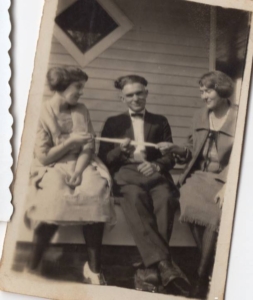
Some of Randall’s early 1900s kin at a front porch toffee pull.

As I grew, the WWI era and 1920s captured my heart, shaped by my grandparents’ stories. They spoke of muddy battlefields, hospital wards overflowing during the Spanish flu, and the quiet sorrow of fresh graves. Yet there were glimmers of joy—tales of square dances under starlit skies and toffee pulls that warmed the 1920s’ brighter days. Those stories carried such weight that I felt I’d walked those dirt roads myself.

The Great Depression and WWII, my parents’ youth, felt less vivid. We kids reenacted battles from old war films, mimicking soldiers with exaggerated accents. But those times never sank deep—they were stories I played at, not ones I lived.

Then came the 1950s. The era of sleek muscle cars and colorful Formica tables felt like home. Flipping through my parents’ photo albums—snapshots of soda fountains and drive-in theaters—I felt a pang of belonging, as if I’d cruised in a red-and-white ‘57 Chevrolet or swayed at a sock hop. Their tales of post-war hope made the decade feel like a second home.

Why do these eras pull at me? It’s more than nostalgia. My grandparents’ voices, heavy with loss, and my parents’ stories of 1950s optimism wove the past into my present. Or perhaps it’s deeper—memories encoded in my DNA, faint echoes of my ancestors’ lives surfacing in dreams of frontier trails and neon-lit diners.

In today’s world of instant updates, I find comfort in the past’s slower rhythms. The frontier’s adventure, the 1920s’ resilience, the 1950s’ optimism—they remind me every era has its struggles and joys. Which eras call to you? Dig through old photos or listen to your elders’ stories—you might find a time that feels like home. Perhaps we’re all a little out of sync with time, carrying echoes of the past in our hearts.