
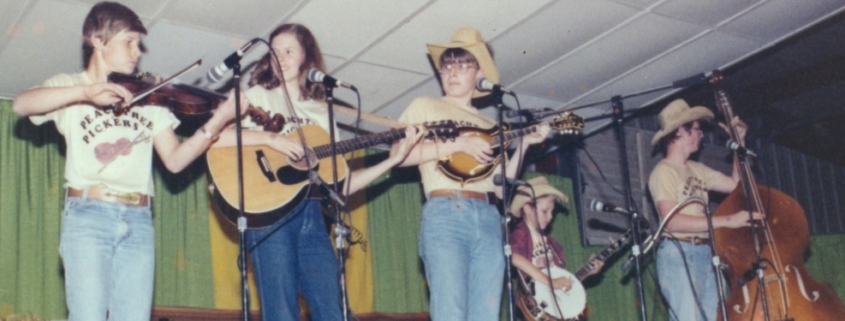
Randall Franks and The Peachtree Pickers
When looking back at the beginning of Randall Franks’ musical career, it is easy to see that his life revolved around three musical aspects: piano, violin, and voice.
Randall began studying piano under Jean Stiles, taking lessons at a nearby piano store. He then shifted his musical interest to the violin, inspired by the fiddling of his great-uncle Tom Franks and a school lesson where he first heard Ervin Rouse’s “Orange Blossom Special.”
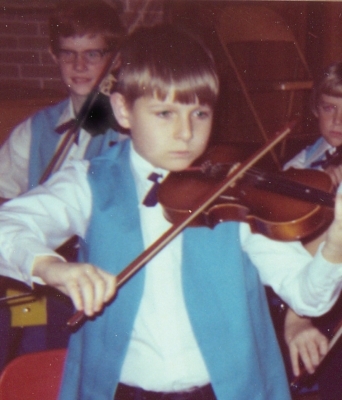
Randall Franks plays in an orchestra recital, Mark Nelson is over his right shoulder, also performing.
Dr. Donald Grisier became his guide as he learned the basics. He then joined the elementary choir, excelling in voice.
Through these musical adventures, he began friendships with other young musicians, such as Mark Nelson, a child musical prodigy who excelled at any instrument he set his mind upon. Mark was in both chorus and strings with Randall. The duo began singing and playing together while performing in school plays, chorales, and orchestra presentations.
Also among their circles was John Daniel, son of Georgia State Professor and music historian Wayne Daniel. Through jam sessions, Randall, Mark, and John found a common love of fiddling, bluegrass, and country music.
Their jams, alternating between homes, grew to include numerous youth from surrounding schools. Many were also in string programs but desired to play something other than classical. Gatherings began to include both boys and girls playing a variety of instruments, jamming and growing in their crafts, such as Brian Stephens, Liza Paschal, Kathy Phillips, John Worley, and others. Brian Stephens was the youngest of the group starting at age 8 entertaining with his guitar. After meeting Kathy Phillips through the jam sessions, Randall also made early special appearances performing with The Phillips Family – Herb, Doris and Kathy at Hope Road Church of God. These jams sessions soon began including seasoned musicians and performers who took an interest in passing along their knowledge to these talented youth, including Cotton and Jane Carrier, Eugene Akers, John and Debbie Farley and many others.
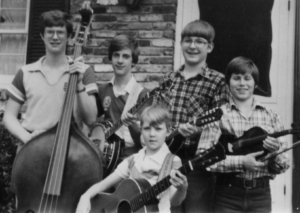
The Peachtree Pickers are from left, Mark Nelson, John Daniel, Brian Stephens, Randall Franks and Wes Freeman. (Randall Franks Media)
With an abundance of violinists, and with the help of mentor Eugene Akers, Randall shifted his musical focus onto mandolin.
The group began competing at fiddle contests in various categories and attending bluegrass festivals to join jam sessions with more experienced pickers while watching stage musicians perform. Franks competed extensively in fiddle, mandolin, and bluegrass band contests across Georgia, Tennessee, and Alabama, including events at Hiawassee, Yellow Daisy, Menlo, Prater’s Mill, Dalton, Lake Lanier, Chattahoochee, Athens, and Dogwood, where he consistently ranked among the top performers.
He claimed titles such as the 1982 WKHX Fiddling Champ and the 1983 Cumberland County (Tenn.) Fiddle Champion.
Randall fell in love with the music—and even more so with its creation and performing—and he convinced his counterparts that they needed to join him in a band. Beginning with that core group of about 10 youth, they would all switch off depending upon school schedules to make their engagements, with the support of all the parents.
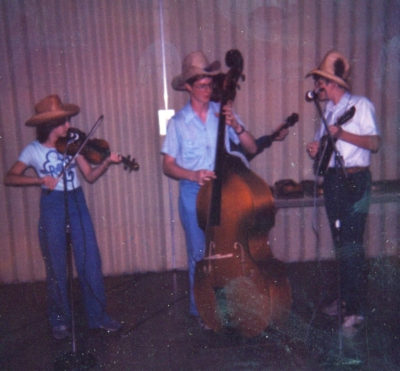
The only polaroid from that initial performance. From left Kathy Phillips, Mark Nelson, John Daniel (hidden) and Randall Franks. (Randall Franks Media)
After several years of jams, festivals, contests, and school performances, their first official ticketed concert as The Sequatchie Valley Players occurred on Oct. 23, 1980, at Briarcliff United Methodist Church, featuring Randall Franks, Mark Nelson, Kathy Phillips, Brian Stephens, and John Daniel. The name was a nod to Randall’s ancestral maternal home. Their next show was at North Georgia Music Store in Marietta in December, and their adventure grew from there. A search began for an appropriate name. Three of the musicians appeared for a private gig for Georgia Power, meeting then—U.S. Senator Sam Nunn. He, along with other dignitaries such as Georgia Lt. Governor Zell Miller, was given a chance to chime in on the youth group’s name. Ultimately, Randall settled upon The Peachtree Pickers. An Atlanta act having “Peachtree” in its name was not unusual, since there were 37 streets named similarly, and it was a bit of a nod to the history of country music on Peachtree Street in Atlanta. This name would go on to be how Randall has referred to his band ever since.

The Peachtree Pickers on TV set in 1981, from left John Daniel, Mark Nelson, Randall Franks, Brian Stephens (hidden), Wes Freeman and Liza Paschal. (Crimson Records: Randall Franks Media)
From their 1970s jam sessions until 1987, the musicians grew together. From that first appearance until 1987, 25 youth performed with the teenage bluegrass band. Franks honed his fiddling under mentors like Dallas Burrell, WSB Barndance host Cotton Carrier, Gordon Tanner of The Skillet Lickers, and Anita Sorrells Mathis.
In the early 1980s, Franks founded Peach Picked Publishing (BMI-affiliated) to manage his compositions and those of collaborators. Years later, he would found Peach Picked Productions for films and television productions. Along with six others, he founded the SouthEastern Bluegrass Association in 1984.
He also began working as a journalist, with early publications in “Bluegrass Unlimited,” “SEBA Breakdown,” and “Precious Memories” magazine from 1984–1988.
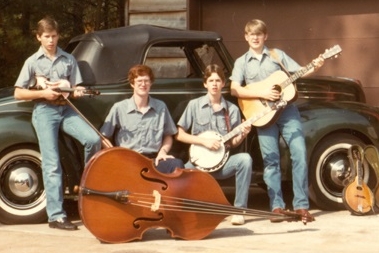
Ivory Halls cover photo: From left are Wes Freeman, Mark Nelson, Jeff Blalock and Randall Franks. (Randall Franks Media)
The youth group landed their first television appearance in 1981 filming at the western backdrop of Stone Mountain Park’s railroad.
The Peachtree Pickers recorded their first album, “Ivory Halls: Bluegrass Vol. I,” twice—the second time at Hilltop Recording Studio in Nashville for Carl Queen’s Atteiram Records. When released in 1982, Country Music Hall of Fame Announcer Grant Turner featured it on the Grand Ole Opry Warmup Show.
The album included Randall Franks (mandolin), Wes Freeman (fiddle), Jeff Blalock (banjo), Mark Nelson (bass), Randy McClung (guitar), Matthew Mundy (mandolin & guitar), and guest dobroist Roy Westray (Matt’s grandfather). Music historian Wayne W. Daniel did the liner notes. His son John had already left the group. Their debut album saw interest with orders coming in from around the world. The group’s appearance on the Mountain Music Showdown, a PBS production, also elevated sales.
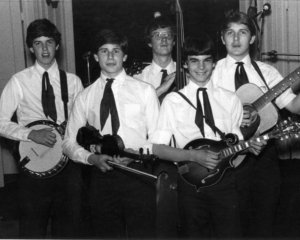
The Peachtree Pickers: Jeff Blalock, Wes Freeman, Mark Nelson, Matthew Mundy and Randall Franks (Randall Franks Media)
Franks and the band continued their growth, performing at events like the Armuchee Bluegrass Festival, Sugar Creek Bluegrass Festival, Uncle Pen’s Pickin’, South Carolina State Bluegrass Festival, Dahlonega Bluegrass Festival, Holiday Hills Bluegrass Festival, Raccoon Creek Bluegrass Festival, and other Southern venues. In 1983, Franks made his debut guest appearance at the Opry’s Ryman Auditorium as a solo performer.
That same year, while performing with Dobro pioneer Josh Graves, Bill Monroe took interest in the young fiddler and began mentoring him.
As Randall arranged for the group to join the cast of “The Country Kids TV Series” filmed in Dallas, Texas, he saw a turnover of the youth participating, losing Wes Freeman, Jeff Blaylock, and Matt Mundy.
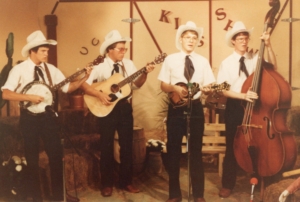
The Peachtree Pickers: Randy McClung, Jerry Coursey, Randall Franks and Mark Nelson on the set of the Country Kids TV Show in Dallas, Texas. (Randall Franks Media)
The group had already begun working on the next album and had recorded four songs not released until the CD “Country Kids.” Adding Randy McClung (banjo) and Jerry Coursey (guitar)—with Randall switching to mandolin and fiddle—the group taped a season of the show, which broadcast internationally in 1983-84. Kathy Chahrouri and Rebecca Schrager also filled in during this time. Using the winter to regroup, both Randy and Jerry stayed with the group for a few months, and Randall searched for new musicians, welcoming Lyndon Kolb (guitar) and Greg Earnest (banjo). This would be the core
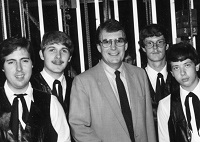
The Peachtree Pickers backstage with Grand Ole Opry Announcer Hairl Hensley who brought them on for their debut appearance for the Grand Ole Opry. From left are Lyndon Kolb, Randall Franks, Hensley, Mark Nelson and Greg Earnest. (Randall Franks Media)
group that Randall would take for their initial Grand Ole Opry appearance in October 1984 with the addition of veteran fiddler Max Tillman joining in some shows.
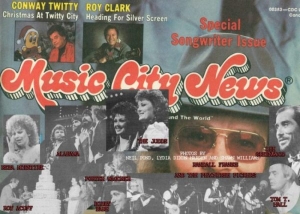
That year, Franks also made appearances with Monroe in Nashville, and Monroe invited The Peachtree Pickers to perform for the Grand Ole Opry birthday celebration, leading to Franks being featured in Music City News alongside major stars.
Grand Ole Opry star Roy Acuff attended his first Opry performance and became a supporter.
Within weeks, Franks traveled with Monroe as a member of the Blue Grass Boys, becoming the first fiddler to succeed legendary fiddler Kenny Baker. He participated in live recordings with the band, including tracks like “Back Up and Push,” “The Road to Columbus,” and “Cotton-Eyed Joe,” later released on “The American’s Creed” (2016/2024).
During this same period, Randall worked closely with Grand Ole Opry mentors Jim and Jesse McReynolds, having them guide his steps behind the scenes and opening many doors to him in country music.
During his college years, Franks played fiddle with the Georgia-based bluegrass band Elaine and Shorty – The GrassKats, which included Shorty Eager on banjo, Elaine Eager on guitar, and bass players Mike Newberry (later replaced by Bruce Sims); the group performed at festivals, concerts, clubs, and on television.
Franks also joined The Marksmen Quartet, a Georgia-based gospel group led by Dr. Earle Wheeler, including members Mark Wheeler, Keith Chambers, Darrin Chambers, and Rob Gillentine; he contributed to their recordings and chart-performing songs from 1984 onward.
The Peachtree Pickers’ second album was “Building on Sand,” recorded in 1984, featuring Randall Franks (mandolin and fiddle), Mark Nelson (bass), Lyndon Kolb (guitar), Greg Earnest (banjo), and special guest Max Tillman (fiddle). Cotton Carrier and Bill Monroe did the liner notes. This Atteiram album continued to solidify the status of the group.
Lyndon would move on shortly thereafter, replaced by Keith Morris (guitar), with occasional appearances by Greg Rogers on mandolin. The group appeared on the PBS series “Tonight at Ferlinghetti’s” with Gene Daniell filling in on bass for Mark Nelson.
Bluegrass agent Lance LeRoy was among the veteran professionals that came to know the success Randall was having with his young group. He called Randall to participate in the initial meeting of the International Bluegrass Music Association in early 1985. Sadly, he was unable to attend but helped garner the support of SEBA to support the new organization as it came together.
The group would record “Live at Raccoon Creek” at the Raccoon Creek Bluegrass Festival in July 1985, which wasn’t released on CD until later due to production issues with the studio that prevented its completion and release at the time.
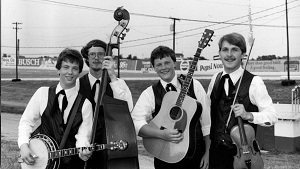
Randall Franks and the Peachtree Pickers backstage at Grand Ole Opry Bluegrass Show at 1985 Fan Fair. From left are Greg Earnest, Mark Nelson, Keith Morris and Randall Franks. (Randall Franks Media: Donna Tracy)
In addition to returning to perform for the Grand Ole Opry for the Country Music Association’s Fan Fair Bluegrass Show for over 10,000 fans in June 1985—where Franks performed alongside Ralph Stanley, Wilma Lee Cooper, and Bill Monroe—the group won the Georgia State Bluegrass Band Contest in 1985.
That year, Franks returned to school and The Peachtree Pickers after touring coast-to-coast with Monroe, expanding his bluegrass audience.
He taught a fiddle styles workshop representing Southern Appalachia at the National Folk Festival while performing there, and joined the legendary fiddle band Doodle and the Golden River Grass (active 1963–1995) as fiddler, alongside members John “Doodle” Thrower, James Watson, Gene Daniell, Wesley Clackum, and C.J. Clackum; they performed on PBS, at events like America’s National Folk Festival and the World’s Fair, and released 17 albums, with one track later appearing on the Grammy-winning “Art of Field Recording Vol. 1.”
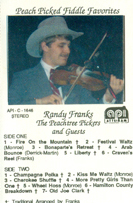 The Peachtree Pickers also released additional albums during this period,
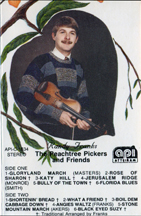 including “Peach Picked Fiddle Favorites” (1985, Perfection Sound cassette; later reissued) and “Pick of the Peaches Fiddlin'” (1986, Atteiram Records cassette; later reissued), along with “Bluegrass Banjo” (Perfection Sound cassette). The first two welcomed guests including James Watson (clawhammer banjo), John Farley (guitar) and Eugene Akers (mandolin) in addition to Franks, Nelson, Earnest and Morris.
To build their audience, Franks established a fan club managed by Pearl Bruce, which grew to about 8,000 members by 1986, and published “The Pickin’ Post” newsletter for bluegrass fans and “The Singing Post” for gospel enthusiasts.
The final configuration of musicians performed with Randall until 1987, when band members decided to go their separate ways to attend college, leaving Randall to once again regroup.
From that point forward, Randall used day players to fill in with him until he brought together core musicians for his Hollywood Hillbilly Jamboree in 1990. Musicians such as Randy Howard, Ronnie McCoury, Mike Scott, Mike Bub, and others did appearances as a Peachtree Picker as Randall appeared on shows around Nashville.
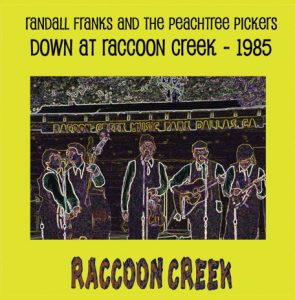
Cover of Down at Raccoon Creek CD (Now Out of Print)
Overall, Randall’s Peachtree Pickers released two vinyl albums/cassettes initially (“Ivory Halls” and “Building on Sand”), plus additional cassettes like “Peach Picked Fiddle Favorites,” “Pick of the Peaches Fiddlin’,” and “Bluegrass Banjo,” along with later CD reissues such as “Early Gospel Favorites” and “Early Bluegrass Favorites” drawing from the early recordings. “Live at Raccoon Creek” and “Country Kids” were released to CD featuring unreleased material from the group’s original recordings in the 2010s. “Peach Picked Fiddle Favorites,” “Pick of the Peaches Fiddlin’,” remain available for download from Amazon and iTunes and limited CDs from Randall’s website. Other tunes are out of print. They also produced merchandise like 8 by 10 photos, T-shirts, bumper stickers, and hats.
Randall attributes these formative years to bringing him onto the international music stage and opening doors for worldwide stardom in acting, music, and writing.
“If it had not been for all I learned and the great youth musicians who helped me build in those early years, I would have never gained the attention of those who opened the biggest doors to me in my life and helped me reach millions of people with my musical dreams.”
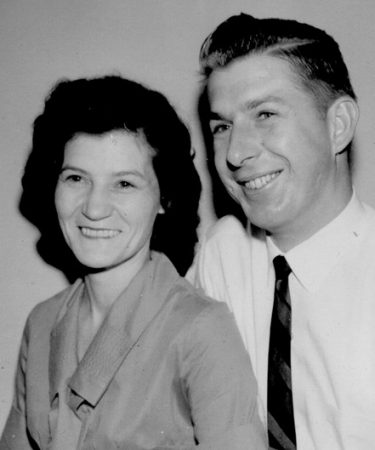
Pearl and Floyd Franks Scholarship is given annually by the Share America Foundation, Inc. (Share America Foundation)
The dedication of Randall’s parents Floyd and Pearl Franks and all the parents of the youth who supported these endeavors inspired the creation of the Share America Foundation, Inc. and its continuing efforts to encourage youth in Appalachian music. Support the continuing dreams with your donations by visiting www.ShareAmericaFoundation.org.
Members of the Peachtree Pickers reunited for one show at the 1997 Peach Blossom Bluegrass Festival hosted by Atlanta’s WRFG around the 10-year Anniversary of their final show together. The radio station had regularly played their music, helping to popularize the youth group in Georgia. The group appeared in their heyday at the festival. The audience warmly received the now-adult members coming together for a special reunion performance.



