
Echoes of the Past: Why Certain Eras Feel Like Home
Have you ever felt drawn to an era you never lived through, as if your ancestors’ stories were woven into your very being? As a child, I’d close my eyes and picture myself on a lush green mountain trail, a pioneer forging a path through America’s wild frontier. The past felt closer than the present, as if I belonged to another time.
My childhood was steeped in the American Revolution and frontier days. I’d imagine slipping through forest shadows as an ancestor, spying on British troops or dodging danger along rugged paths. I could almost feel the weight of a musket in my hands, hear the creak of a wooden floor in a grand stone manor, where I’d don tailored clothes and wield a sword with finesse. These weren’t just games—they felt like memories, as if my forebears’ journeys lingered in my blood.
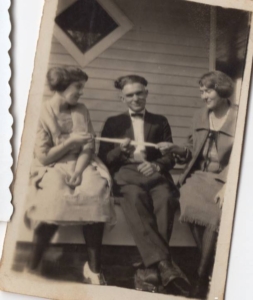
Some of Randall’s early 1900s kin at a front porch toffee pull.
As I grew, the WWI era and 1920s captured my heart, shaped by my grandparents’ stories. They spoke of muddy battlefields, hospital wards overflowing during the Spanish flu, and the quiet sorrow of fresh graves. Yet there were glimmers of joy—tales of square dances under starlit skies and toffee pulls that warmed the 1920s’ brighter days. Those stories carried such weight that I felt I’d walked those dirt roads myself.
The Great Depression and WWII, my parents’ youth, felt less vivid. We kids reenacted battles from old war films, mimicking soldiers with exaggerated accents. But those times never sank deep—they were stories I played at, not ones I lived.
Then came the 1950s. The era of sleek muscle cars and colorful Formica tables felt like home. Flipping through my parents’ photo albums—snapshots of soda fountains and drive-in theaters—I felt a pang of belonging, as if I’d cruised in a red-and-white ‘57 Chevrolet or swayed at a sock hop. Their tales of post-war hope made the decade feel like a second home.
Why do these eras pull at me? It’s more than nostalgia. My grandparents’ voices, heavy with loss, and my parents’ stories of 1950s optimism wove the past into my present. Or perhaps it’s deeper—memories encoded in my DNA, faint echoes of my ancestors’ lives surfacing in dreams of frontier trails and neon-lit diners.
In today’s world of instant updates, I find comfort in the past’s slower rhythms. The frontier’s adventure, the 1920s’ resilience, the 1950s’ optimism—they remind me every era has its struggles and joys. Which eras call to you? Dig through old photos or listen to your elders’ stories—you might find a time that feels like home. Perhaps we’re all a little out of sync with time, carrying echoes of the past in our hearts.