The Fifer Who Crossed the Delaware: The Night That Saved a Revolution
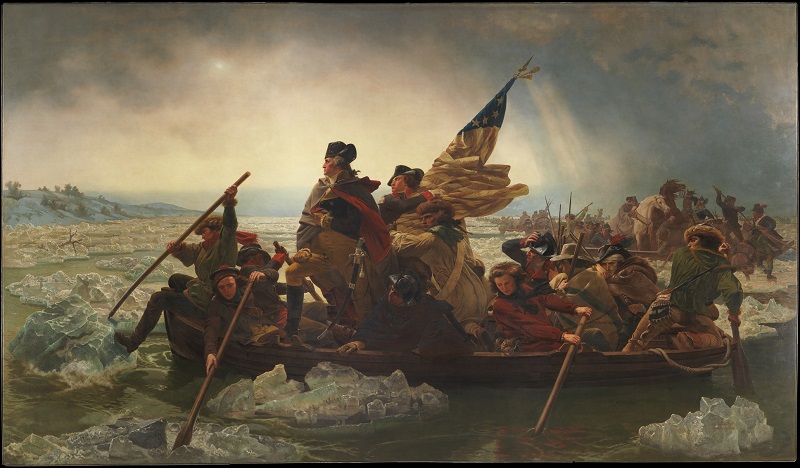
 

Every Christmas, hundreds of re-enactors gather on the Pennsylvania bank of the Delaware and push replica Durham boats into the black, ice-choked river. They are re-living the night of December 25–26, 1776 — the night George Washington’s ragged army made its desperate gamble to surprise the Hessians at Trenton and, in one audacious stroke, keep the American Revolution alive.

Among the 2,400 frozen men who stumbled ashore in the pre-dawn darkness was a 32-year-old fifer from Lancaster County named William Hedrick. He was no general, no celebrated captain, not even an ordinary musket-toting private. His weapon was eight inches of ebony wood. His job was to pipe the tunes that kept exhausted, frostbitten feet moving in step. By late December 1776 the cause looked lost. The Continental Army had been driven out of New York, chased across New Jersey, and pushed behind the Delaware. Enlistments were expiring. Desertions were epidemic. Congress had fled Philadelphia. Riding with the retreating columns, Thomas Paine scribbled the words that still ring: “These are the times that try men’s souls.

”Washington knew he needed a victory — any victory — before the army simply dissolved on January 1. So he chose the boldest plan imaginable: recross the river in a nor’easter, march nine miles through the night, and strike the Hessian garrison at Trenton at dawn.

William Hedrick’s company of Pennsylvania riflemen, led by Captain James Ross and attached to Major Abraham Ledsour’s battalion, was in the vanguard of that forlorn hope. Pension records and militia rolls place him in the column that formed at McKonkey’s Ferry around four o’clock on Christmas afternoon.

These were not ordinary soldiers. In the elite Pennsylvania rifle companies of 1775–1778, the fifer was first a rifleman who happened to play the fife. When the shooting started, Hedrick laid the instrument aside, shouldered his long rifle, and fought like everyone else.

By the time he reached the Delaware that Christmas night, he was already a hardened veteran. He had marched nearly a thousand miles on foot, fought in the disastrous Battle of Long Island, skirmished almost daily during the four-month retreat across New York and New Jersey, and watched the army shrink from 20,000 to barely 3,000 effectives. He had gone hungry, shoeless, and sleepless for weeks.

Imagine the scene. Ice floes thick enough to gut the boats crashed against the hulls. Men broke a path with oars and poles, advancing only yards at a time. Two horses drowned; two cannon nearly slid overboard. The password was “Victory or Death.” On that night it felt less like inspiration than weather forecast. The crossing took hours longer than planned. Instead of attacking at 5 a.m., the first troops reached Trenton after 8 a.m. — long after sunrise. Surprise seemed lost. Yet the same storm that delayed the Americans kept the Hessian pickets huddled indoors. When the Continentals finally poured down Pennington Road and King Street, many mercenaries were literally still pulling on their boots.

Washington had split his force. Sullivan’s division, including Hedrick’s riflemen, sealed the Assunpink Creek bridge while Greene struck from the north. In forty-five minutes it was over. Colonel Johann Rall lay mortally wounded; nearly 900 Hessians surrendered. The Americans lost only two men — both to the cold, not enemy fire.

On the icy road from the river to the town, Hedrick and the other musicians had played “Roslin Castle,” a haunting Scottish lament turned quickstep, and the insolent new favorite “Yankee Doodle.” The shrill notes cut through the gale and kept men from falling out to die in the snow.

Trenton was not the war’s biggest battle, but it was the most necessary. Ten days later came Princeton, and suddenly recruits were streaming back to the colors, and the Revolution had a pulse again.
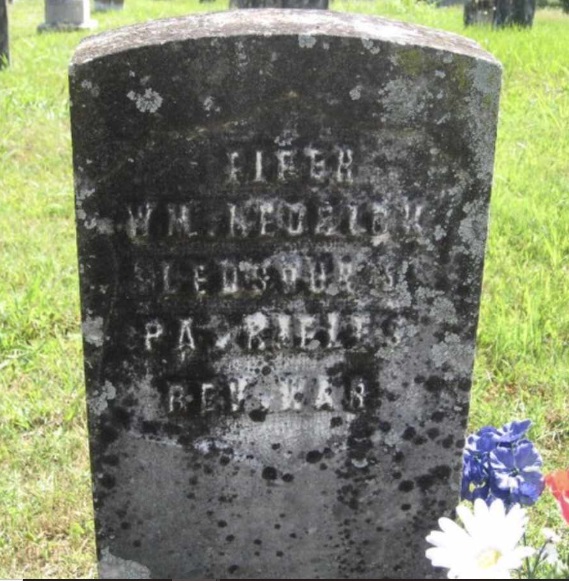
William Hedrick marched on — through the mud of Brandywine, the snows of Valley Forge, the fog of Germantown — until an honorable discharge sent him home. He headed south to the mountains of East Tennessee, raised a large family, helped plant churches and communities in Sullivan, Greene, and Sevier Counties, and lived to the remarkable age of ninety-five. In 1839 he was laid to rest beneath a simple stone at Headrick Chapel Cemetery in Wears Valley, the notes of his fife finally silent.

The paper trail is solid: National Archives pension S.40495, Lancaster County militia rolls of 1777–1778, and sworn statements from comrades who remembered the fifer who played them across the Delaware and stood beside them through the horrors of Valley Forge.

So this Christmas, when you see Leutze’s famous painting on a card or coffee mug, look past the standing Washington. There, among the straining oarsmen and the swirling ice, among the men — no fancy uniform, no epaulets, no glory. A man with just eight inches of wood at his side and the stubborn heartbeat of a nation being born within him.

His name was William Hedrick. He was my paternal six-times-great-grandfather. Because he and thousands like him kept marching that night, we are still here to tell the tale.

“Victory or Death.”
They chose victory.

If you are a man in the Northwest Georgia area and have an interest in honoring the legacies of your patriot ancestors, visit General Nathanael Greene Chapter – Sons of the American Revolution https://www.facebook.com/profile.php?id=61572762870391 to learn more about an organization you can join.
Giving What Really Matters

As a five-year-old, I pressed my nose against the Western Auto window and fell in love. There it sat—the shiniest red Radio Flyer wagon I’d ever seen. Its chrome hubcaps practically winked at me, whispering, “Take me home.” At least that’s what my little-kid brain heard.

Christmas was simpler then. My friends and I came from similar working-class homes. If things were going well, we each got one “big” gift and a couple of practical ones—tube socks, a flannel shirt, maybe a dress shirt for church.

As years passed, the dream in the window changed: a Red Ryder BB gun, a Matchbox racetrack, model airplanes and ships, then a bicycle. Eventually the dreams outgrew my parents’ budget. I saved lawn-mowing money for a candy-red English racer while they supplied smaller gifts that matched whatever I’d bought myself.

Once I was old enough to earn real money and stopped making the lopsided clay ashtrays, I settled into my own gift-giving routine. For Dad: handkerchiefs and Old Spice aftershave. For Mom: L’origan perfume, (she never changed brands), a box of chocolate-covered cherries, and one unique item I’d hunted for all year.

Yet our tree was never buried in presents—two or three gifts each, that was it. What we lacked in quantity, we made up for in generosity toward others. Mom baked for neighbors. We filled food boxes for families in need. Dad spent evenings in the garage restoring donated toys for children who might otherwise wake up to nothing.

That’s what my parents taught me Christmas is really about: using whatever God has given you to lift someone else up.

For me, those gifts turned out to be music and acting. Every December I sang at church or performed at nursing homes, watching eyes light up brighter than any string of tree lights.

Christmas doesn’t require big price tags. Sometimes the best giving is simply sharing whatever talent, time, or kindness you have to offer.

This season, I hope you discover the deeper joy that comes from giving quality instead of quantity—and from meeting needs rather than feeding wants.

May the bliss of Christmas find you in the giving.

From Niagara Falls to Forever: Remembering A Brother’s Love

As a toddler at Niagara Falls, I was determined to catch one of the huge fish I saw jumping in the churning water below the walkway. I stuck my leg through the railing, then maneuvered my head to follow. In my little mind there was no danger — only the thrill of grabbing that fish. I never considered that success might send me tumbling over the falls right along with it.

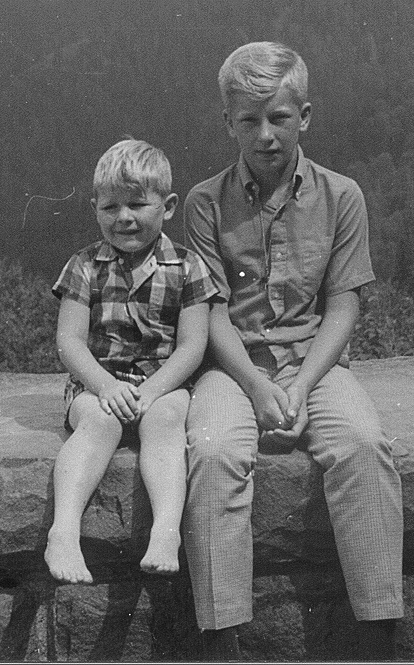
Randall and Alan Franks (Photo: Floyd Franks)

Thankfully, my older brother Alan wasn’t distracted that day. Several years my senior, he yanked me back to safety and ended my fishing career before it began. He saved my life, even if, at the time, I only saw him as the one who wouldn’t let me do what I was sure I could do.

I’m the youngest of three boys. Alan, the middle one, was my half-brother — Dad’s son from his first marriage. He lived mostly with his mom, Melba, and his stepdad, in Blairsville coming to stay with us on some weekends, alternate holidays, and summer vacations in Atlanta. When we were little, those visits were pure fun; we always found games and mischief to share. I’m sure for him it often felt like babysitting his pesky little brother.
Alan loved his mom Melba with all his heart, but he was blessed to have a second mom in my mother too. She didn’t hesitate to hold his feet to the fire, push him to reach his potential, and set him straight when she thought he was veering off course. The same she did for me. He used to laugh that Mom was a “ball of fire,” and none of us wanted to be in her path when she got on a roll.
He also had two dads. Like me, his relationship with our father could be strained at times; part of that age-old struggle when a boy starts becoming a man and tries to step out from under his father’s shadow.
By the time he charged into his mid-to-late teens, I was just starting elementary school. His heavy-metal albums and glorious afro cracked me up. For a while in his late teens he came to live with us, and I loved having him around — even if we had almost nothing in common and he was far more interested in girls than in playing with me. I remember he once talked about training to become an EMT. Life moved on. He fell in love, married Carolyn, started a family in another town, and our time together shrank to holidays, funerals, and the occasional pass-through visit.
Rotary-dial phone calls kept Mom and Dad updated on his adventures: first a job at the First National Bank of Chatsworth, then running a little place called The Chili Dog (restaurants were a subject our family knew plenty about), and always the latest news about my nieces. Eventually he joined with his brother Donny in his dream to start Atlanta Carpet Company, where he worked the rest of his life. When we lost Dad far too young, one more tether between us loosened.
Still, he was my brother — a gift from God and from our parents. After Dad was gone, whenever I hit rough patches I turned to my brothers for advice, especially about the ladies in my life. Alan had been married twice — first to Carolyn, later to Jane — so he and my brother Jerry always had more experience than I did. I treasured their wisdom, even when I was too stubborn to follow it right away.
As adults we related better — talking about life, the world, our family, and hopes for the future. His kids gave him grandchildren, and more recently great-grandchildren. 
Sometimes we get urges for a reason. Earlier this year, while performing in eastern Georgia, I felt a strong pull to reroute my drive home through Gainesville, stop in, and maybe share supper with Alan. The sensible side of me looked at the three-hour drive and the monstrous traffic I was driving in and decided on a phone call.

A few hours ago, from this writing, that same phone rang. A doctor was on the line — she’d found my number in his

Alan Franks

contacts. She told me Alan had suffered a massive cardiac arrest and they were still working on him.

Tonight that earlier decision haunts me. Yes, we talked and messaged a few times after that missed visit, but I lost my last chance to sit across a table from him in this life. I will always regret not listening to that urge.
I am comforted, though, by how proud he was of my recent music honors.
Not long ago he wrote: “Congratulations to my Lil brother who got all the talents which left me with none! LOL. The man can definitely saw a fiddle. I have always loved to hear you play. I will never forget the cross-country road trip we took with Dad and Pearl — Atlanta to Arkansas to Ohio to Niagara Falls to Canada and back home through Cherokee, N.C. You was a little guy then and drove me completely nuts in the back seat of the old blue Chevy making up songs and singing them. LOL. You have always been talented Lil bro. The award was much deserved.”
Moments like that mean little without family to share them with. Countless times I’ve been grateful Alan was there to cheer me on over the years. And there were just as many times — heart broken by a woman or by a career stumble — when I’d drive a couple of hours just to sit while he tinkered, or spill my guts on his couch about things I could only tell my brothers.
I was privileged to do the same for him — celebrate when he caught a big bass in a tournament, brag about his success in commercial carpeting, or listen to the latest story about one of his kids or grandkids.
I’ll miss my brother terribly. Tonight, with tears hitting the keyboard, I keep thinking about those boyhood rides in the back of Mom’s 1964 Chevy Malibu or Dad’s light-green 1969 Chevy truck, wherever Mom and Dad were hauling us. The destination didn’t matter. What mattered was that we were together.
I know we will be again.
Alan was an active supporter in our charity benefiting youth with the Pearl and Floyd Franks Scholarship through the Share America Foundation, Inc. If you are inclined to give a gift in his memory visit online: http://ShareAmericaFoundation.org
or by mail: P.O. Box 42, Tunnel Hill, GA 30755.

Find the Thing That Makes You Stupidly Happy (and Do It Anyway)

I was twelve the first time I rode the Rotor at Six Flags — that human centrifuge that pins you to the wall, then drops the floor. My friends and I rode it eighteen times in a row, stumbling off each time laughing like lunatics, begging for one more spin. Six years later the same ride left me green and praying for death. Bodies change. Bliss doesn’t have to.

We all know that electric feeling: the first kiss that stops time, the song you figure out on guitar that makes the room disappear, the blank page that suddenly isn’t blank anymore. It’s the moment you forget to breathe because something inside you is breathing for you.

Too many of us file those moments under “childhood” or “someday” and get on with the grown-up business of paying bills. Shelter, clothing, food — non-negotiable. But as someone wiser than me once pointed out, man cannot live by bread alone. I’ve tried. It’s a dry, crumbly existence.

I could have taken the safe route: steady paycheck, 401(k), a life that looked responsible on paper. Every time I edged toward it, the road seemed to shift under my feet. Jobs dried up. Opportunities in acting, music, and writing appeared like bread crumbs leading somewhere else. I finally quit pretending I hadn’t noticed the trail.

Has it been easy? Not even close. There were years I measured success by whether I could afford both rent and guitar strings. But every time I finish a book, record a song, or step off stage, I’m twelve again — dizzy, alive, certain I was born for this exact second.

Creating is the only high I’ve found that doesn’t fade with age or punish you the next morning. Better yet, when someone hears a song I wrote during my own dark night and tells me it carried them through theirs — that’s a relay race across generations. Beethoven’s still running laps around us 200 years later. Shakespeare won’t quit. Even the cave painters at Lascaux are still whispering, “I was here, and it was beautiful.”

I won’t pretend my work will outlive me by centuries. Most art doesn’t. But even if every note I’ve played and every word I’ve written ends up deleted, recycled, or lost, I will have spent my days doing the thing that makes me stupidly, embarrassingly happy.

That’s not a bad epitaph.

So here’s my question to you: What makes you forget to eat, forget to check your phone, forget the clock even exists? What would you stay up until 3 a.m. doing if money were no object and failure were impossible?

Whatever it is — pottery, poetry, welding, welding poetry out of scrap metal — do it today. Do it badly. Do it with gusto.

The world has enough sensible people.

It will never have enough people who are fully, recklessly alive.

Go get dizzy.

Echoes from King’s Mountain: Ancestors, Sacrifice, and the Songs of Freedom

As we draw nearer to the 250th anniversary of American independence, I find myself reflecting on the ancestors who answered the call to arms, ordinary frontiersmen who became heroes in the fight to free the colonies from British rule.
My fifth-great-grandfather, Charles Kilgore, was one of five Scotch-Irish brothers who heeded the Revolution’s summons. Born in 1744 in County Clare, Ireland, Charles traced his roots to the Kilgours of Fife, Scotland. Family lore connects them to Clan Douglas, fierce warriors who battled for Scottish independence and stood with the Jacobite risings of the 1700s.Around 1763, Charles and his brothers—Hiram, Robert, William, and James—crossed the Atlantic, settling first in North Carolina before pushing to the Virginia frontier. There, Charles married Martha McIlhaney, raised eight children on a 600-acre plantation, and joined the Washington County Militia under Captain James Dysart in Colonel William Campbell’s regiment. His four brothers enlisted alongside him. They were part of the legendary Overmountain Men, rugged settlers from beyond the Appalachian Mountains who embodied the spirit of the frontier.

In late September 1780, these men mobilized after British Major Patrick Ferguson threatened to “march over the mountains, hang their leaders, and lay waste the country with fire and sword.”
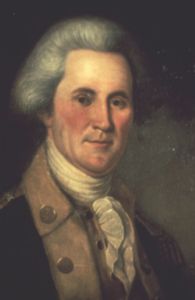
The brothers joined hundreds of others in a grueling 330-mile march over rugged terrain, enduring rain and hardship for two weeks to confront the Loyalists.
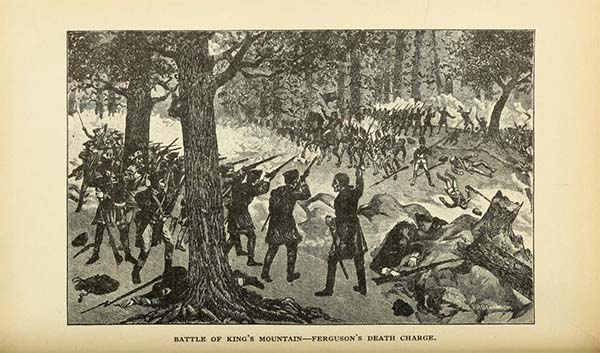
Their defining moment arrived on October 7, 1780, at Kings Mountain—a rocky, wooded spur on the North Carolina-South Carolina border that proved a pivotal turning point in the Southern Campaign of the Revolutionary War.
Roughly 900 Overmountain Men encircled about 1,100 Loyalists perched atop the ridge. Unlike traditional European line battles, the Patriots employed guerrilla tactics suited to the terrain: advancing uphill under cover of trees and rocks, using their accurate long rifles to pick off enemies while dodging bayonet charges.
The Kilgores’ militia charged from the north, pressing through thick smoke and the crack of musket fire. Hiram fell in battle; Robert and Charles were gravely wounded. Yet, they helped secure the summit as Loyalist leader Major Patrick Ferguson was slain, his forces crumbling in just over an hour.
From the southeast, my Sherrill kin—fourth- and fifth-great-grandfathers Adam and Samuel Sr., along with uncles

Uncle Col. John Sevier

Samuel Jr. and George—fought under my uncle Colonel John Sevier, their rifle fire converging with the Virginians’ assault.
On the southern flank, my sixth-great-grandfather Captain John Weir’s “South Fork Boys” pushed forward despite early losses, tightening the pincer that broke the Loyalists.The toll was stark: Loyalists suffered 157 killed, 163 wounded, and 698 captured—nearly their entire force—while Patriots lost only 28 killed and 62 wounded, a testament to their superior marksmanship and resolve.
In the aftermath, nine Loyalist officers were hanged for alleged atrocities, underscoring the war’s brutal, brother-against-brother nature.
This victory demoralized British forces in the South, boosting Patriot morale and prompting Lord Cornwallis to abandon his invasion of North Carolina.
Thomas Jefferson later hailed it as “the joyful annunciation of that turn of the tide of success which terminated the Revolutionary War with the seal of our independence,” paving the way for the decisive siege at Yorktown a year later.
Amid the chaos, my Loyalist-turned-Patriot ancestor, fifth-great-grandfather Captain Billy Green, initially defended the hilltop. Captured and sentenced to hang, he escaped and later realigned with the Patriots. This meant I had family on both sides—an experience echoed throughout history, from Scotland’s clan wars to civil conflicts worldwide.
On that fateful day, all five Kilgores stood shoulder to shoulder, shedding blood in a clash that shifted the war’s momentum. Charles, shot through the body, survived only because Martha and their young daughter Mary braved the wilderness in a wagon to retrieve him and bring him home to Virginia. Robert also recovered from his wounds, but tragically lost his life to Mingo Indians on December 31, 1782, during a hunting expedition. His family then moved in with Charles’s for a time.
Charles earned a pension in 1809 and passed away in Greene County, Tennessee, in 1823. His daughter Rebecca married Adam Sherrill in the 1790s, uniting two families of Kings Mountain veterans in bonds forged through shared sacrifice.


The Carter Family

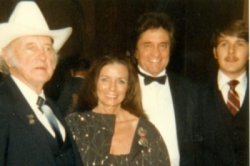
Randall Franks (right) with Johnny and June Carter Cash and Bill Monroe in 1984.

Charles and his kin remind us that the Revolution was won by everyday men and women—farmers, brothers, and families—who rose to extraordinary heights. The five Kilgores symbolize the unbreakable ties that compelled them to leave their homes and fight side by side for freedom. Because they did, generations since have lived without bowing to distant monarchs.
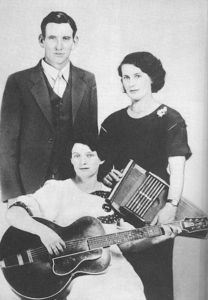
On a personal note, I am privileged to descend from these men. Through the Kilgore roots, I share them as grandfathers with notable figures in Appalachian music: All three original Carter Family members—A.P., Sara, and Maybelle—are my cousins. Sara and Maybelle descend from Charles, like me; A.P. from brother Robert. Thus, connecting me also to the Johnny and June Carter Cash clan. These ancestors’ lives truly gave us all something to sing about. 


The Fiddle’s Enduring Tune in American History

The fiddle has an amazing history in the American experience. It first crossed the Atlantic with European settlers, where violins played the music of both upper classes and common folk, uplifting and entertaining through hard times.

Whether in a seated concert with a string quartet or kicking up heels at a cotillion or barn dance, the fiddle became the centerpiece of American music for much of our nation’s first 200 years. It crossed the Appalachians with early frontiersmen and traveled waterways with trappers and explorers.

During early conflicts like the Revolutionary War, the War of 1812, the Mexican-American War, and the Civil War, it wasn’t unusual to hear a fiddle sawing away beside a campfire as soldiers recuperated from battle. Fiddlers often provided rare moments of uplift amid gruesome experiences. Tunes like “Soldier’s Joy” weren’t just melodies—they reflected how the fiddle’s sound boosted morale.

The instrument journeyed west in Conestoga wagons and on horseback, providing the soundtrack to settlement after settlement. It remained at the heart of dances well into the 20th century. As music ventured into recording and radio, fiddlers led the way, with the first country stars often being fiddle players or string bands.

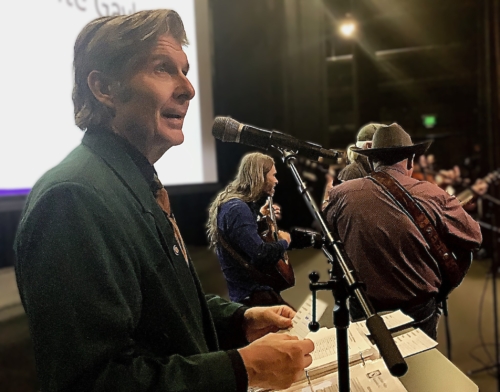
Randall Franks hosts the Grand Master Fiddler Championship at the Turner Theater. (GMFC Photo)

As a fiddler myself, I’m proud of the music passed down from my great-grandfather and those before him. I learned from Appalachia’s early stars and carry a bit of them with me. Over the years, the fiddle has adapted to regional styles, reflecting the lives and tastes of its players.

I’m honored to be in my 18th year as celebrity host of the Grand Master Fiddle Championship, carrying on the tradition of Grand Ole Opry legends like Porter Wagoner and Roy Acuff.

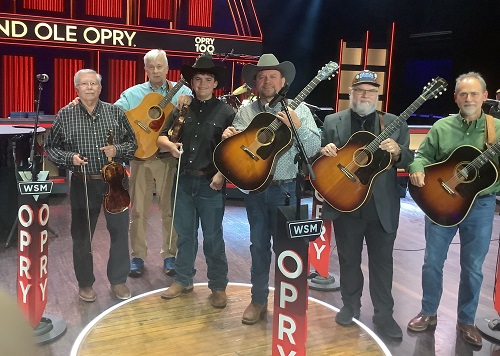
Dozens of fiddlers of all ages gathered just outside Music City in Franklin, at the Mockingbird and Turner Theaters at the Factory, to test their mettle. Classic fiddling sprang from their instruments, delighting spectators. Competitors traveled from across the U.S. and Canada to vie for the coveted Grand Master Fiddler title, originally created by the Grand Ole Opry in 1972. Past winners like Tristan Paskvan, Tristan Clarridge, and Bobby Taylor (2025 Dr. Perry Harris Award recipient) made a special appearance during the Opry’s 100th anniversary celebration, enthralling the audience.

The Grand Master Fiddler Championship on stage at The Grand Ole Opry. (GMFC Photo: Randall Franks)

On Saturday, young fiddlers—from about age 4 to 15—showed off their hot licks. Many overcame nervousness to deliver amazing performances and rack up high scores. Tristan Paskvan of Southlake, Texas, claimed the Youth Grand Master Fiddler title.

Sunday shifted focus to adults, with 14 competitors vying for open spots by playing breakdowns to secure a place in the Top Twenty. Around six joined champions from around the country. The top fiddlers then performed their best breakdown, waltz, and tune of choice to narrow the field to the Top 10. Those finalists went bow-to-bow again for the top rankings. Jesse Maw of Asheville, North Carolina, emerged as the Grand Master Fiddler, edging out multiple-time winner Tristan Clarridge as runner-up.

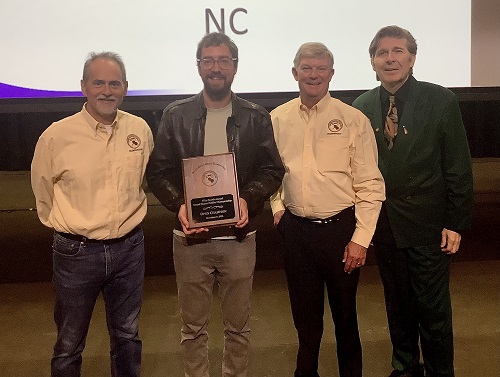
Grand Master Fiddler Open Champion Jesse Maw (second from left) receives his award, from left, GMFC Directors Howard Harris (third from left) and Ed Carnes (left) and Host Randall Franks. (GMFC Photo: Tyler Andal)

The 54th Annual Grand Master Fiddler Championship was a tremendous reflection of the American fiddle experience! Support its ongoing success by donating at www.GrandMasterFiddler.comLearn more about my fiddling history at www.RandallFranks.com/Fiddling/ .

Check out Randall’s Visit to the Grand Ole Opry with the Grand Master Fiddlers:


Milestones and Markers

How we determine if we are successful in life and careers is often marked by milestones and markers that indicate where we are and how well we’ve done our jobs. We strive for them throughout our lives. I often pull out a suitcase that contains bits and pieces from my late father’s life. We filled it after he passed away at 54, unable to part with the certificates of achievement, the small pins marking his years of service, and the awards he received. Medals and insignia from his time in the Army are also there. I remember one time when my father came home floating on air after receiving recognition for saving his employer an immense amount of money.

Beyond the love I still carry for my dad, these mementos from his life mean little in the grand scheme of things. I’ve probably opened that case five times since he died 38 years ago, taking the pieces out, reading, remembering, and repacking.

In contrast to my father, who spent his life working for companies and the government, my life has been spent either behind or in front of a film or television camera, or driving from town to town, stage to stage, as I spoke or performed my music and comedy. My milestones and markers are much different from my father’s. They are achievements generally granted by organizations that focus on the crafts in which I perform my gifts. Awards come in all shapes and sizes and at all levels these days, generally selected through nominations and voting processes by industry professionals or sometimes by fans. Chart songs come through radio stations and whichever authority compiles the data.

As entertainers and actors, we do our work, and at times, we’re blessed when it rises into the view of our peers, fans, and organizations—enough so that our names are set alongside those considered the very best in the business. Those nominations sometimes even grant us the unusual distinction of becoming award winners.

I’m blessed that there have been seasons when I’ve seen the blessings of nominations and awards. God has allowed 2025 to be another one of those seasons, with a mixture of 16 nominations or honors in various areas of my creative endeavors from a variety of organizations.

Other milestones are markers of passing time—anniversaries. The last 12 months have been a series of markers for me, many starting with the number four. The longest is 45 years since I hosted my first ticketed concert with my youth bluegrass band—The Peachtree Pickers. This, in many ways, was the beginning of my professional career, aside from my earliest TV appearance at age six. Time also allows many folks to look upon your list of achievements that come with time and decide you need to be honored with career-capping distinctions, such as induction into halls of fame. My career has managed to accumulate five of those thus far, but I have yet to put a cap on my career. In fact, I’m doing everything I can to ramp up my opportunities to allow me to create and perform for the next two decades.

I don’t know who might sift through my awards and nominations 38 years after God calls me home, but it’s my intention to give them plenty to look through. I certainly hope I leave behind several trunks’ worth.

What achievements are you leaving behind? Whether in corporate offices, on stages, or elsewhere, we all chase these markers—but what truly endures? While the things described above are important to me, I’ll refer to something one of my performance mentors taught me about what we leave behind. My bluegrass mentor Doodle Thrower used to say, as he left the stage after the final show of a festival: “When they dig my grave, it’ll have to be several feet deeper than normal to house all the wonderful memories of good friends and the great moments shared with those in the audience.” I’m hopeful that for me the same will be true, but instead the extra depth will be needed for those who have stood in front of my stages or watched me on a screen.

Track: The Dog Who Listened

I stepped out the back door and plopped down on the top step. Our back stoop had just three concrete steps leading down to the sidewalk, which ran along the rear of the house to the gate.

There, my faithful, hairy companion Track arrived and rested his head in my lap. He was a cross between a beagle and a peekapoo and looked like the movie dog Benji, but with darker hair.

As a child, I was allergic to animals, so I wasn’t always the loving master Track deserved. My father made up for my shortcomings, I think. Still, there were many times when my childhood world seemed to be crashing down around me, and Track would lay his head in my lap for a heart-to-heart.

I often paint with the brush of idealism when I write—because we all prefer the polished version of the past. But there were times when the gleam didn’t reflect well on us.

Life isn’t easy, and the daily grind can wear us down. Parents sometimes share intense “fellowship” with each other. Sometime kids push the envelope saying or doing things they should not. In my experience, though, that rarely ended well for the child. A meeting of the minds often came with the crisp whir of my father’s belt slipping through its loops—a sound every kid recognized as the line being crossed. We’d bolt for cover: the bedroom, the den, or—on occasion—behind my mother’s kitchen chair. Sometimes she’d come to our defense, but mostly the two tall grown-ups were united on discipline. For me, the licking wasn’t pleasant, but the pain was transitory. The lesson lingers decades later.

When the stress peaked—whether from my parents’ arguments, my own misbehavior, or a friend’s betrayal—Track was always there. His brown eyes gazed up into mine, listening to my complaints as tears ran down my cheeks.

He listened. He consoled. In some way, I know he understood my hurt. Compassion knows no bounds between humans and our furry friends. For me, Track was a constant. Our playtime was limited, but he entertained himself with fierce intensity in his enclosed backyard domain. He’d bark insistently at any passersby who dared approach the fence, claiming his territory. The garbage men endured it every Tuesday as they grabbed our two metal cans, hauled them to the truck, dumped them, and returned them. Service was personal back then. Track would bark at our cans, follow them to the truck, then race to the neighbor’s in-ground can to bark some more. I assume he relished the weekly ritual.

For all his bravado, Track wouldn’t hurt a fly or snap at a person. I recall one adventure when we harnessed him and the neighborhood dogs to wagons with wheels and raced them down the street. Oscar, a huge dog, always won—and if he broke free, we’d chase him endlessly. Track excelled at pursuit, shooting down the block like a bullet from a gun. I’d usually find him at Oscar’s fence, the two running back and forth, one on each side. He did the same with Herman, the elderly next-door dog who preferred not to run.

Except for a few months while I earned my animal husbandry merit badge, Track led a solitary life, broken only by brief visits from neighbor dogs. During that time, we brought home Lassie from Raymond, the janitor at my elementary school. She and Track had seven puppies, which we placed with families—including some back with Raymond, who hunted with them. Lassie eventually went to another home, too.

Track was my confessor, my friend, and my steadfast companion through childhood.

When he passed, I built him a small coffin and laid him to rest between a peach tree and a crab apple tree—his favorite spot. It was a sad day for my dad and me as we said goodbye. I haven’t had a pet since, and I don’t plan to.

Make the Most of Today

Life is a stage, and as we play our parts, we face the sudden and lingering exits of those we hold dear. The first loss we experience is often a relative, sometimes a friend.

As a young child, I was deeply affected by the death of my Great-Uncle Jadie Harris, though I don’t recall the details—only the weight of grief I was told I carried.

Last week, an unexpected lunch with childhood friends Pam and Bob Padgett brought back memories of another loss: Pam’s sister, Nancy Burgess, who succumbed to kidney failure. Our mothers were close, and we spent countless hours playing board games while they laughed and talked. Nancy’s death, the first of a playmate, shook me as a youth. Until then, death had been reserved for older relatives—great-great-aunts and uncles whom I adored, blessed as our family was with longevity.

In seventh grade, I recall a season when funerals seemed constant. When someone passed, our world paused. My parents consoled grieving families, helped with arrangements, or simply sat with them in silence. We children did our part, distracting younger cousins with games to shield them from sorrow.

As years passed, I noticed losses arriving in waves, marking generational shifts: first my great-grandparents, then grandparents, then aunts and uncles. Over the past decade, I’ve watched my own generation—and even some from the next—begin to depart. Just this week, two unexpected losses struck: a hometown friend whose dedication transformed our community, and a film industry colleague with whom I worked for over a decade to create opportunities for others.

Soon, I’ll attend one friend’s funeral to offer condolences and share memories with those who loved him. I’ll also call another friend who recently lost both his brother and wife, hoping light conversation might lift his spirits.

When we leave life’s stage, our role ends. Loved ones may mourn, but the world moves on. God doesn’t promise us tomorrow—only today, a gift to use well. Are you living fully in this moment? Are you lifting those around you?

Even a life as long as my friend Violet Hensley’s—109 years as an Ozark entertainer—passes in a blink from cradle to grave. So use today. Love with kindness, bless others, and live with purpose. Then, when your final curtain falls, the applause will echo.

How do we leave behind something worth remembering?

Oftentimes in life, we concentrate our efforts on paying the next bill, dealing with a loved one’s problems, or chasing the next goal.

I recently saw a meme of a man in three stages of life pursuing money flying through the air: In the first, he has none; in the second, an armful; and in the final, an enormous amount clutched in his arms. But that third panel shows a cliff with a sign: ‘The End.’ He’s reached his goal—and the end of life.

While this is simple commentary, for many it’s true. In the meme, no children or spouse stand with him, so I assume he ran alone.

As someone who’s done the same, this can be a stark awakening: We’ve wasted our lives chasing elusive dreams, clutching at meager successes—power, money, or things we see as prizes.

But is there a way to run that race—even alone—and leave something that outlasts us, giving meaning to our efforts?

I think of people in ministry: D.L. Moody influenced Billy Sunday, who inspired Billy Graham—all rooted in the Word of God. Their work endures through the millions they touched, and the millions more reached in turn. We may not trace the seed of faith we encounter back to Moody or even the twelve disciples, but it still has impact. Those who carried it forward left something worth remembering.

For history lovers, we wander through museums, castles, and old homes named after long-ago philanthropists who built in stone to endure. We glimpse their lives through artifacts, staring into paintings or photos to capture their essence. Sometimes, a story inspires: how someone who died with millions started as an orphan or street waif and rose through hard work. These tales encourage us to improve our own lives. They might have left their money to family or causes that changed others’ worlds, creating a memory beyond their time.

Are they aware? Some believe they watch from heaven. I think once we cross over, old things pass away; while we await loved ones, God shifts our focus beyond the earthly realm.

None of us is promised tomorrow, but we have today. Use it to make a positive impact—through service, mentoring, or giving away accumulated wealth. To see the change, create it now. Touch hearts with your time, knowledge, and gifts; change worlds one person at a time.

This is the only way to leave something worth remembering. One person a day adds up over a lifetime. Go out and change the world!